Leave a Message

Thank you for your message. We will be in touch with you shortly.

Silicon Valley's Spring Market Hits Its Stride With Rising Inventory and Relentless Demand

Local Lowdown David Weil April 14, 2026

The Big Story

Quick Take:
  • Median home sale prices ticked up slightly on both a month-over-month and year-over-year basis in February, continuing the holding pattern we've seen in recent months.
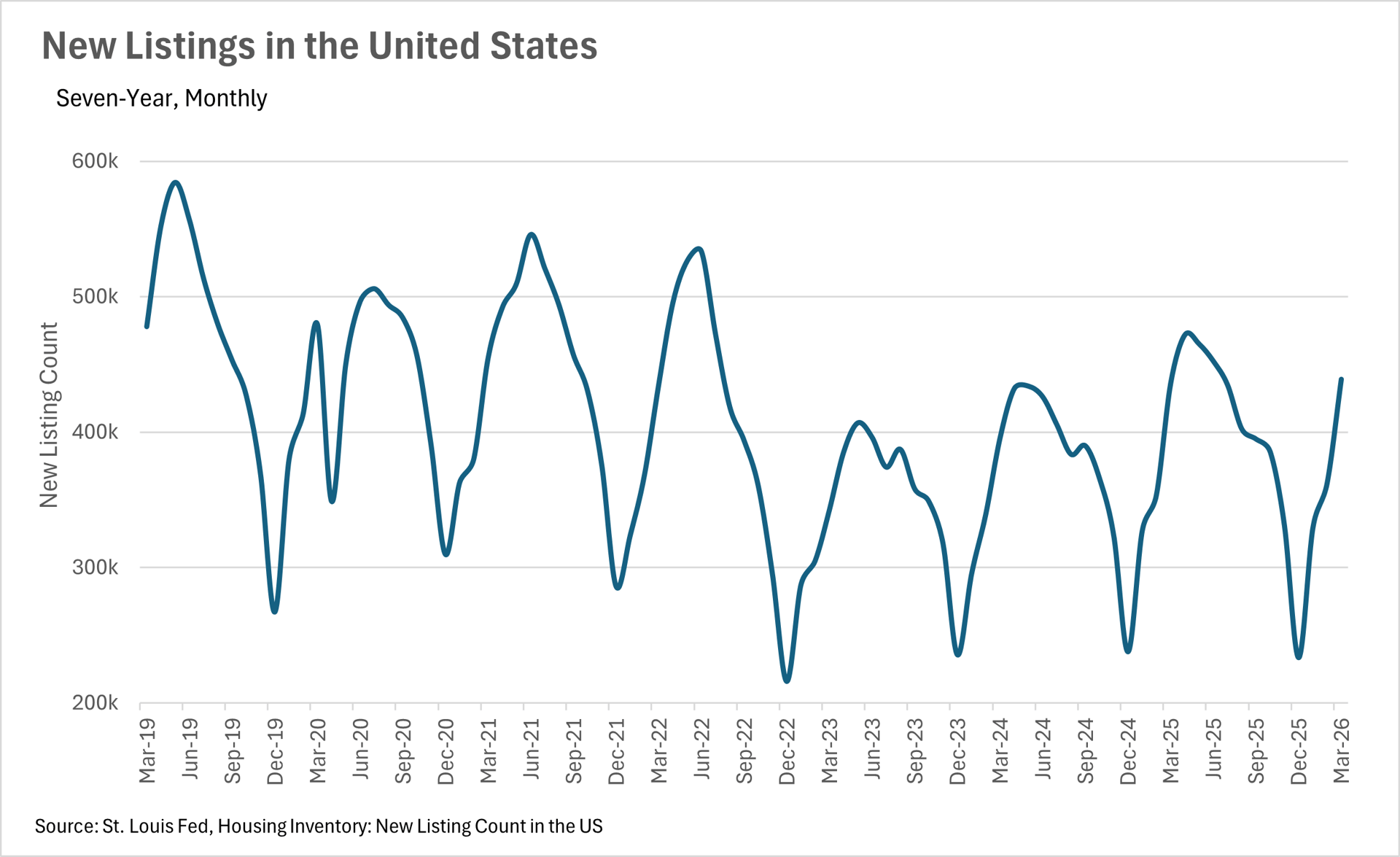
  • Inventory levels continue to climb modestly on a year-over-year basis, with new listings surging heading into the spring selling season.
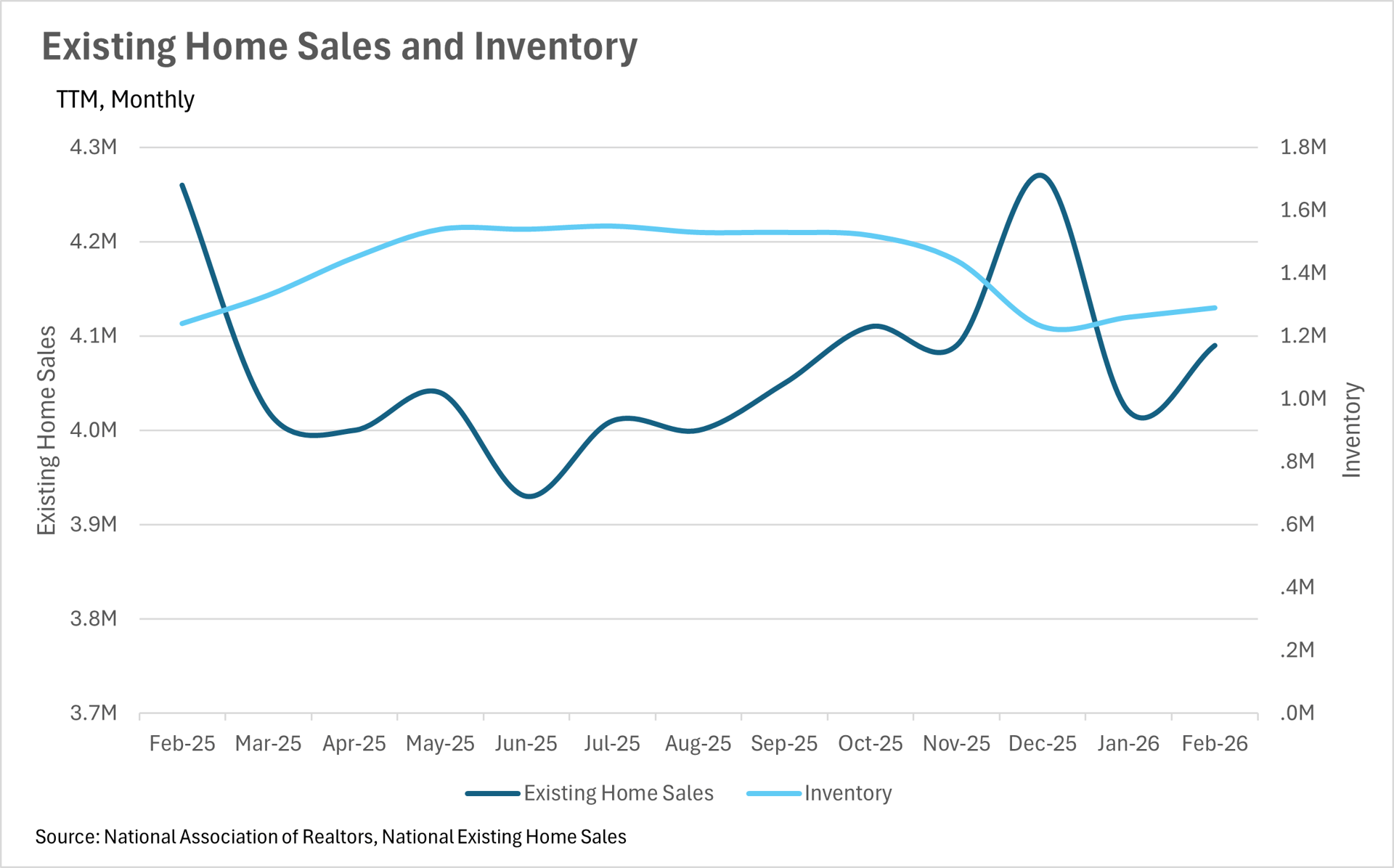
  • Existing home sales rebounded slightly from January, but remain below where they were at this time last year.


Falling rates continue to ease the affordability crunch

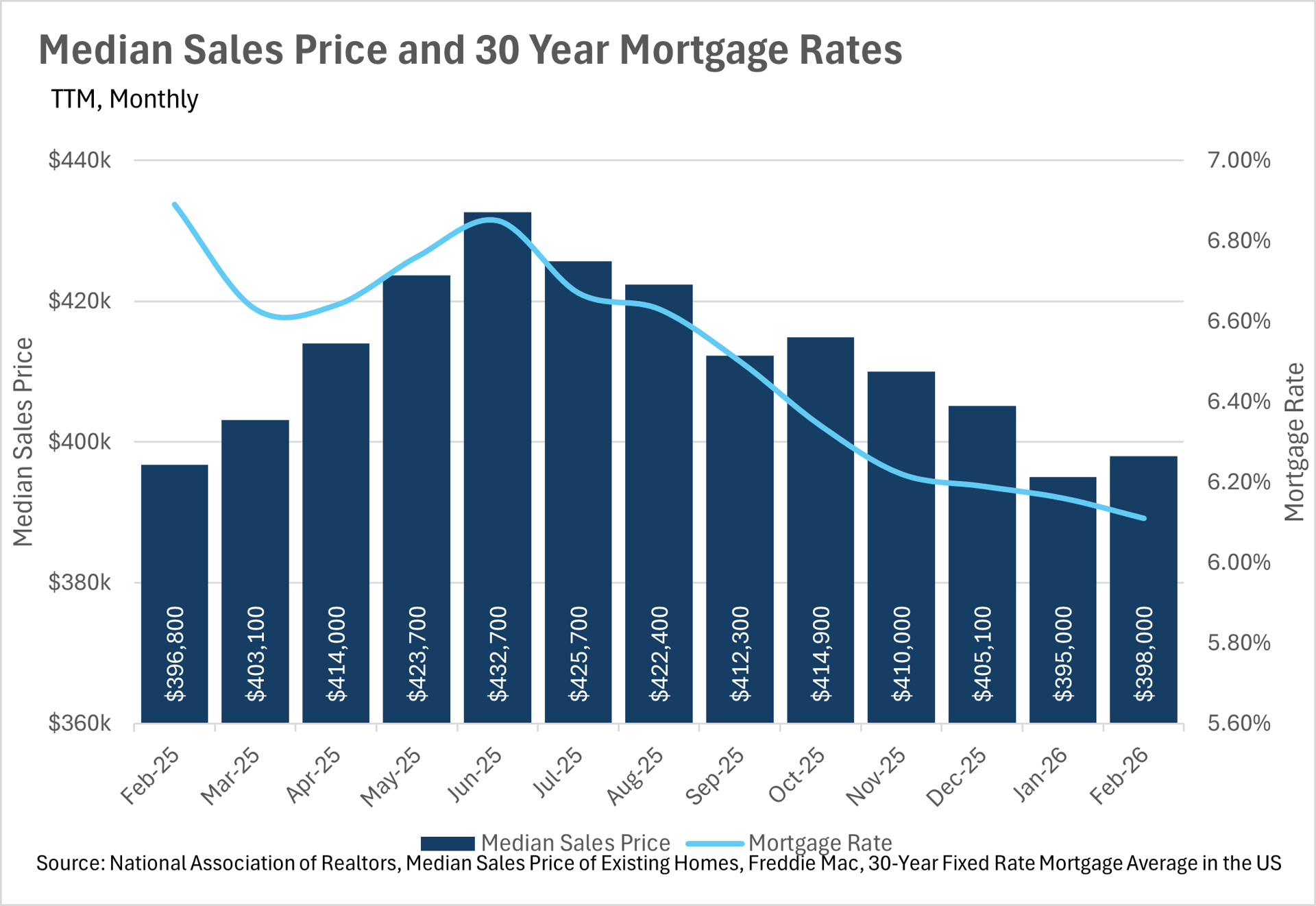
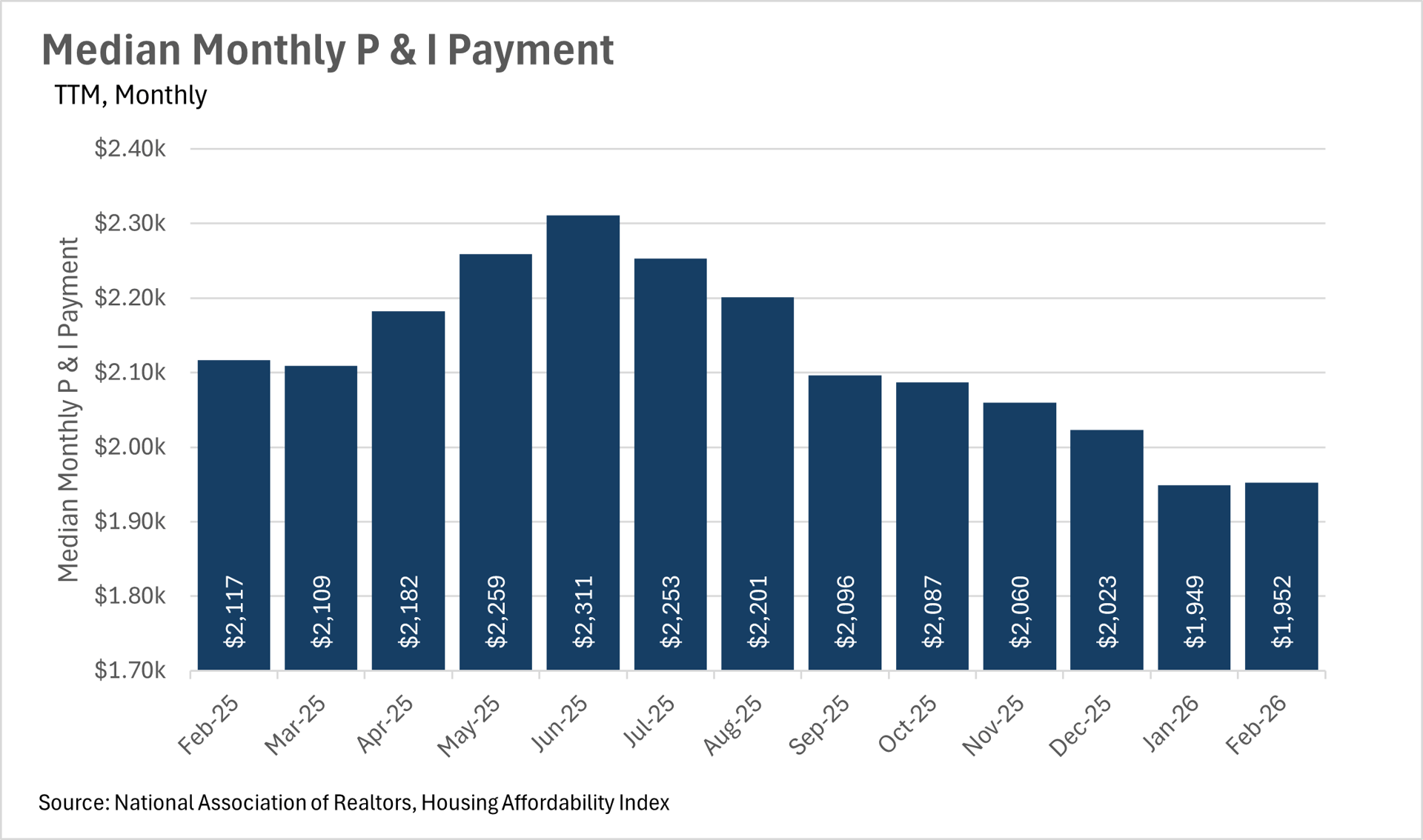
Although median home sale prices have remained remarkably stable over the past several months, the continued decline in mortgage rates is making homeownership considerably more affordable than it was just a year ago. In February, the median home sold for $398,000, representing a modest 0.30% year-over-year increase and a 0.76% uptick from January. On the mortgage rate front, the average 30-year rate dropped to 6.11% in February, representing an 11.32% year-over-year decline from the 6.89% we were seeing at this time last year. This decline in rates has had a major impact on what the average homeowner is paying each month. The median monthly P&I payment came in at $1,952 in February, down 7.79% from the $2,117 the median homeowner was paying just a year ago. That's approximately $165 in monthly savings, which is a significant boost to the average American's budget. If rates continue to trend downward, we could see buyers start to return to the market in a meaningful way as we move deeper into the spring and summer months.
 

New listings are surging as we head into the spring

One of the most encouraging stories in the housing market right now is the dramatic increase in new listings as we move into the spring selling season. In March, there were 439,000 new listings that hit the market, representing an eye-popping 21.21% month-over-month increase and a 0.70% year-over-year increase. This surge in new listings is a very welcome sight, as it means buyers will have considerably more options to choose from as the market heats up. On the inventory side, there were 1,290,000 homes available for sale in February, representing a 4.03% year-over-year increase and a 2.38% month-over-month increase. This gradual build in inventory, combined with the huge surge in new listings, should give buyers some breathing room as we head into the busier months of the year. That said, inventory levels still have a long way to go before they reach the levels we'd consider truly healthy, so it'll be worth keeping a close eye on whether this momentum carries through the spring.
 

Existing home sales are showing early signs of life

After a sluggish January, existing home sales rebounded slightly in February, with 4,090,000 homes changing hands. This represents a 1.74% month-over-month increase, but still comes in 3.99% below where we were this time last year. While it's certainly encouraging to see sales pick back up, the year-over-year decline tells us that buyers are still being cautious despite the substantial drop in mortgage rates that we've seen over the past year. Part of the story here may be that buyers are waiting to see even more rate cuts before they jump in, or they may be waiting for the influx of new listings to give them more options to choose from. Either way, it'll be fascinating to see whether the combination of lower rates, climbing inventory, and a fresh wave of new listings is enough to bring buyers off the sidelines in the coming months.
 

A market that's slowly tilting back toward balance

When determining whether a market is a buyers' market or a sellers' market, we look to the Months of Supply Inventory (MSI) metric. The state of California has historically averaged around three months of MSI, so any area with at or around three months of MSI is considered a balanced market. Any market that has lower than three months of MSI is considered a seller's market, whereas markets with more than three months of MSI are considered buyers' markets.
 
At the national level, we're seeing an interesting dynamic play out. Inventory is growing at a modest pace on a year-over-year basis, existing home sales are lagging slightly behind last year's figures, and new listings are surging into the market just as we head into the traditionally busy spring season. All of this suggests that the market is slowly tilting back toward a more balanced state, which would be welcome news for buyers who have been dealing with tight inventory for years. However, if mortgage rates continue to drop and buyers finally decide to come off the sidelines, we could just as easily see the market swing back in favor of sellers. As always, real estate is a highly localized asset, which is why you should check out what's going on in your local market below in the Local Lowdown!
 

Big Story Data


The Local Lowdown

Quick Take:
  • Single-family median sale prices showed a mixed picture in March, with San Mateo County posting solid gains while Santa Clara and Santa Cruz Counties saw year-over-year declines.
  • Inventory levels are starting to normalize, with single-family home inventory down nearly 10% year-over-year but climbing steadily as the spring market ramps up.
  • Single-family homes continue to sell at a rapid pace, with the average listing in San Mateo and Santa Clara Counties selling in just 10 and 8 days, respectively.
 

San Mateo County leads the charge while other counties pull back

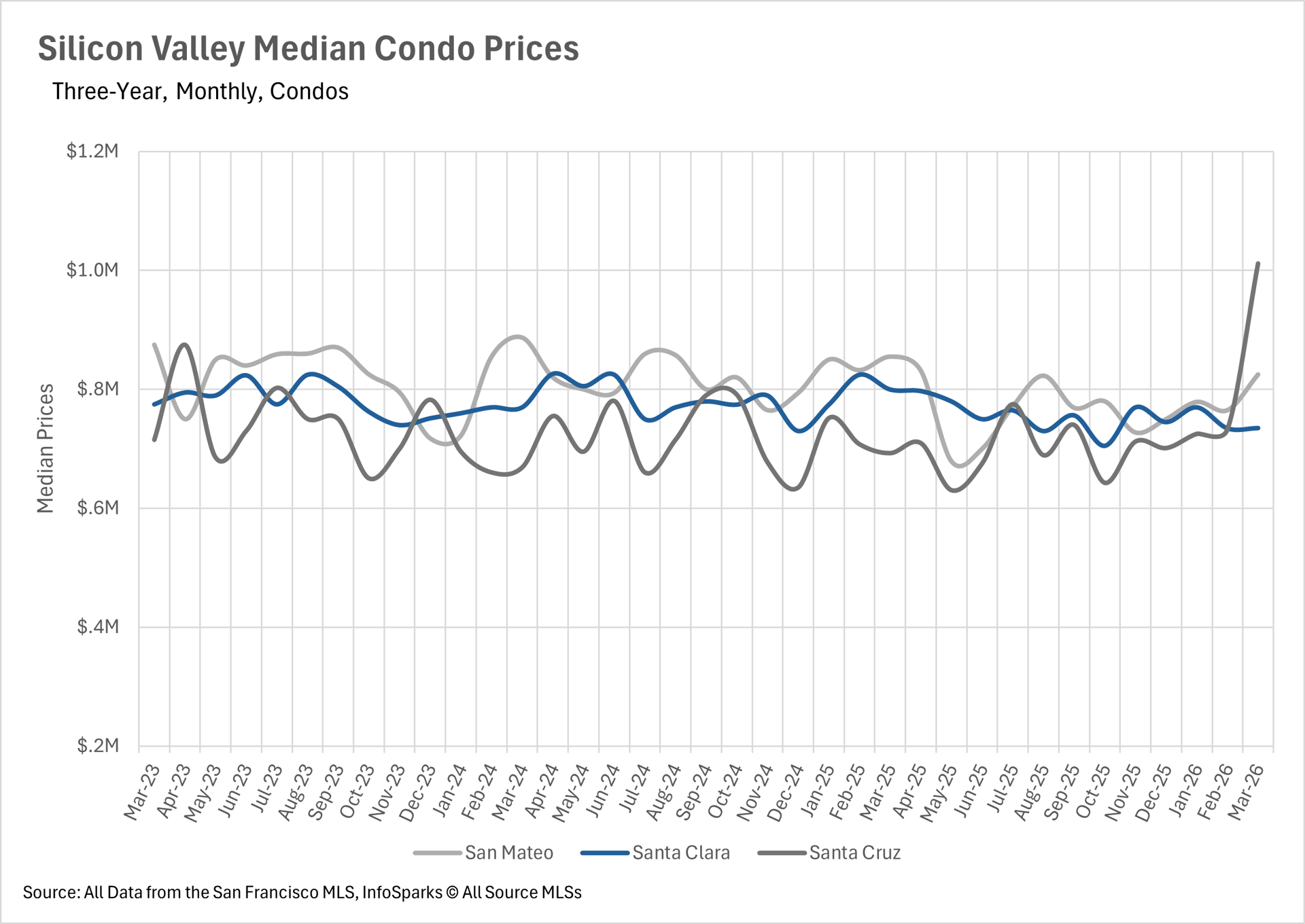
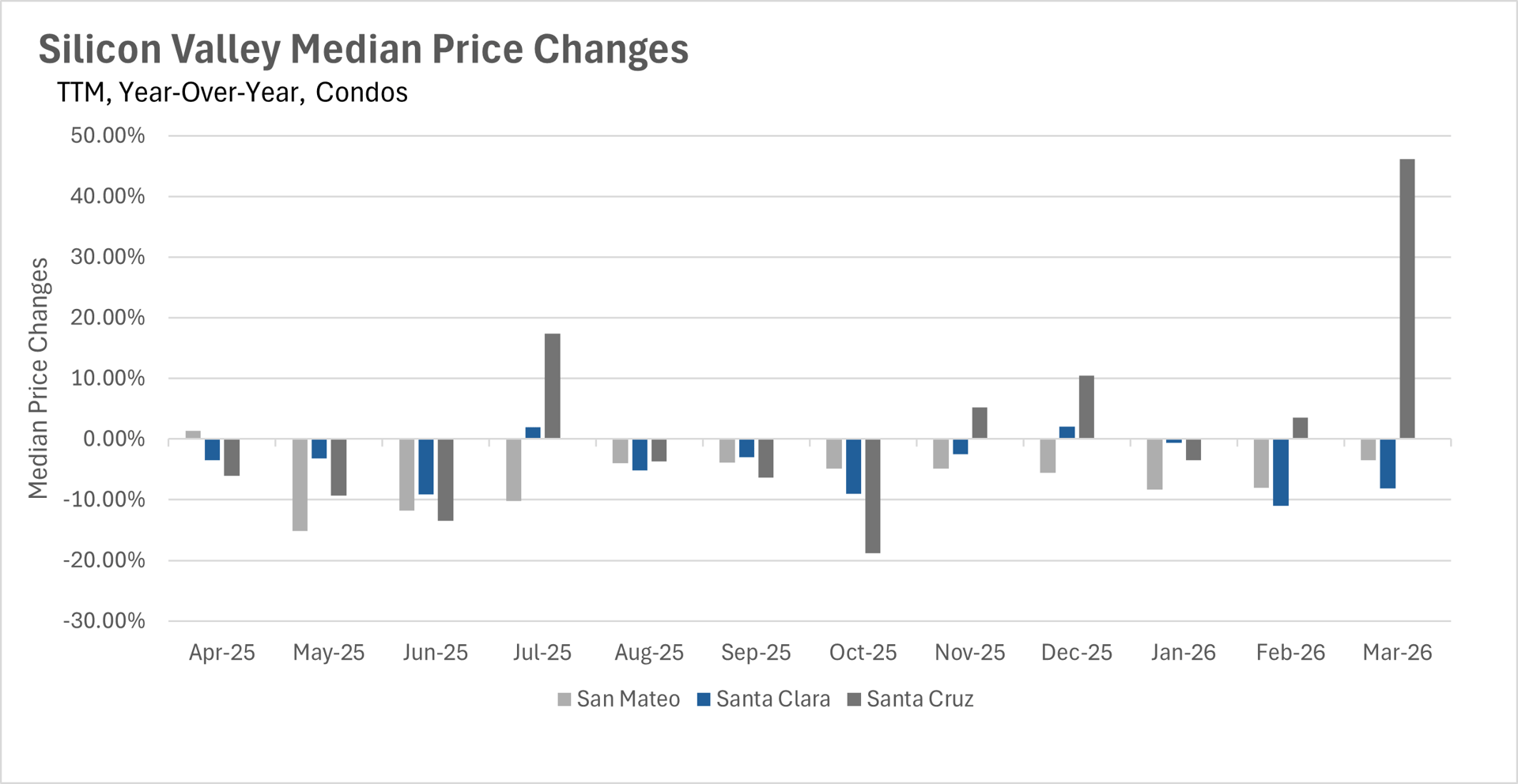
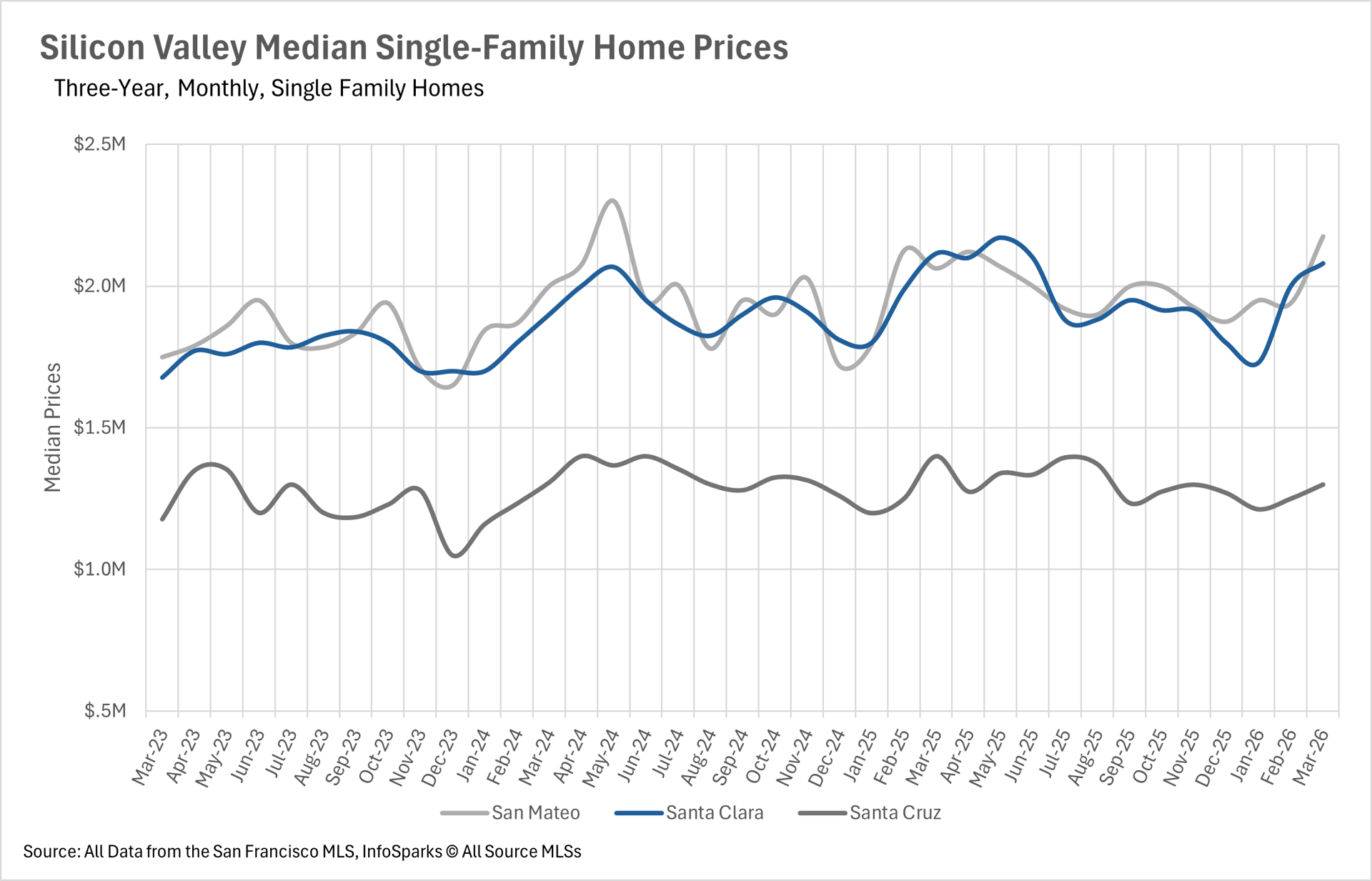
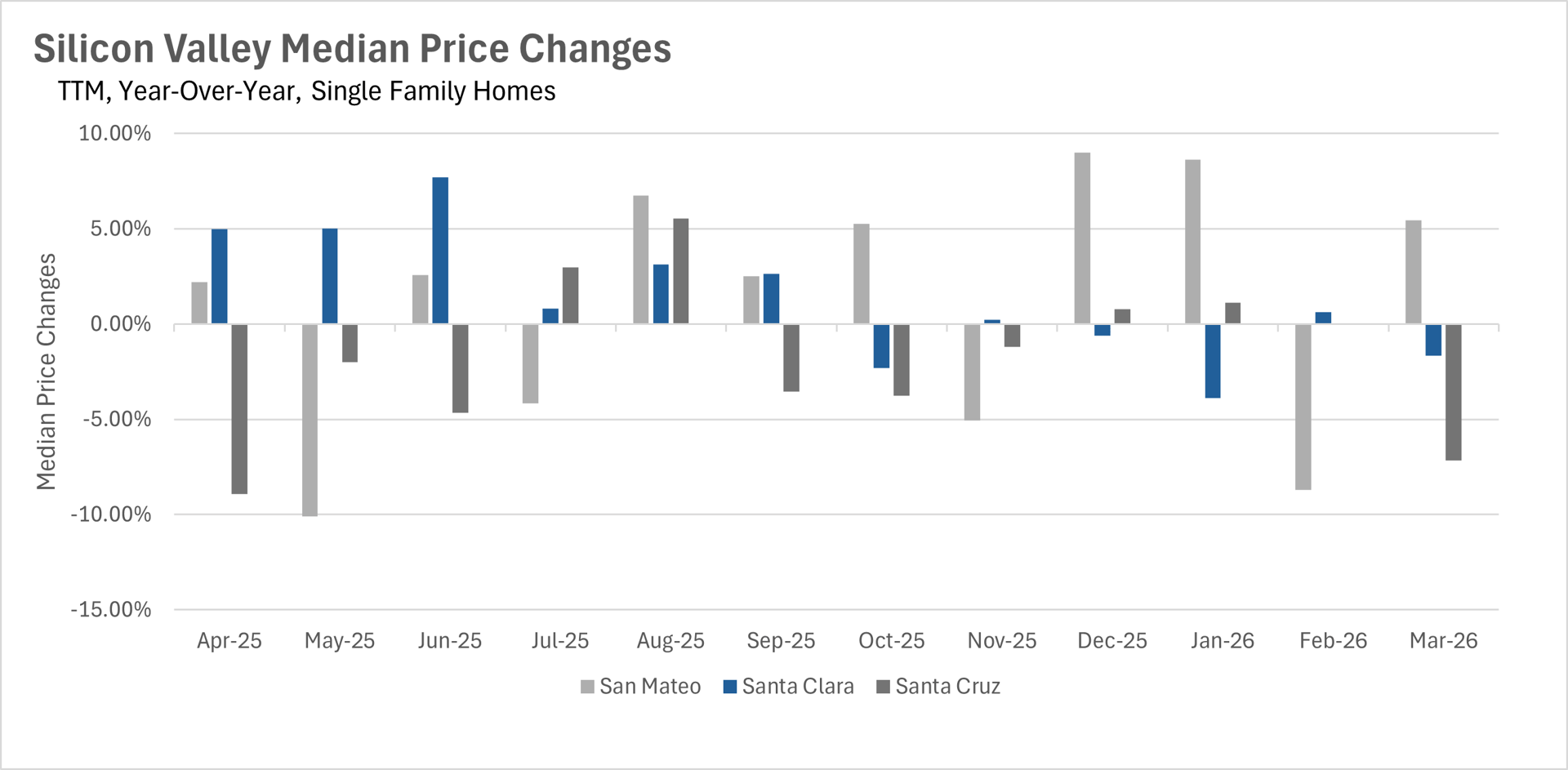
The single-family home market in Silicon Valley showed divergent trends in March as the spring selling season kicked into high gear. San Mateo County posted a solid 5.45% year-over-year increase in median sale price, with the median home selling for $2,175,000. However, Santa Clara County saw a modest 1.65% year-over-year decline, with the median home selling for $2,080,188, while Santa Cruz County experienced a more significant 7.14% drop, with the median home selling for $1,300,000. The condo market presented a wild contrast, with Santa Cruz County condos soaring 46.14% year-over-year to $1,012,000, while San Mateo County condos fell 3.51% to $825,000 and Santa Clara County condos declined 8.13% to $735,000.


Inventory climbs as the spring market heats up

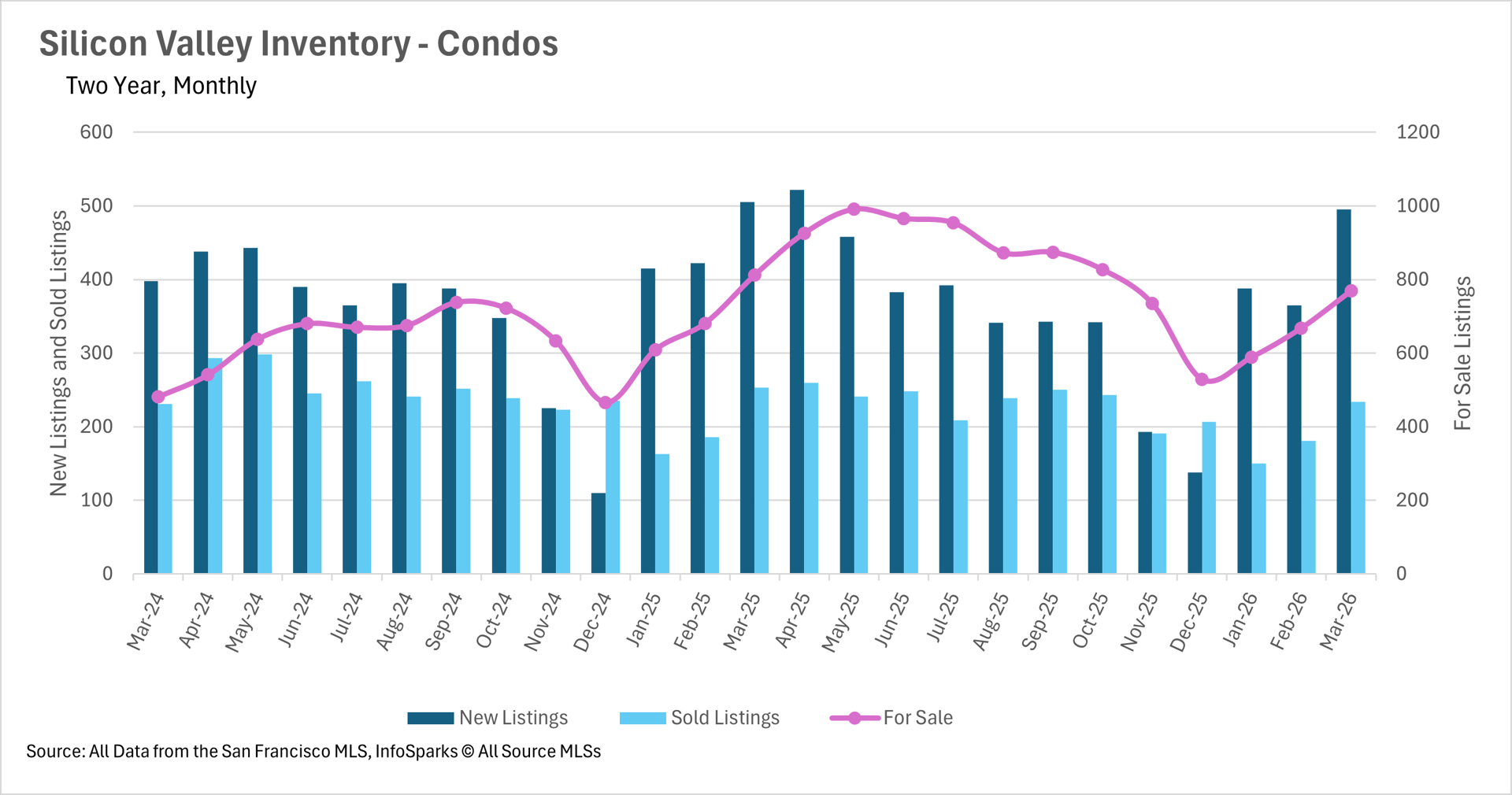
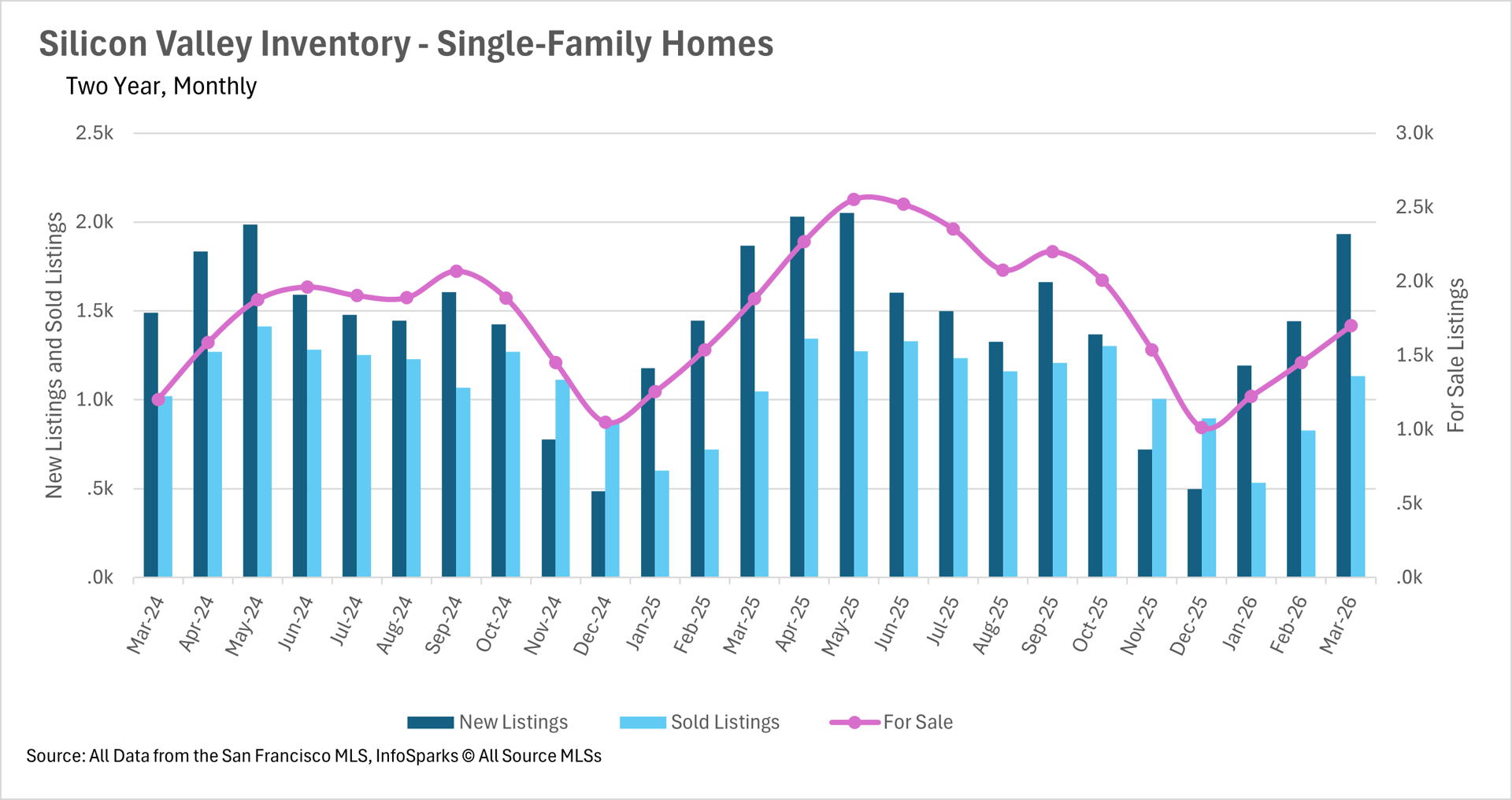
The spring selling season is in full swing, and inventory is responding accordingly. New single-family listings jumped 34.14% month-over-month, and sold listings increased by 37.05%, signaling strong activity on both sides of the market. There are currently 1,699 single-family homes for sale across Silicon Valley, representing a 9.68% year-over-year decline but a healthy 17.09% month-over-month increase. The condo market is also seeing more activity, with 769 condos currently for sale, down just 5.30% year-over-year. While inventory levels remain below where they were last year, the gap is narrowing as more sellers enter the market to take advantage of the traditionally busy spring months.
 

Single-family homes are flying off the shelves

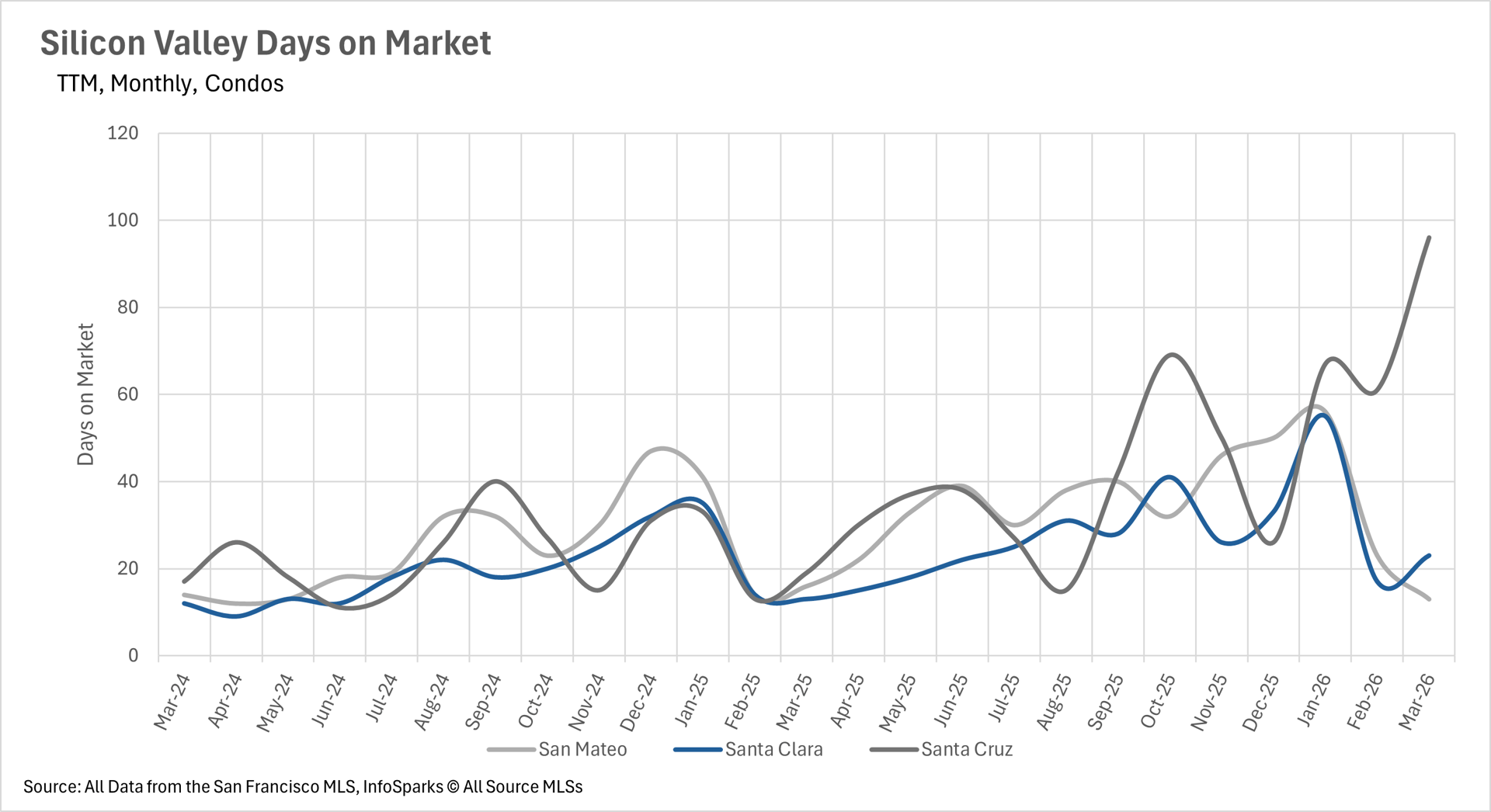
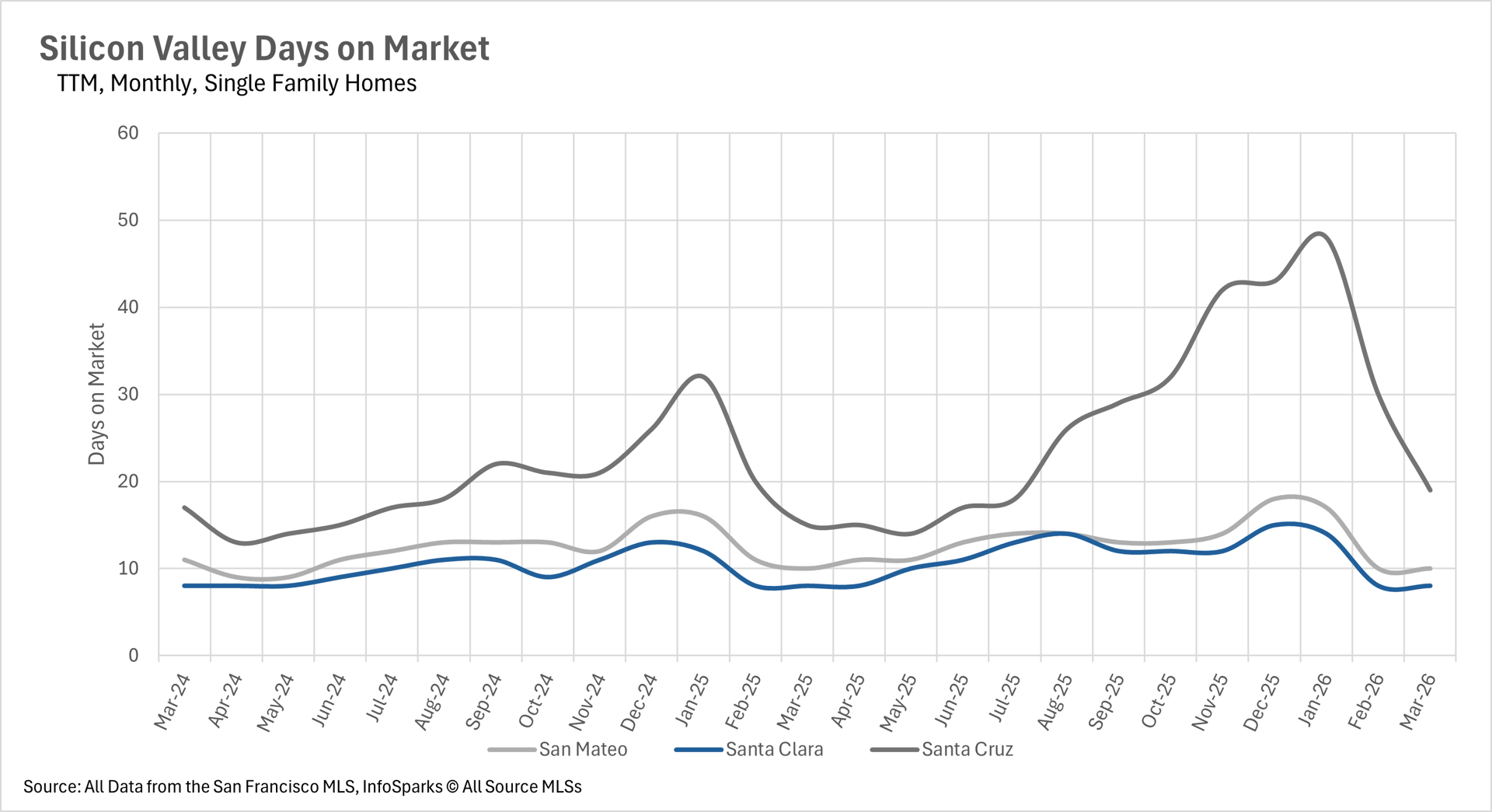
The pace of sales for single-family homes remains blistering across Silicon Valley's core markets. In San Mateo and Santa Clara Counties, the average single-family home is selling in just 10 and 8 days, respectively, unchanged from this time last year. Santa Cruz County homes are taking a bit longer at 19 days on average, though this still represents a 26.67% year-over-year increase. The condo market tells a more complicated story. San Mateo County condos are actually selling faster than last year, with a 18.75% year-over-year decrease in days on market to just 13 days. However, Santa Clara County condos are spending 76.92% more time on the market at 23 days, and Santa Cruz County condos are taking an average of 96 days to sell, a dramatic 405.26% increase compared to March 2025!
 

The tale of two markets continues in the East Bay

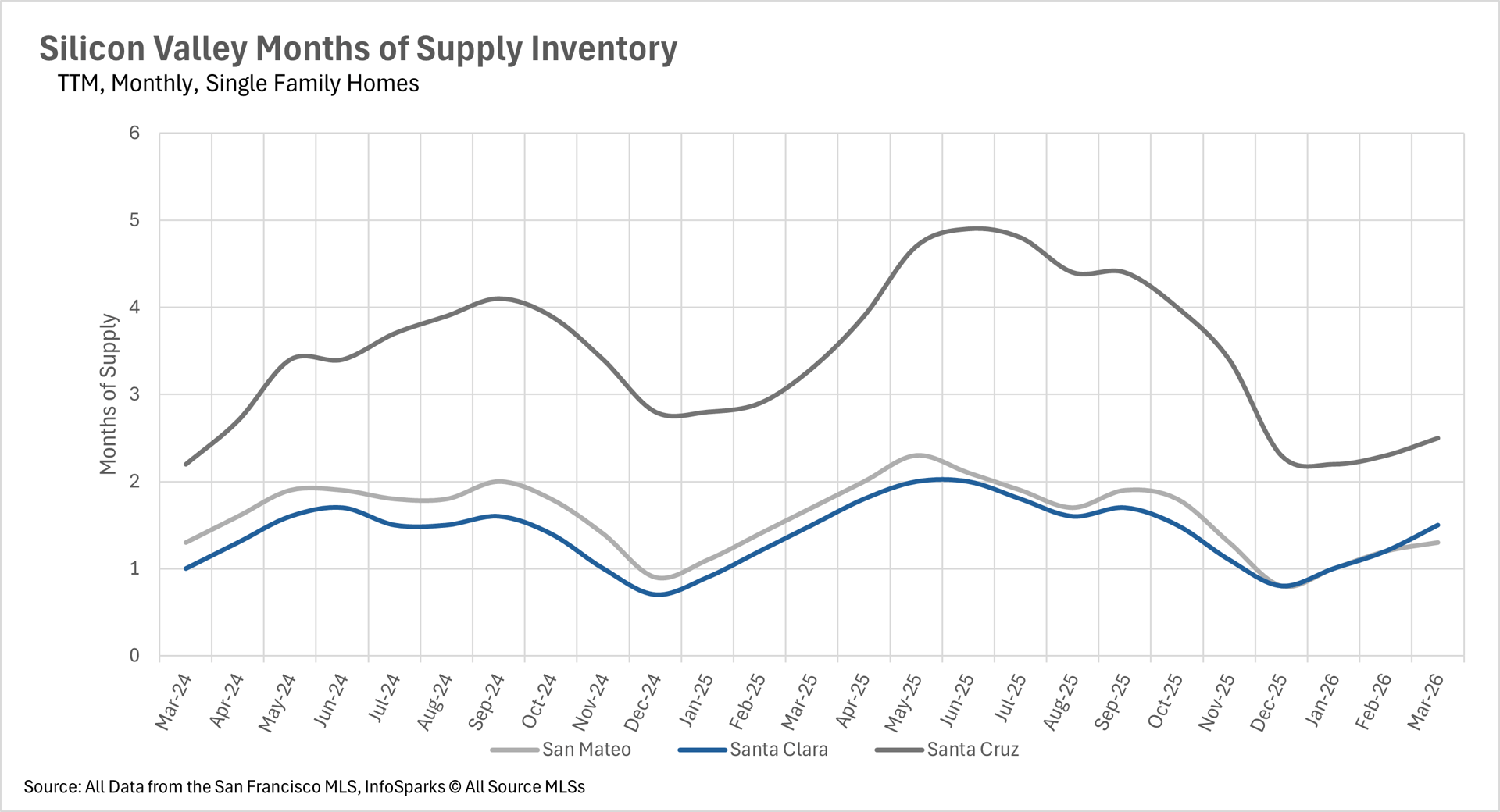
When determining whether a market is a buyers' market or a sellers' market, we look to the Months of Supply Inventory (MSI) metric. The state of California has historically averaged around three months of MSI, so any area with at or around three months of MSI is considered a balanced market. Any market that has lower than three months of MSI is considered a seller's market, whereas markets with more than three months of MSI are considered buyers' markets.
 
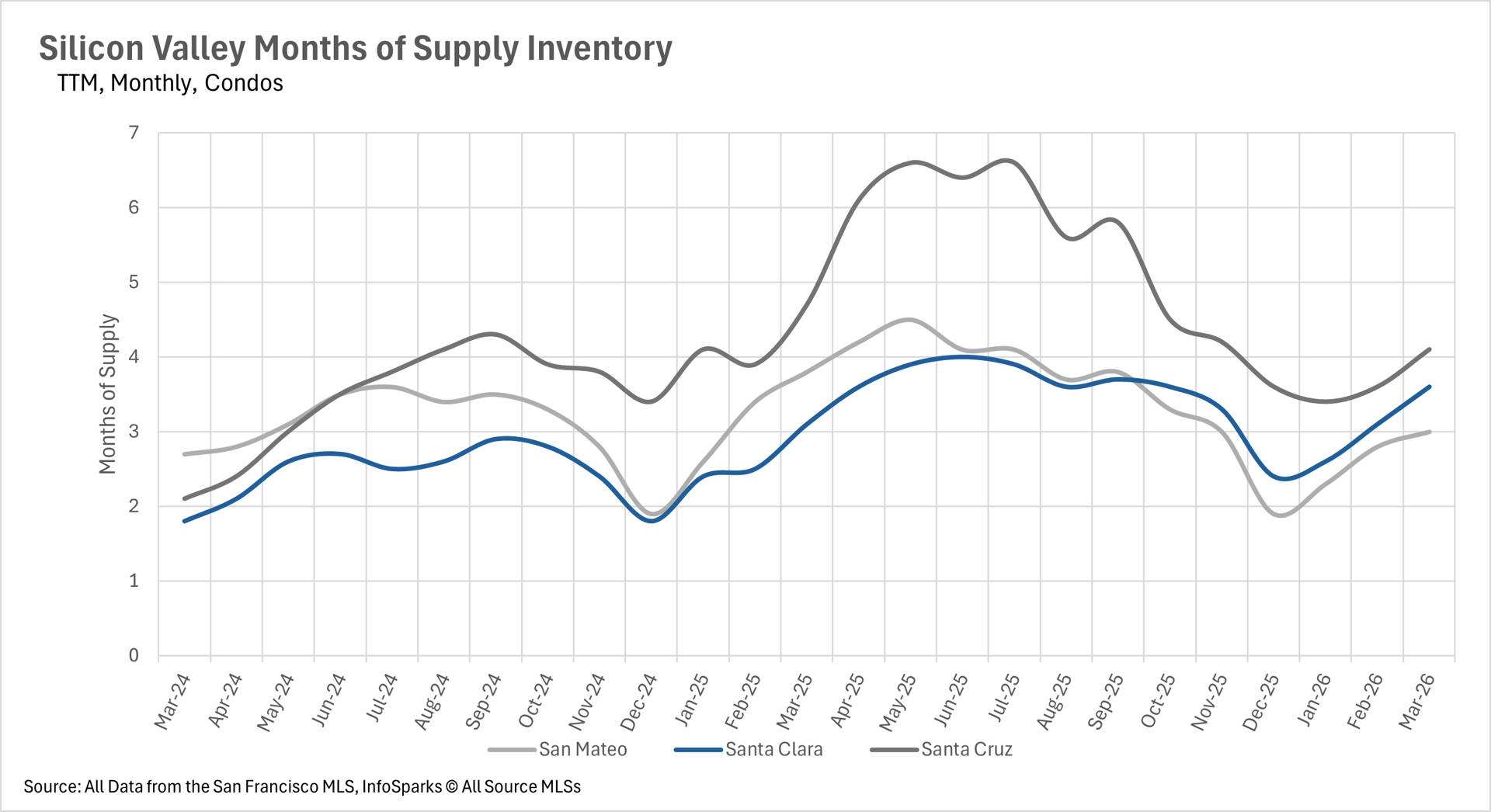
The single-family home market remains firmly in seller's market territory across Silicon Valley. San Mateo County has just 1.3 months of supply on the market, representing a 23.53% year-over-year decline. Santa Clara County has 1.5 months of supply, unchanged from last year, while Santa Cruz County has 2.5 months of supply, down 24.24% from March 2025. The condo market offers more options for buyers, with San Mateo County at 3 months of supply, Santa Clara County at 3.6 months, and Santa Cruz County at 4.1 months. With single-family inventory remaining tight and homes selling quickly, buyers in that segment should be prepared for competition, while condo buyers may find a bit more breathing room to make their decisions!
 

Local Lowdown Data


Leave It to Us — We’ve Got This

We know that real estate transactions can be complex, but with our expertise, they don’t have to be stressful. Our team is dedicated to handling every aspect of your Mid-Peninsula real estate needs with the utmost care and professionalism. From the initial consultation to the closing, we manage all the details so you can focus on your future. Whatever challenges arise, trust that we’ve got this — your success is our top priority.