October Mid-Peninsula Real Estate Update
Market Update David Weil October 20, 2026
Market Update David Weil October 20, 2026
Quick Take:
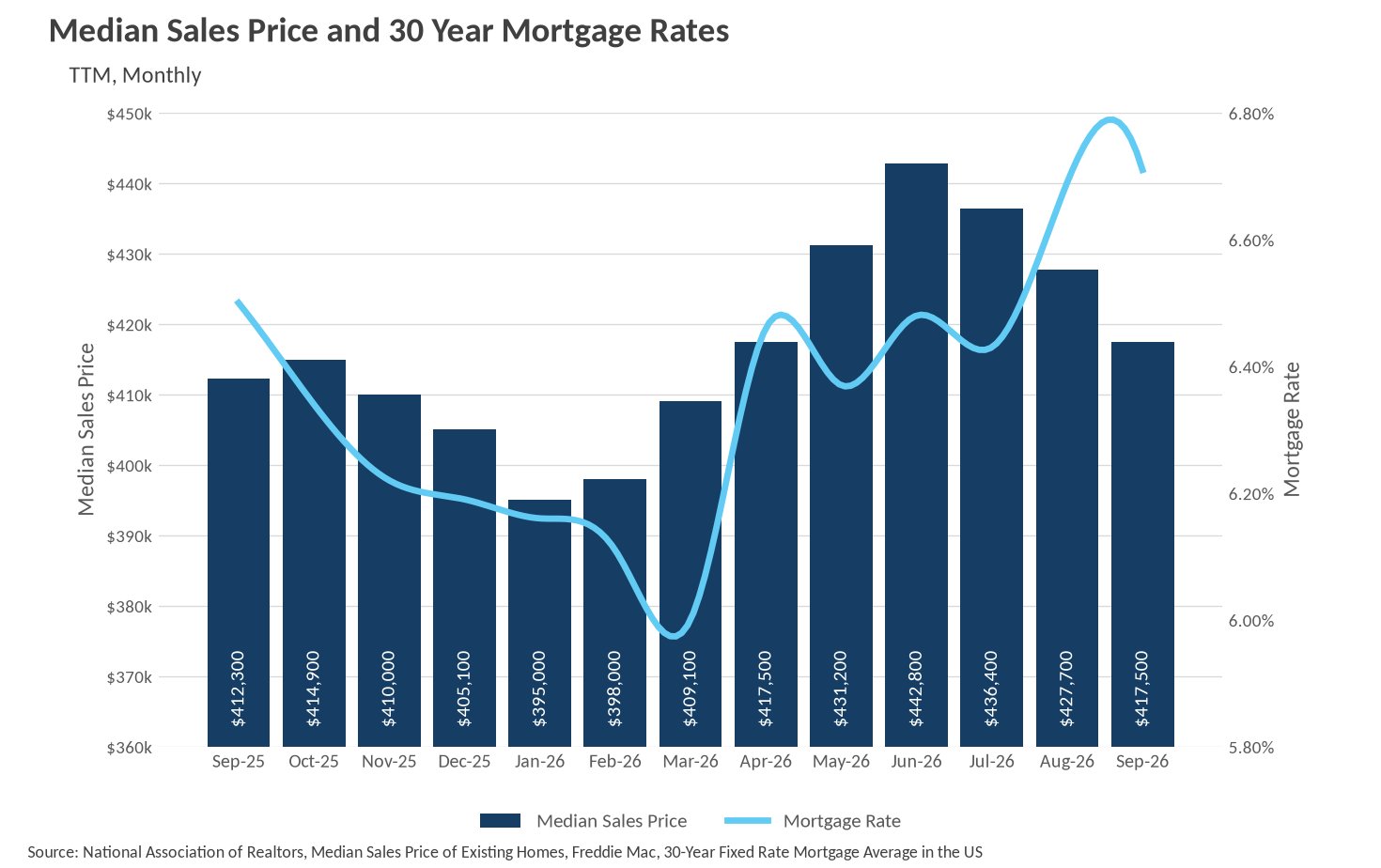
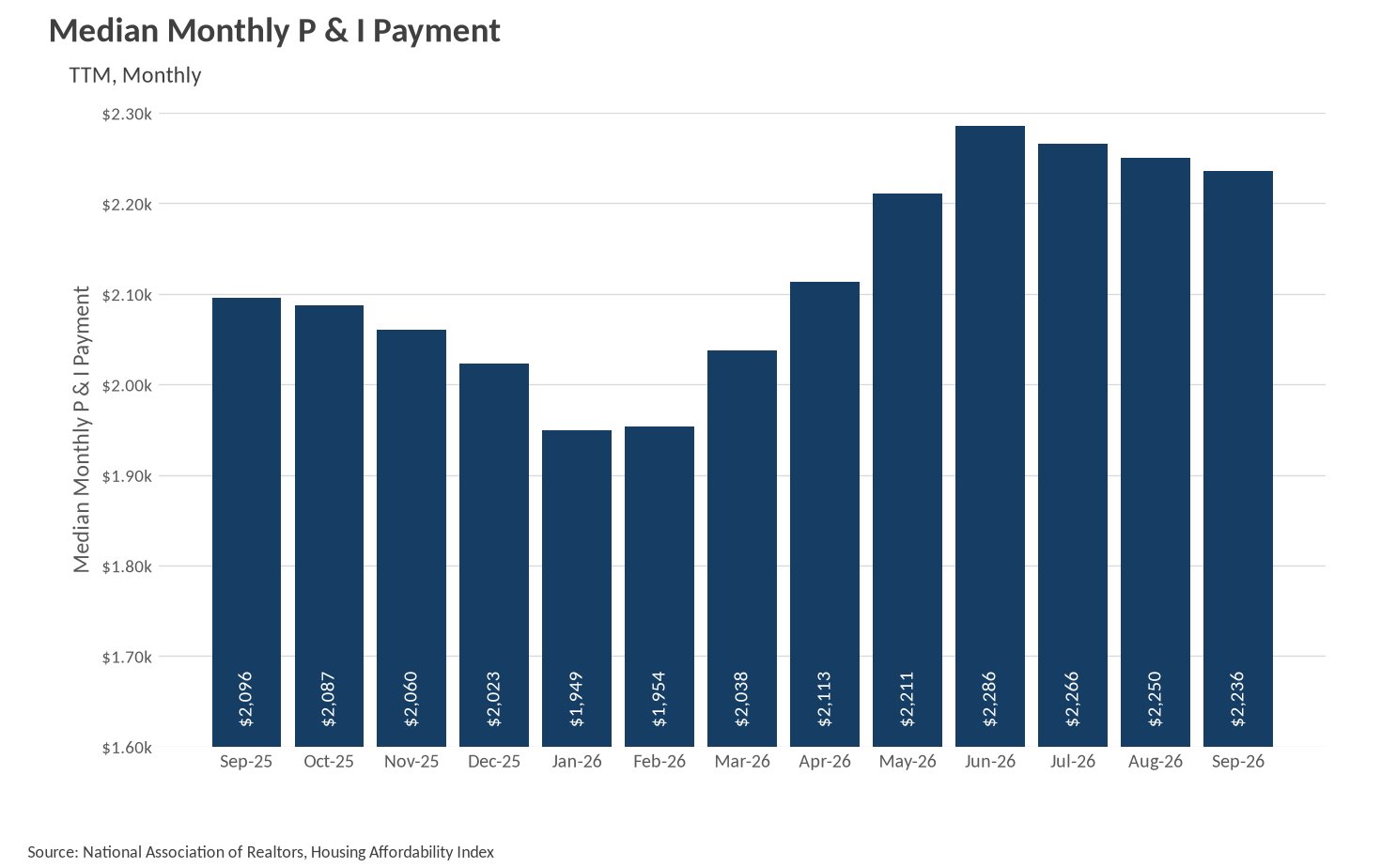
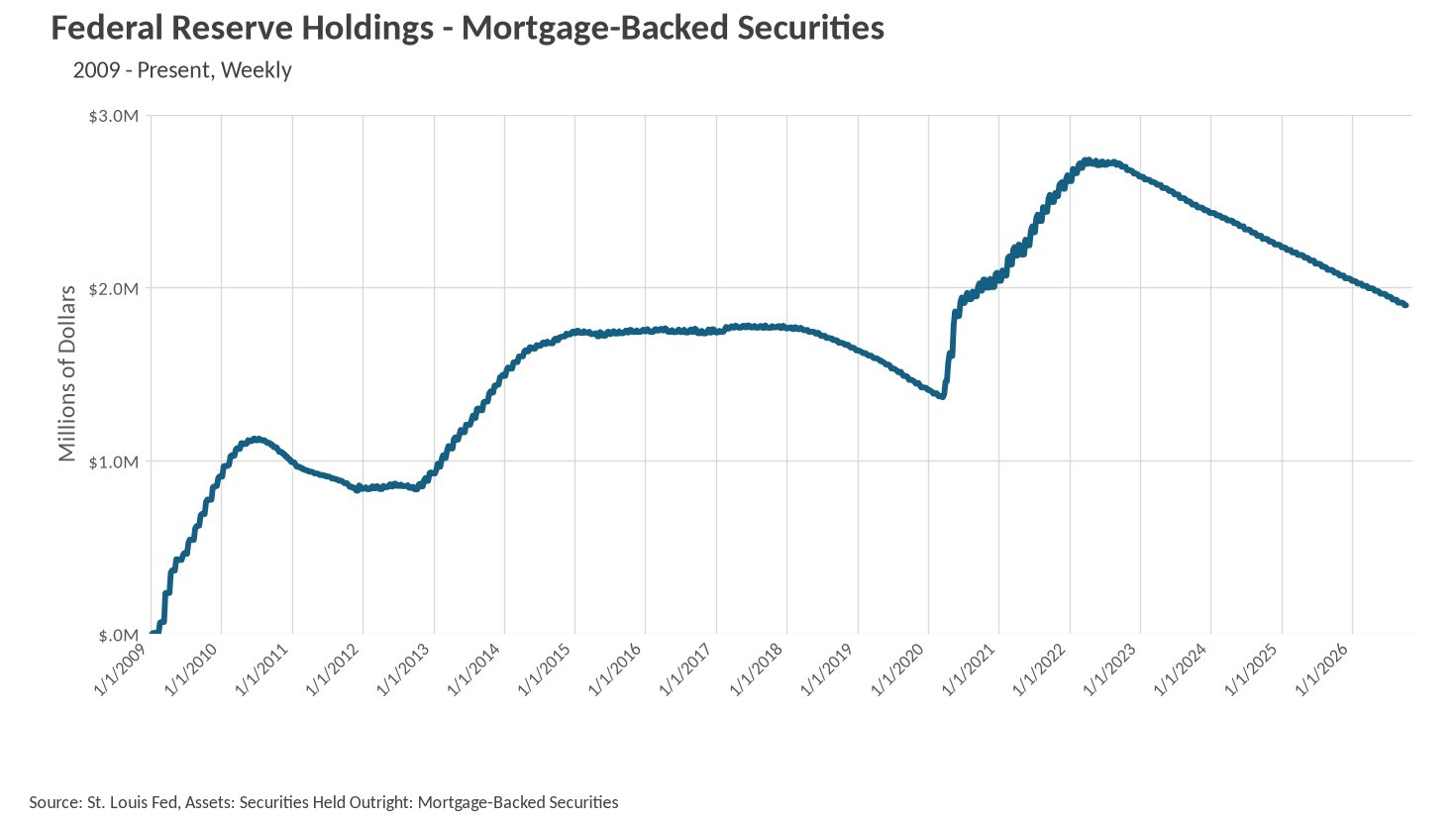
After a five-month run that carried the median sale price from $395,000 in January to a peak of $442,800 in June, prices have now retreated for three consecutive months. In September, the median home sold for $417,500, a 2.39% decline from August's $427,700 and a 5.71% drop from the June high. The one silver lining is that prices are still holding above last year's level, up 1.26% from the $412,300 median we saw in September 2025. Some of this seasonal softening is normal, as the back half of the year typically brings cooler pricing, but the affordability story is doing real damage here. Mortgage rates climbed to 6.71% in September and then jumped sharply to 7.28% in October, a full 128 basis points above the 6.00% low we saw back in March. Even with prices falling, the median monthly P&I payment sits at $2,236, which is 6.68% higher than the $2,096 buyers were paying a year ago and nearly $300 above January's $1,949. In other words, lower prices have not translated into lower payments, and with rates now pushing above 7%, the affordability squeeze is likely to intensify before it eases. Worth watching on that front: the Federal Reserve has continued to let its mortgage-backed securities holdings run off, with the balance falling from roughly $2.04 trillion in January to about $1.90 trillion in October, which removes a meaningful source of demand from the mortgage market.
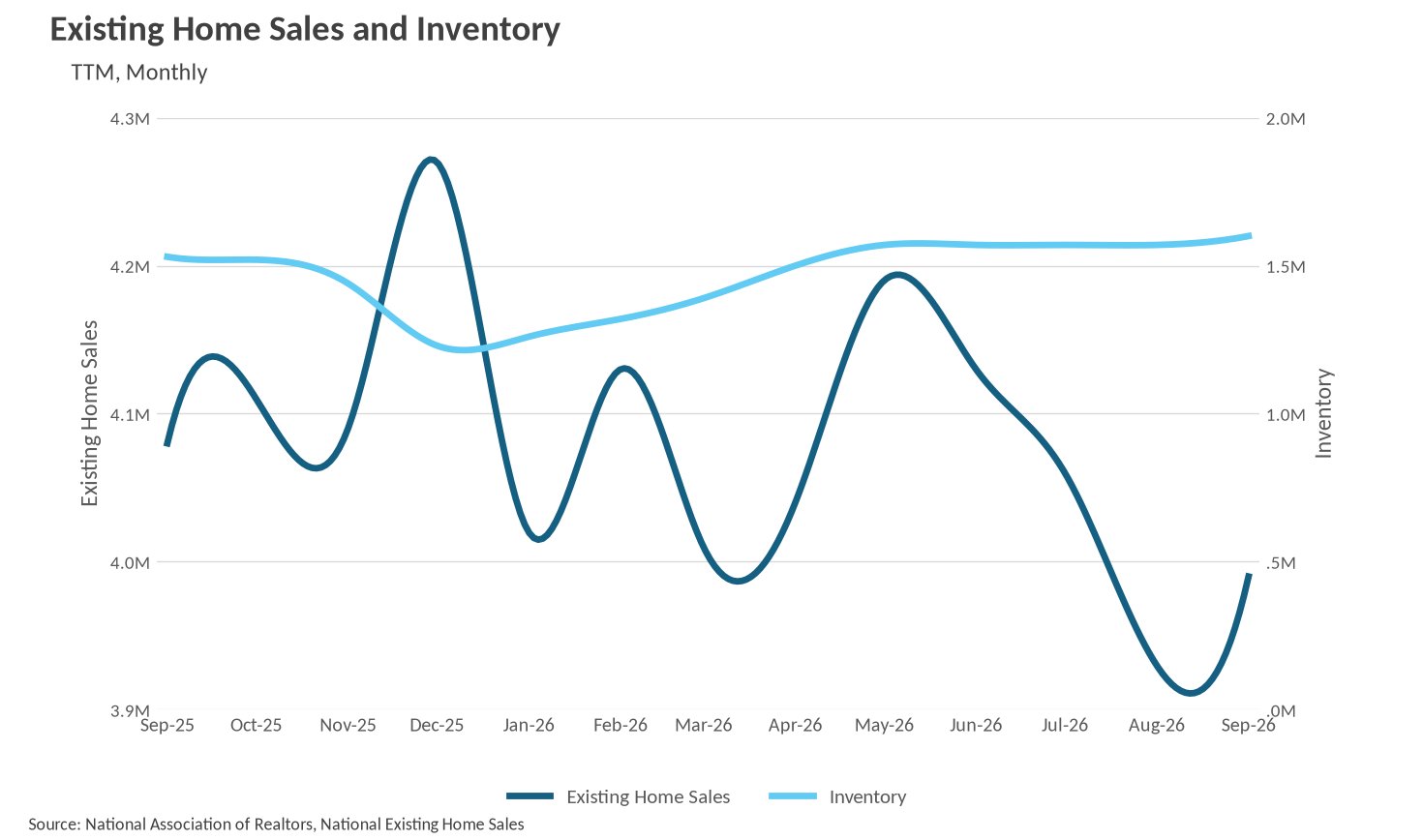
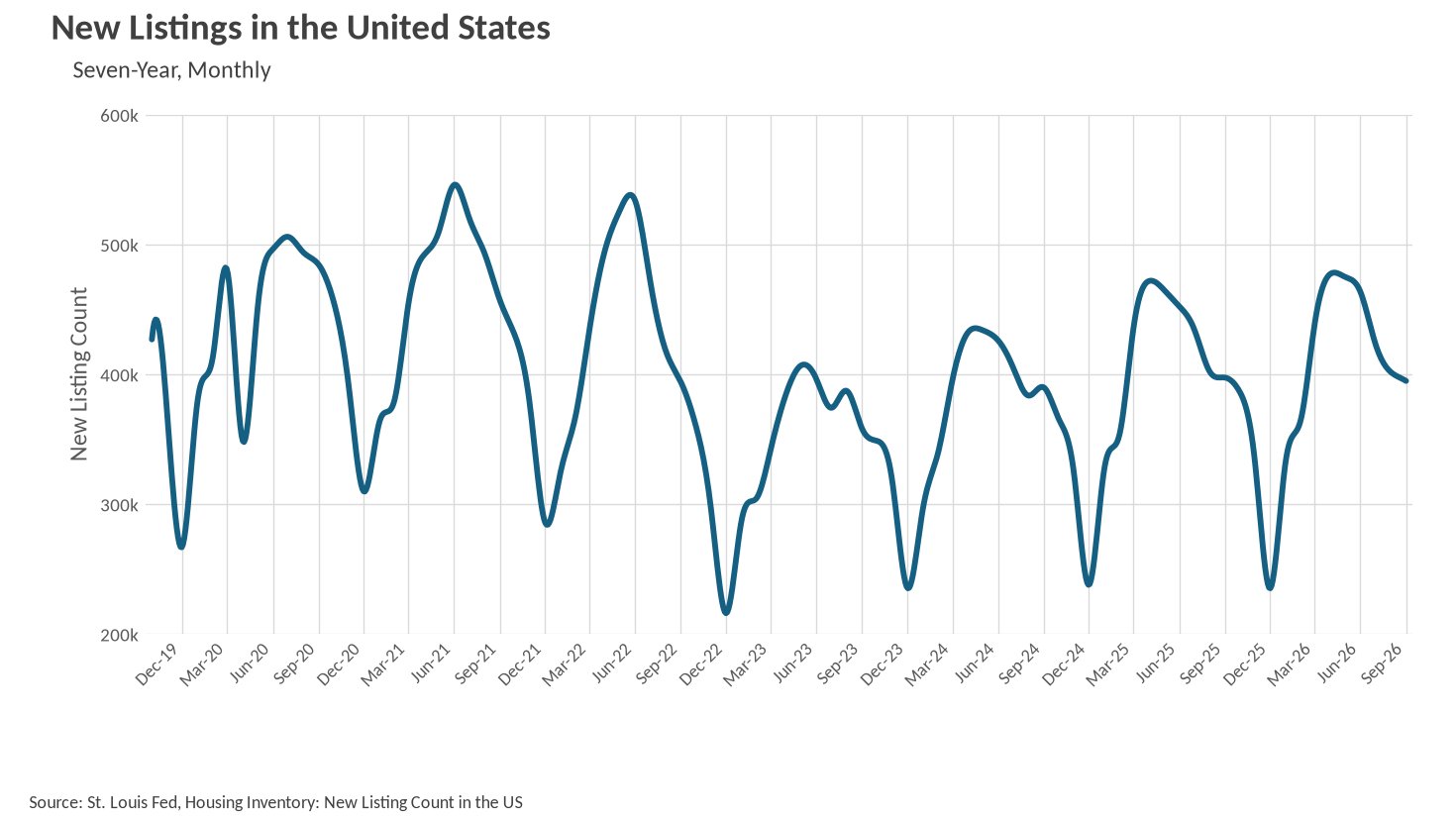
For four straight months, from May through August, inventory sat frozen at 1,570,000 homes. That changed in September, when inventory climbed to 1,600,000, a 1.91% month-over-month increase and a 4.58% gain over the 1,530,000 homes available at this time last year. This is the highest inventory level we have seen in well over a year, and notably it is rising at a point in the calendar when supply usually begins to contract. The new listings data tells a slightly different story, though. September brought 394,830 new listings to market, down 1.72% from August and down 0.65% from the 397,428 we saw in September 2025. So the inventory build is not coming from a flood of new sellers. Instead, it reflects homes sitting on the market longer and failing to clear at current prices. That is a meaningful distinction, because it suggests the supply increase is a demand problem rather than a supply surge, and it helps explain why prices have been drifting lower since June.
Existing home sales came in at 3,990,000 in September, a 1.53% increase from August's 3,930,000, which was the weakest reading in this entire data series. That modest uptick is welcome, but the year-over-year comparison is less encouraging: sales are down 2.21% from the 4,080,000 pace recorded in September 2025. The trend over the past several months has been clearly downward, with sales falling from 4,190,000 in May to 4,130,000 in June, 4,060,000 in July, and then 3,930,000 in August before September's small rebound. The timing lines up almost perfectly with the climb in mortgage rates, which bottomed at 6.00% in March and have risen in nearly every month since. Buyers who were energized by cheaper financing in the spring are now facing a very different math problem. With October rates at 7.28%, it is difficult to build a case for a meaningful rebound in transaction volume in the near term, though lower prices combined with the widest selection of homes in more than a year could tempt patient buyers who have been waiting on the sidelines.
When determining whether a market is a buyers’ market or a sellers’ market, we look to the Months of Supply Inventory (MSI) metric. The state of California has historically averaged around three months of MSI, so any area with at or around three months of MSI is considered a balanced market. Any market that has lower than three months of MSI is considered a seller’s market, whereas markets with more than three months of MSI are considered buyers’ markets.
Nationally, the math now points squarely toward a buyers' market. With 1,600,000 homes available in September against an annualized sales pace of 3,990,000, the national market is carrying roughly 4.8 months of supply, comfortably above the three-month balance point and up from about 4.5 months at this time last year. Inventory is growing, sales are running below last year's pace, and prices have fallen three months in a row, which is exactly the combination you would expect in a market where buyers hold the leverage. The caveat, of course, is that having leverage and being able to use it are two different things. With rates at 7.28% in October and the median P&I payment nearly 7% higher than a year ago, many buyers simply cannot act on the discounts now available to them. Sellers, for their part, should expect longer marketing times and should price realistically rather than anchoring to June's peak. As always, real estate is a highly localized asset, which is why you should check out what's going on in your local market below in the Local Lowdown!
Quick Take:
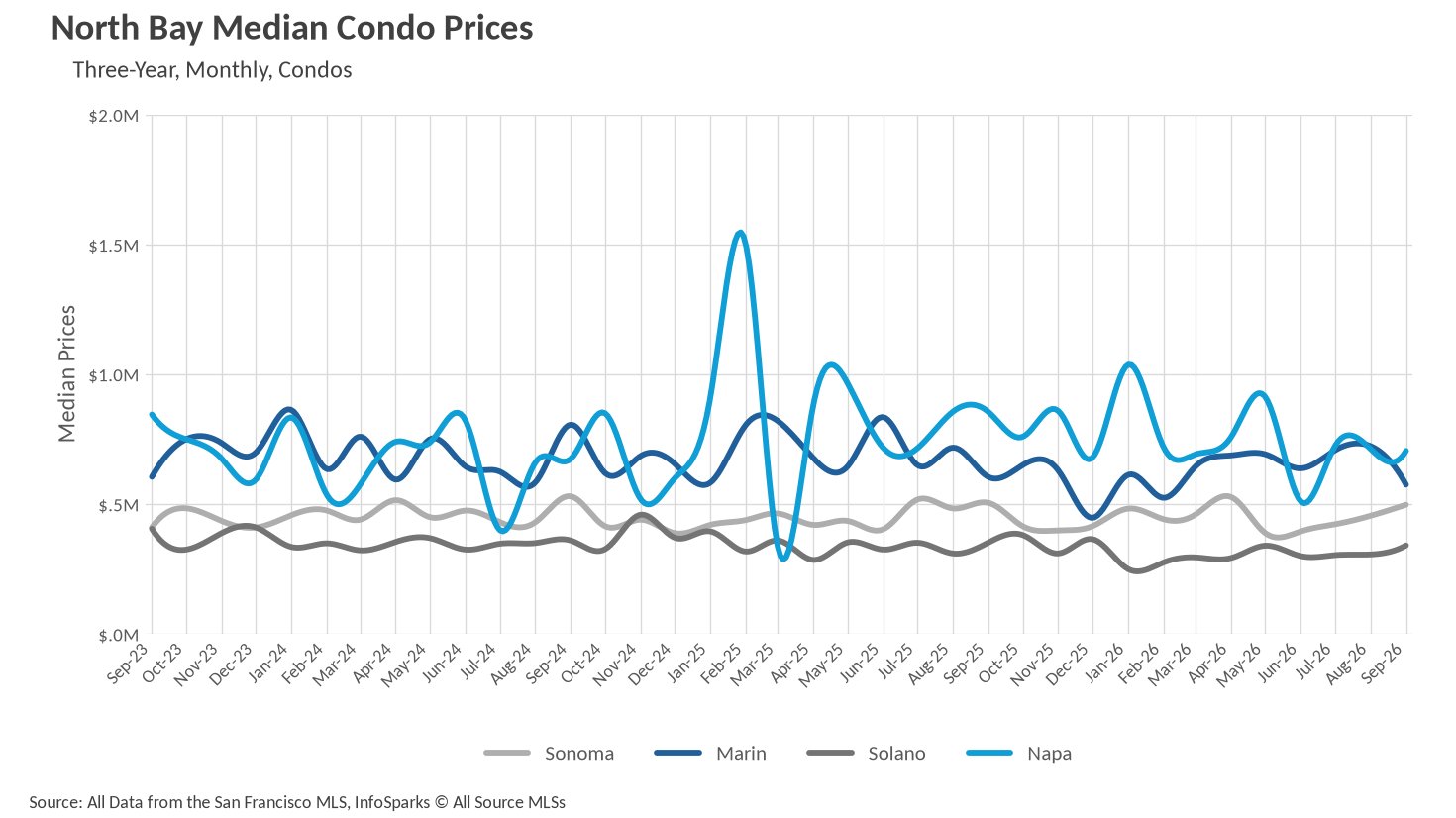
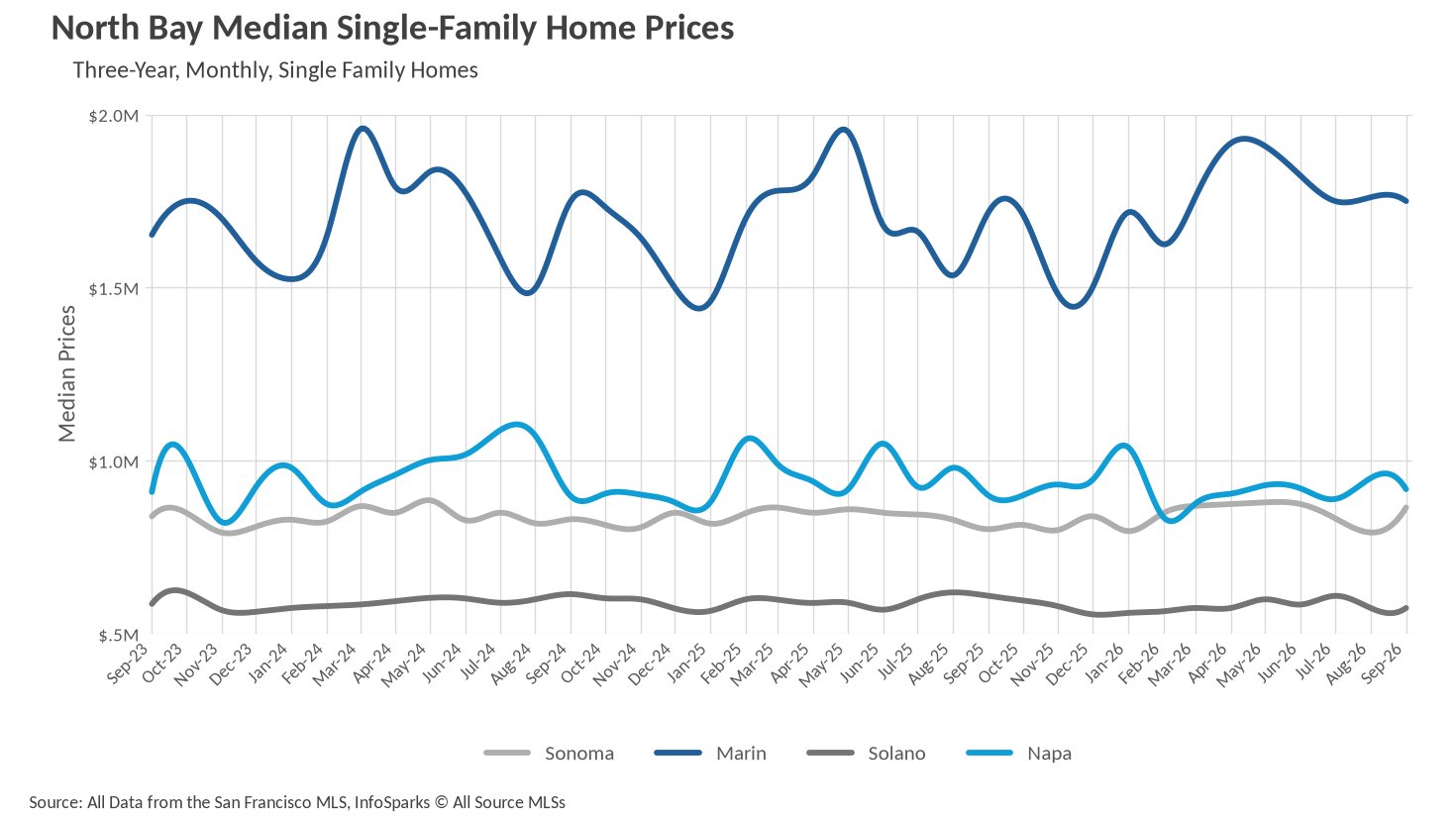
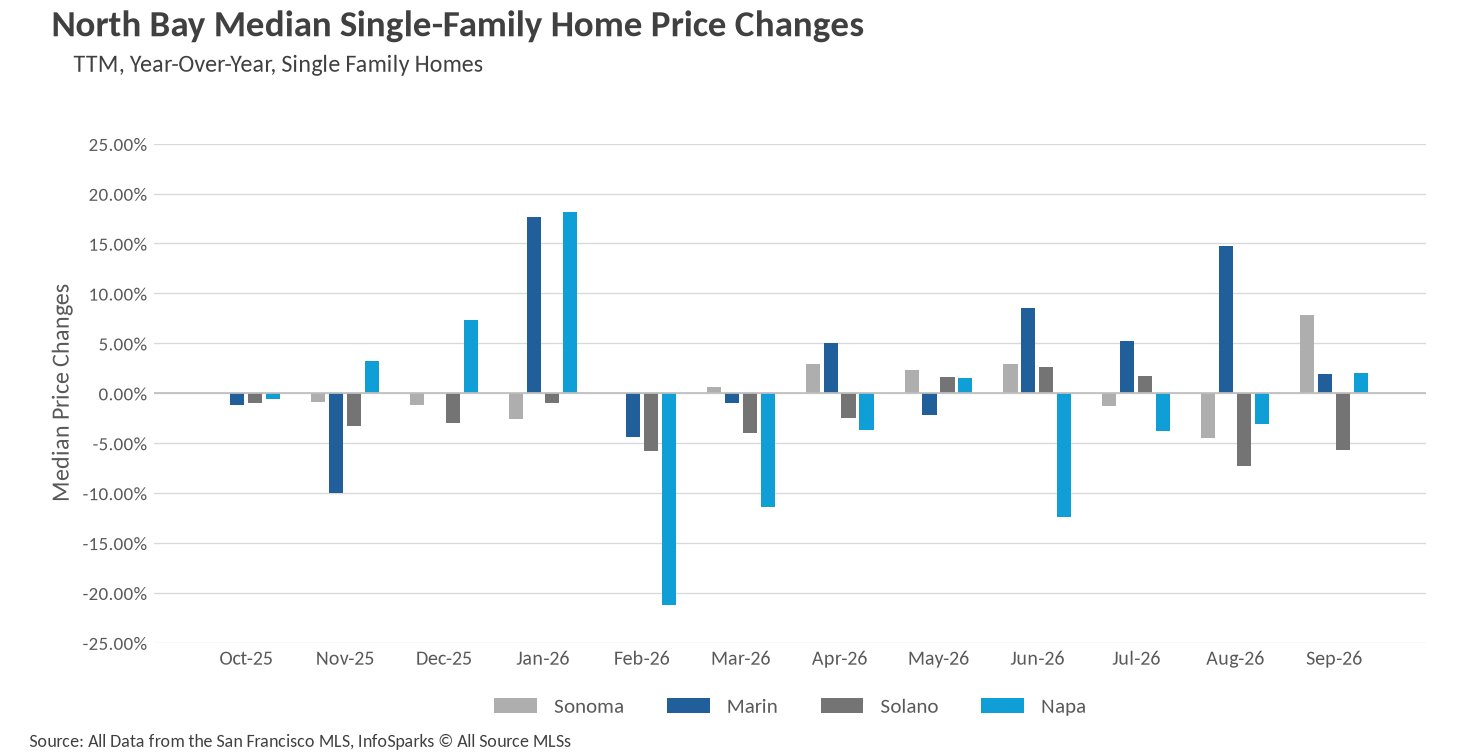
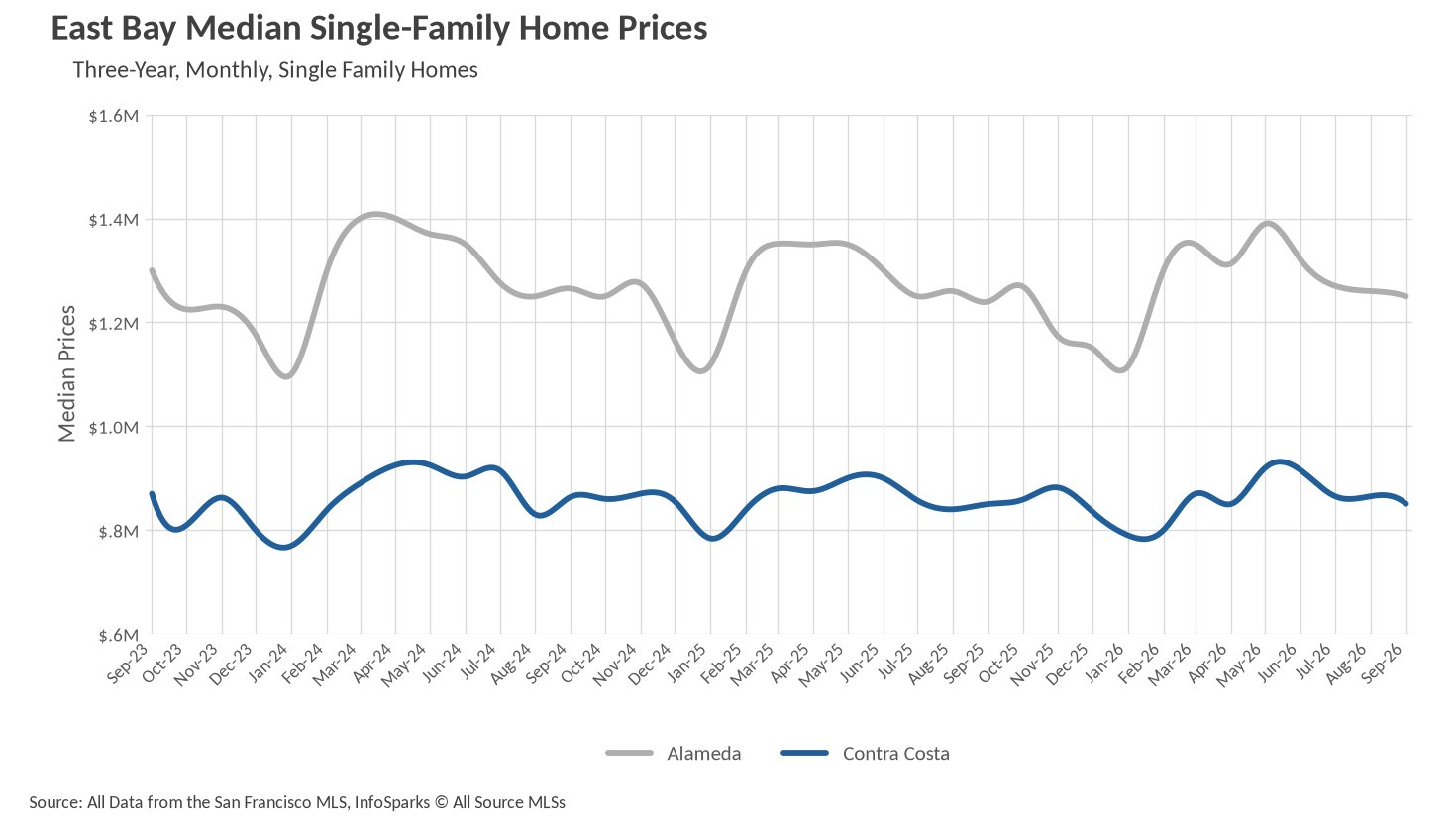
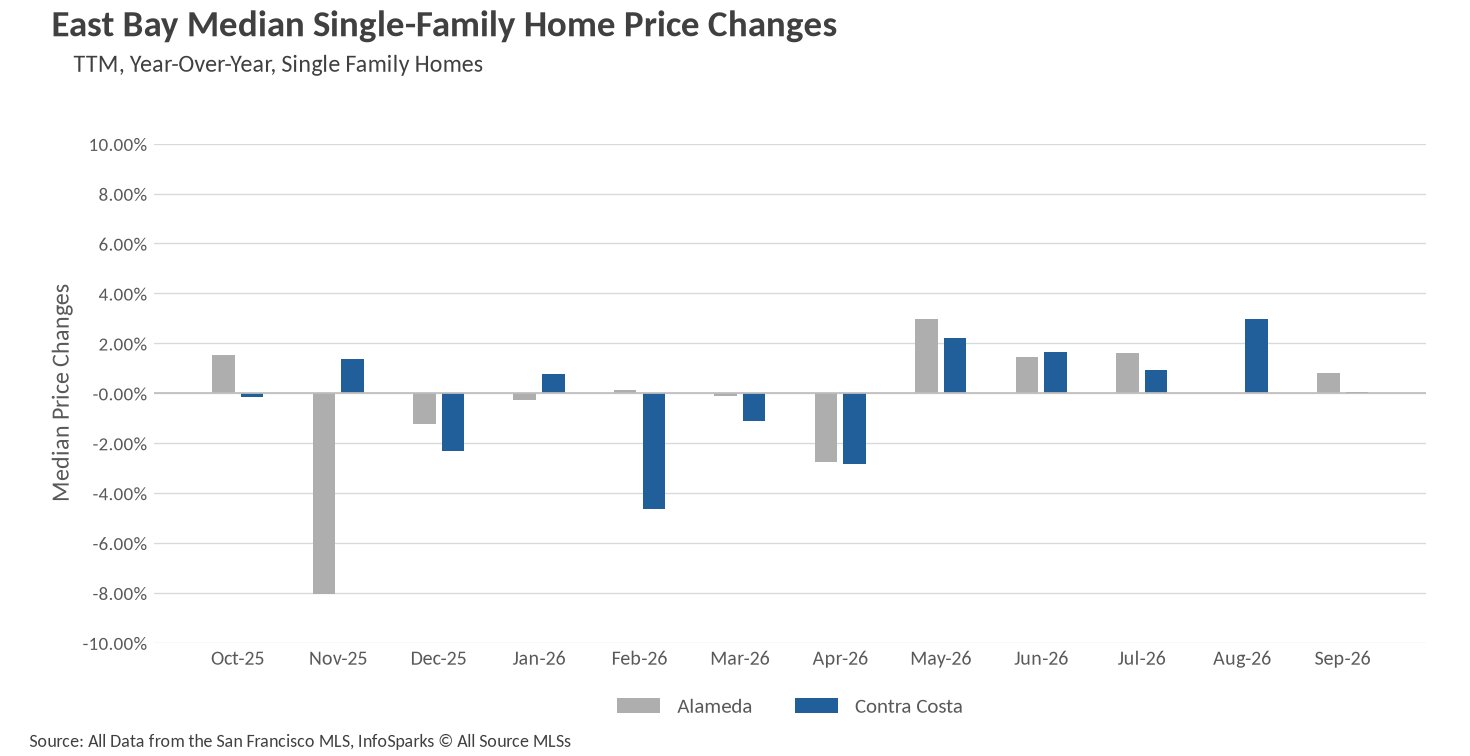
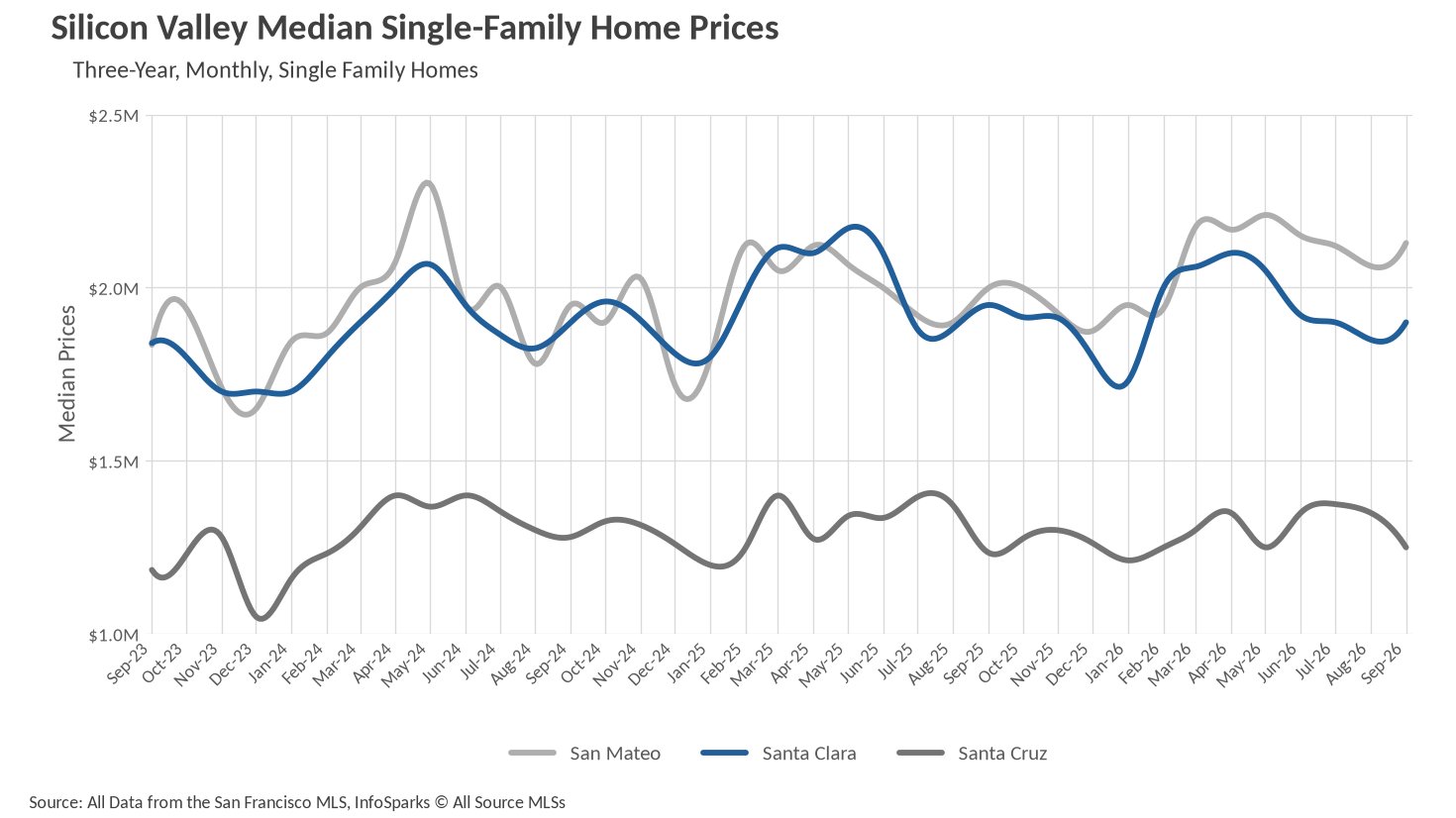
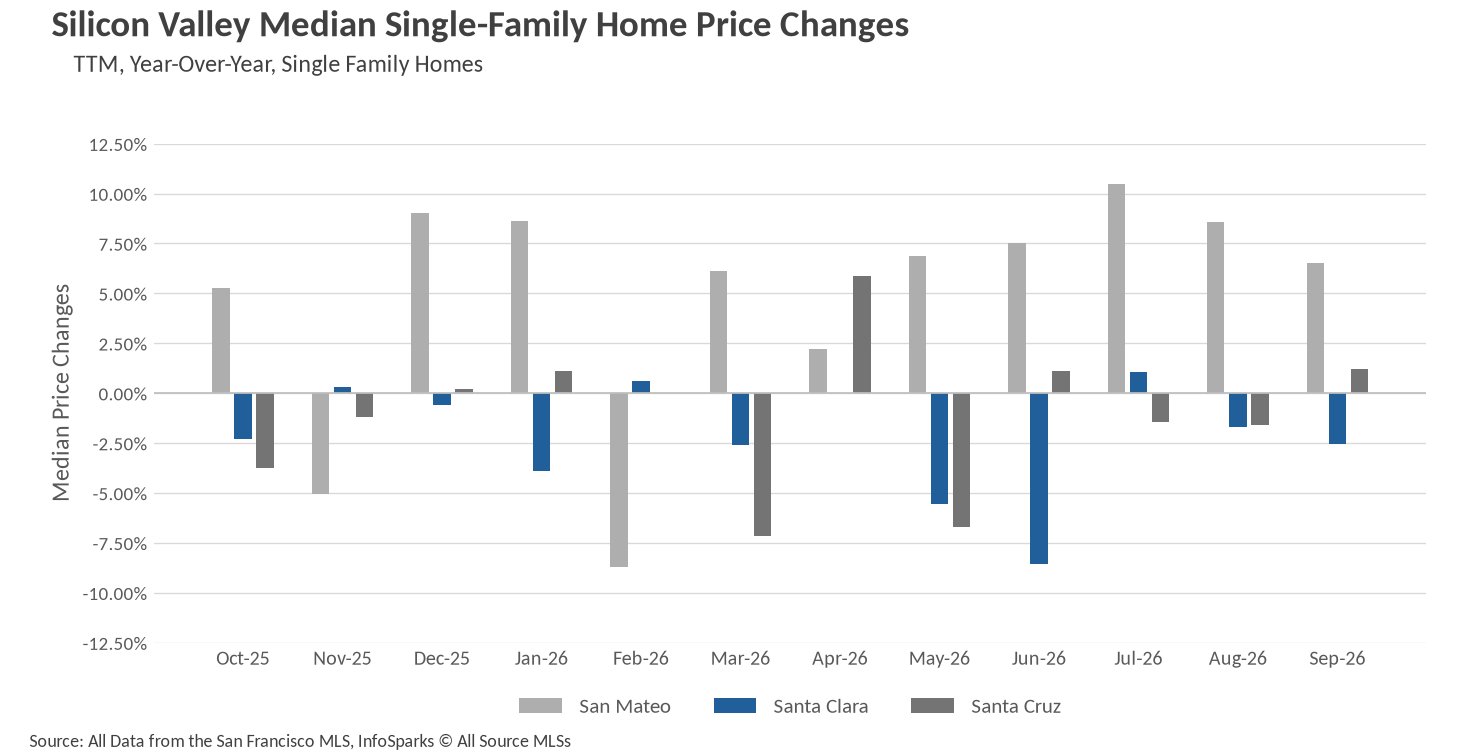
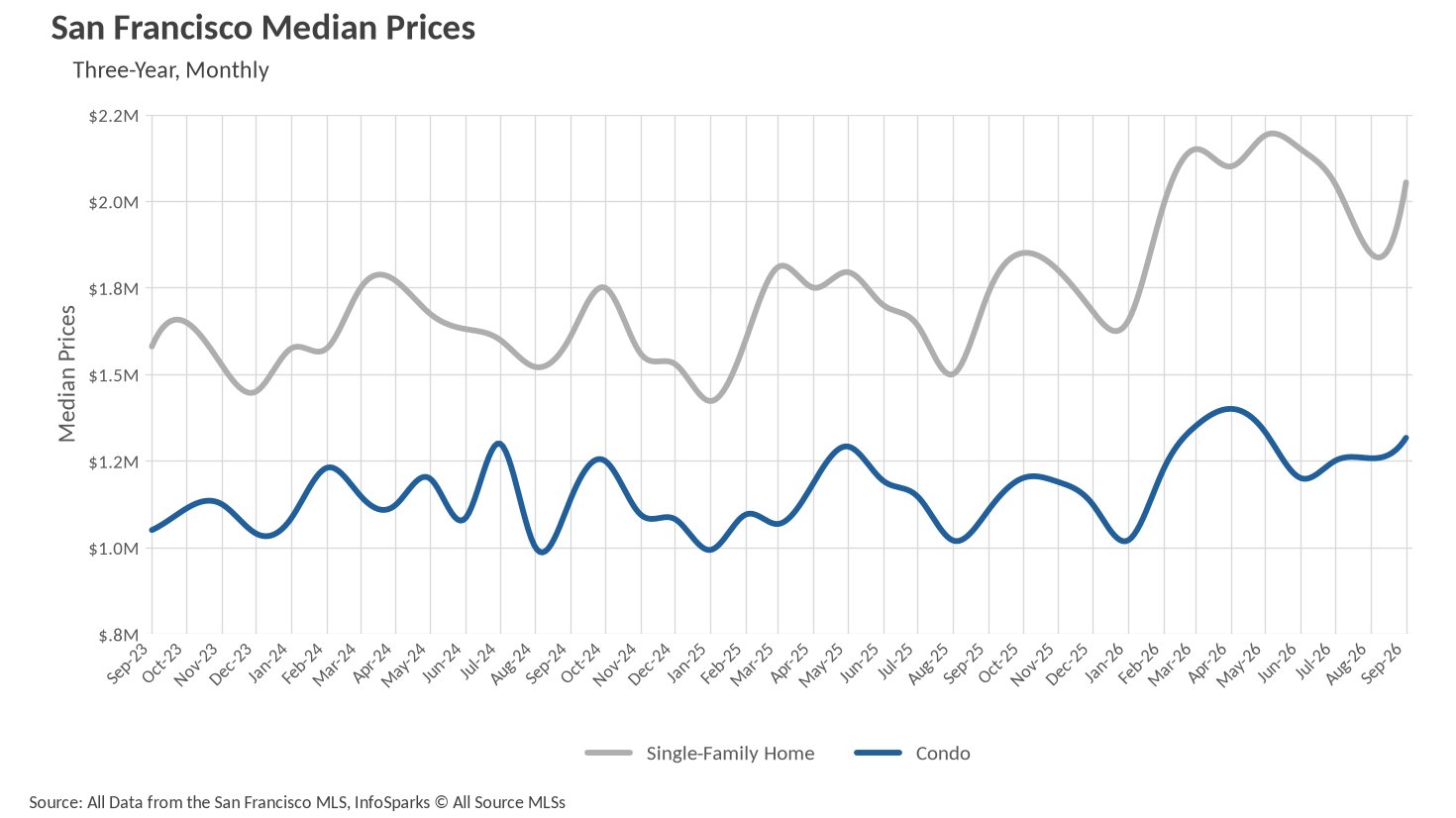
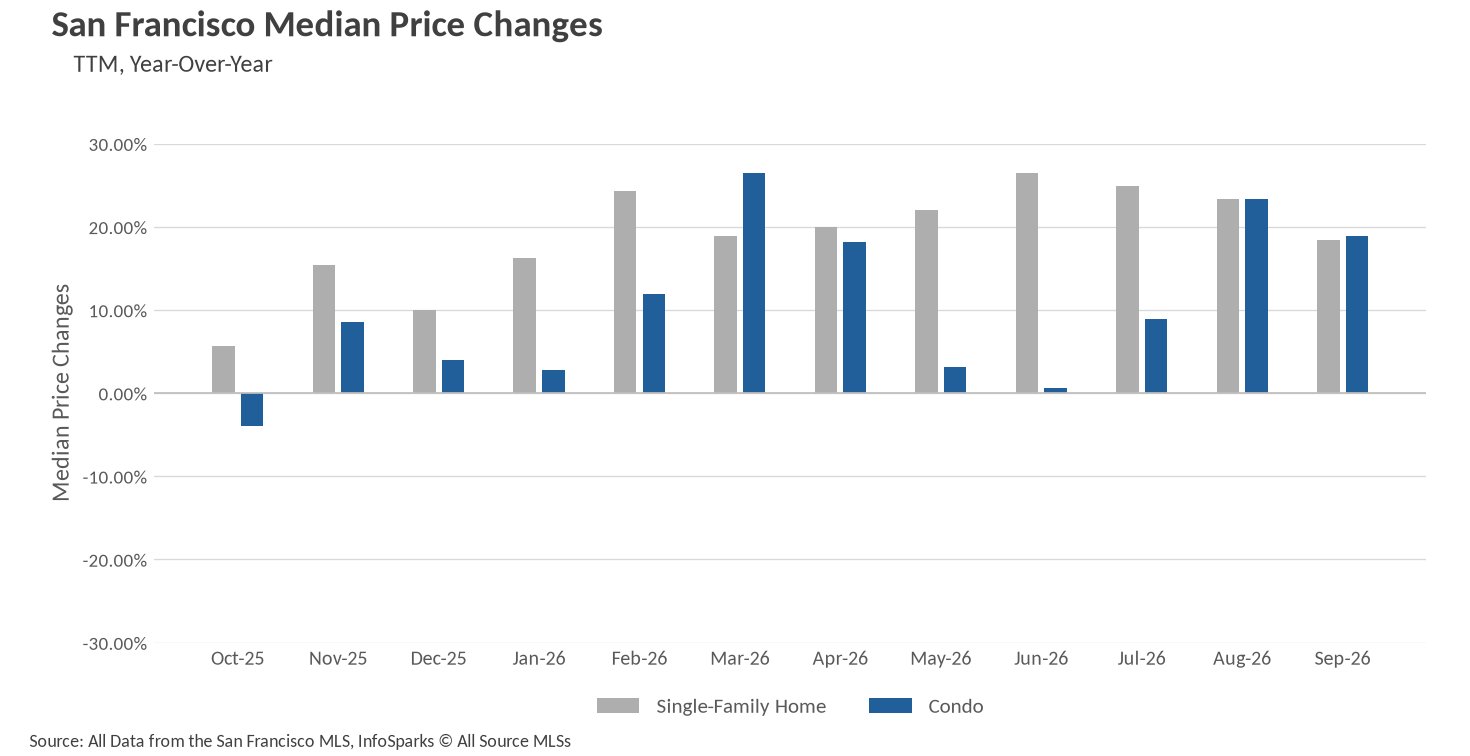
The headline from September is that detached housing across the Bay Area is still finding buyers at or above last year's prices, while attached housing outside of San Francisco and Alameda County is absorbing the pressure. San Francisco delivered the most dramatic single-family move, recovering from a soft August to post a median of $2,054,000, an 11.03% monthly jump and 18.39% above last September. San Mateo County remains the region's priciest market at $2,129,000, up 6.50% year over year, and Sonoma County turned in the strongest percentage gain in the North Bay at $865,000, a 7.79% annual increase and a 9.08% rebound from August. Marin County held at $1,750,000, Napa reached $918,000, and Santa Cruz County posted $1,250,000, all modestly higher than a year ago. The flat-to-lower group is smaller but worth noting: Santa Clara County slipped 2.56% to $1,900,000, Alameda County was essentially unchanged at $1,250,000, Contra Costa County was flat at $850,500, and Solano County gave back 5.74% to $575,000.
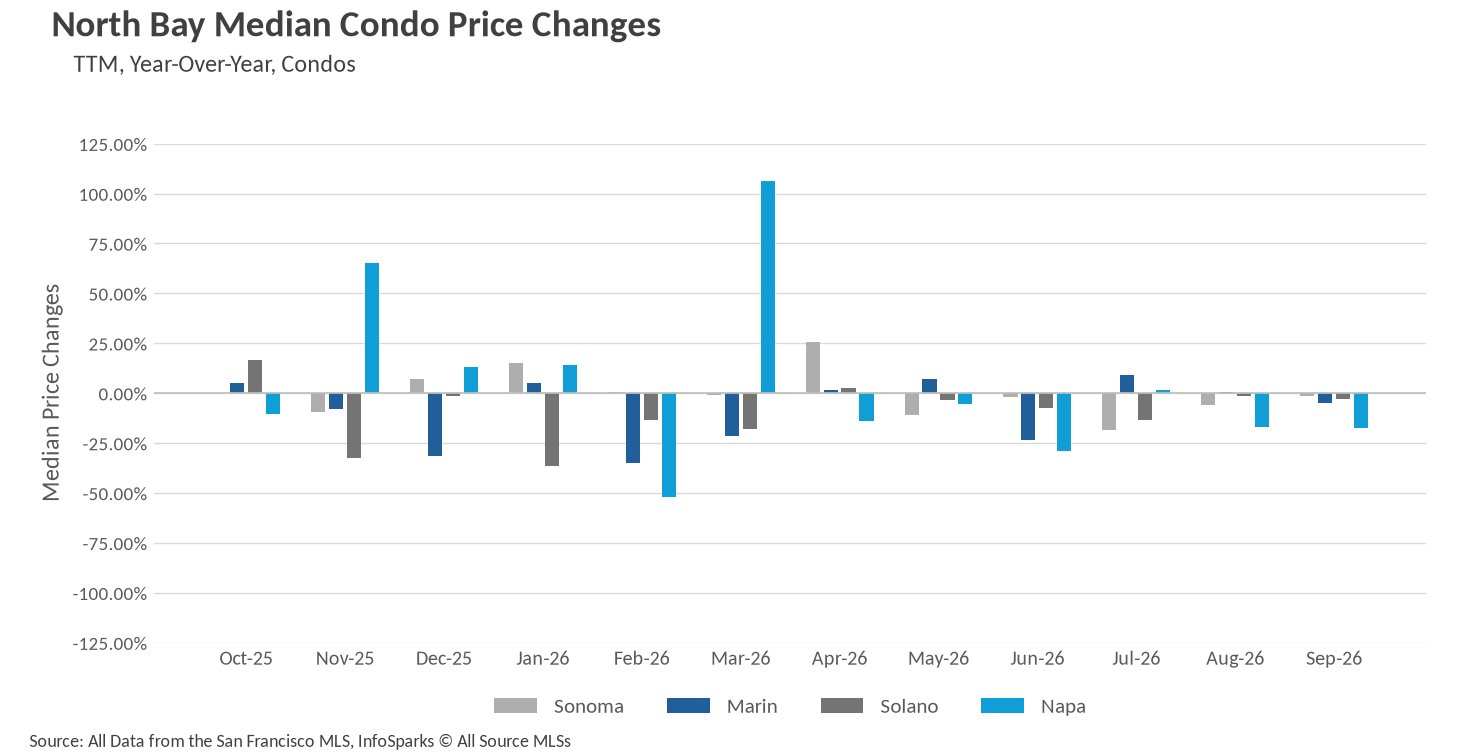
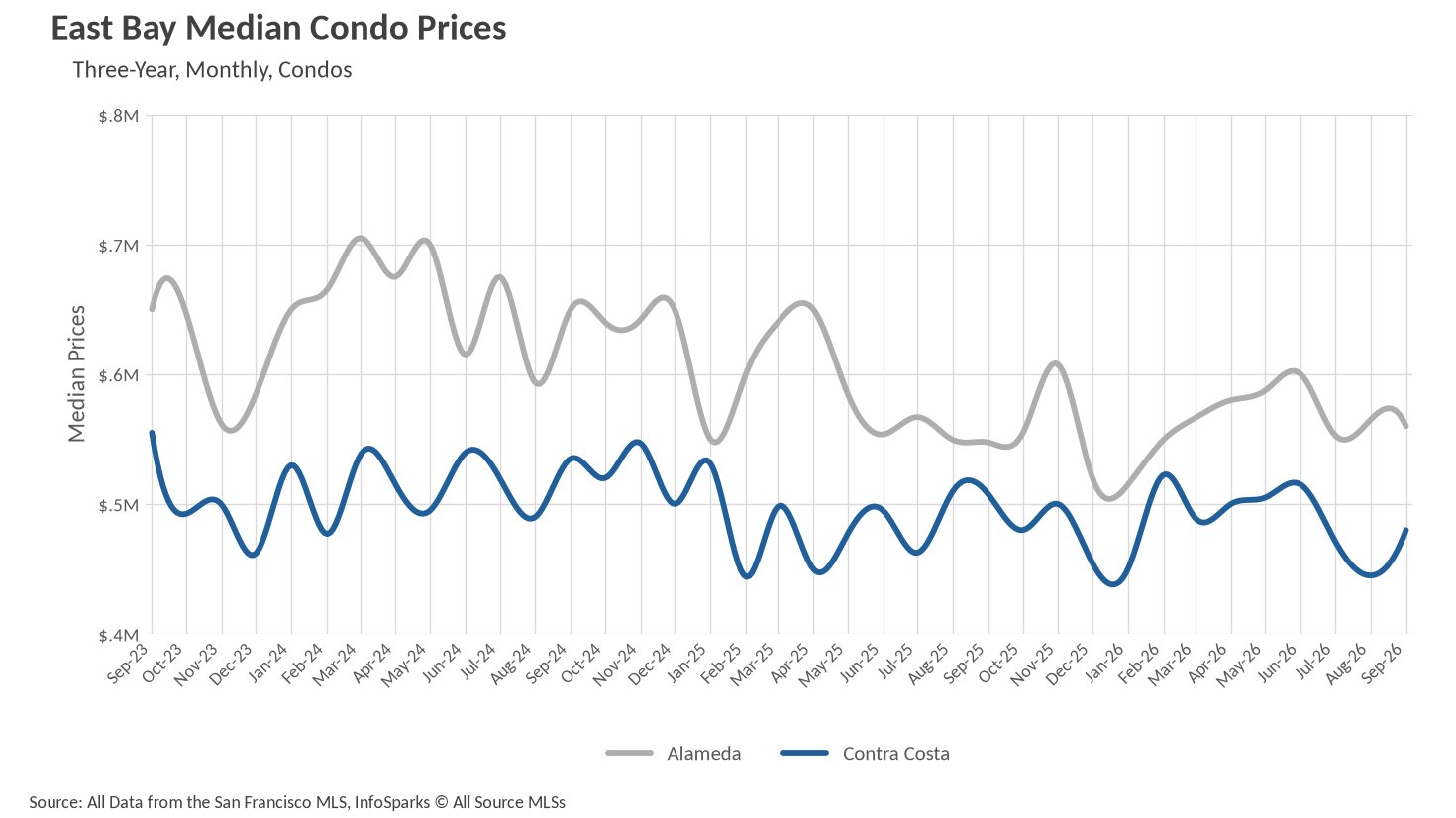
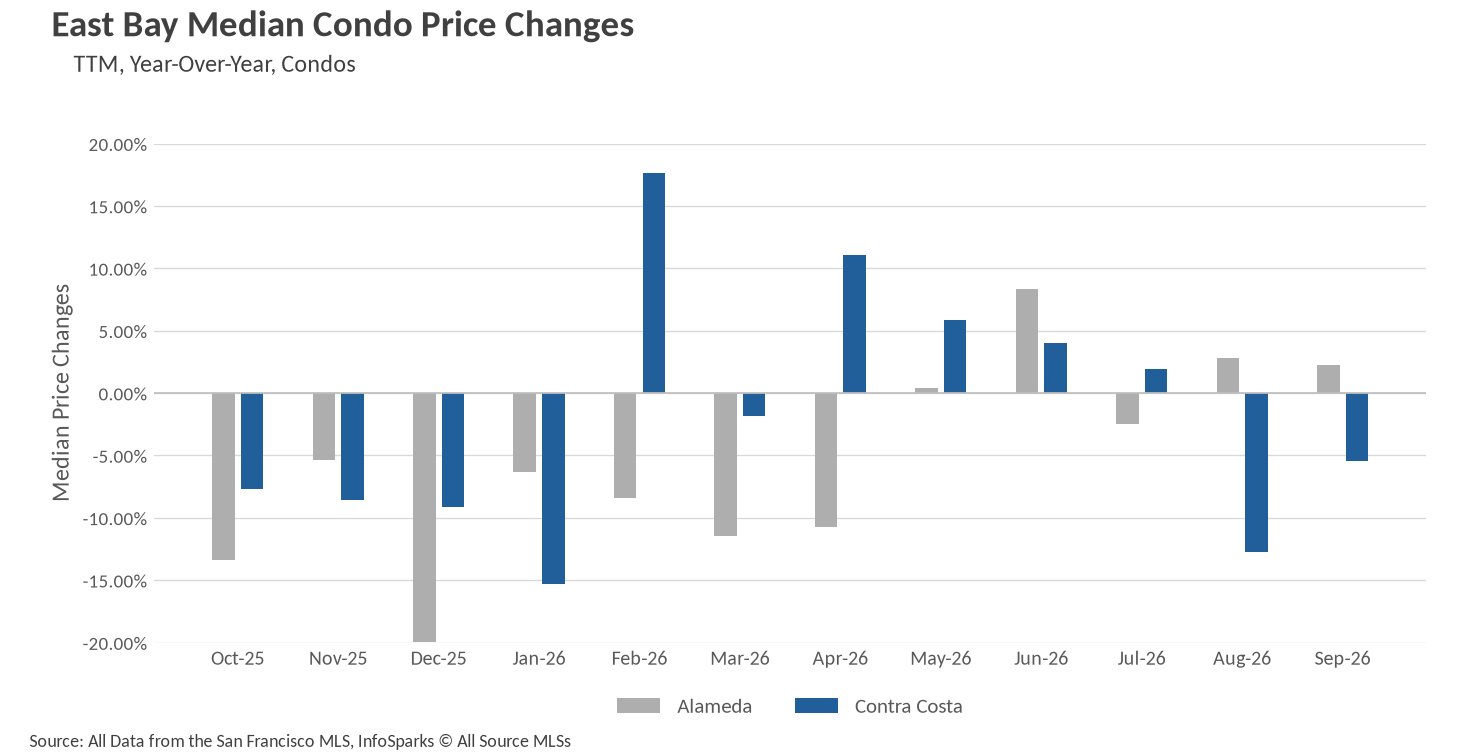
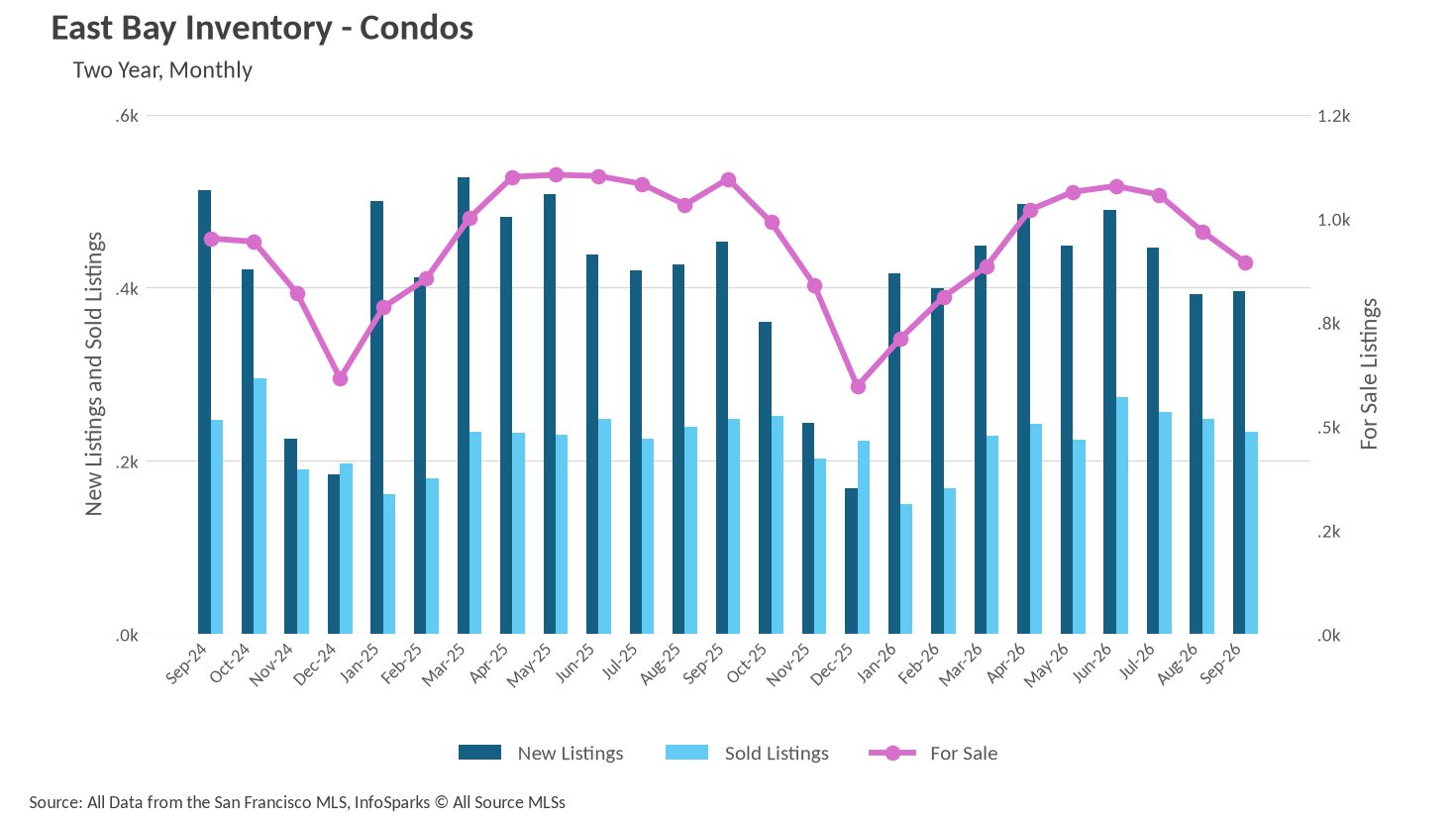
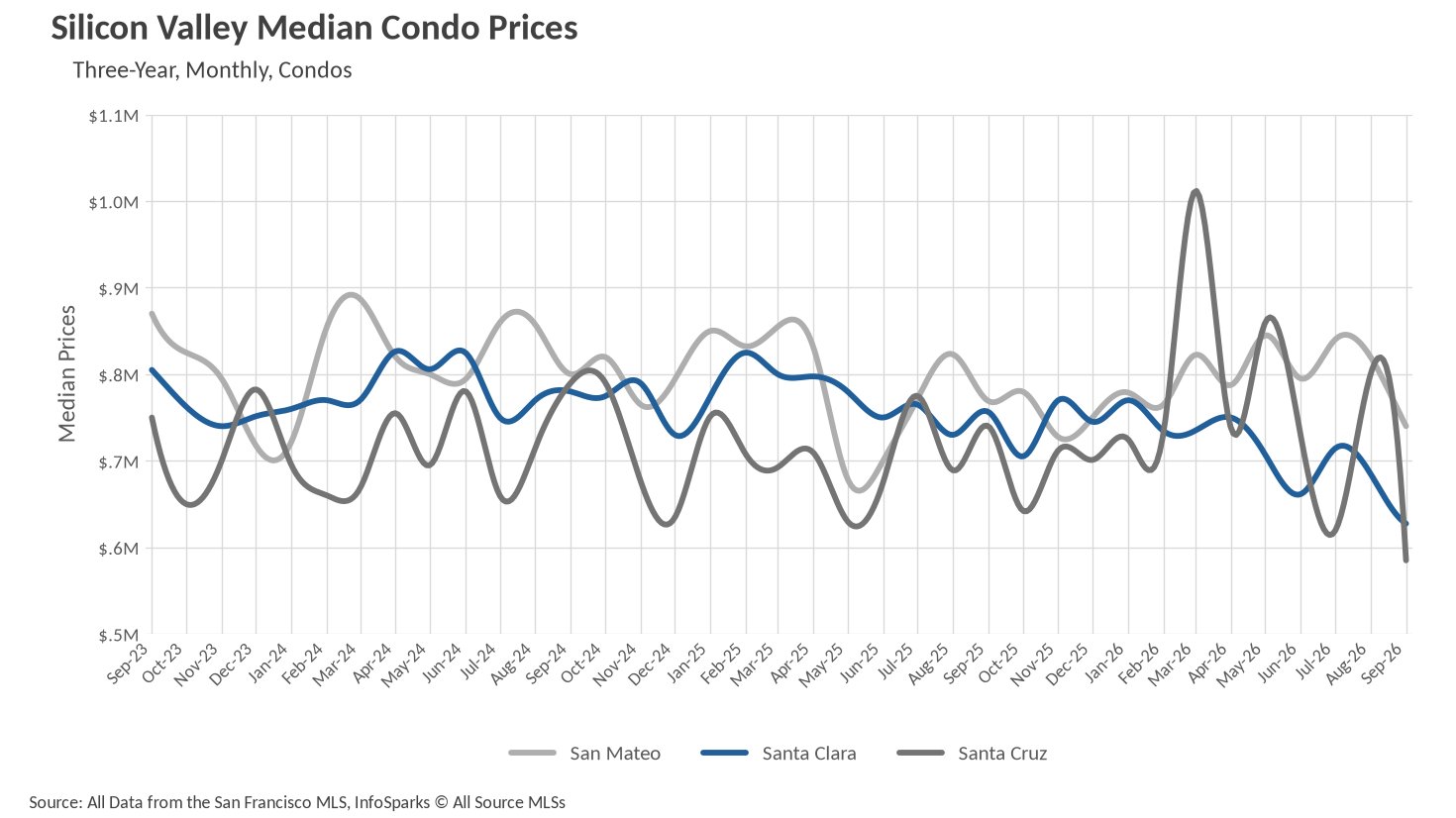
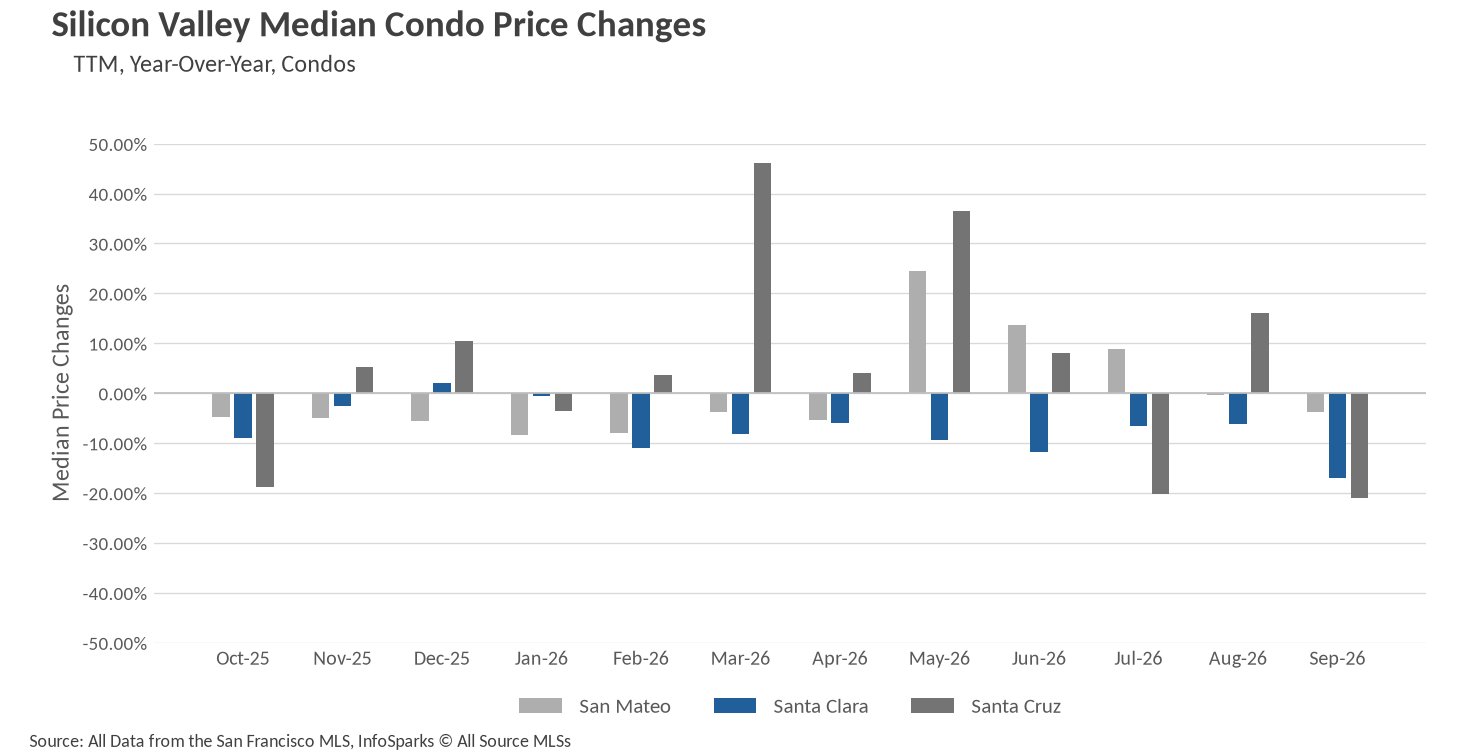
Condos are where the divergence becomes stark. San Francisco condos climbed to a median of $1,316,500, their third consecutive monthly gain and an 18.87% year-over-year increase, while Alameda County condos rose 2.28% to $560,000. Everywhere else the direction was down. Santa Cruz County condos fell 20.95% to $585,000, Napa County dropped 17.54% to $705,000, and Santa Clara County declined 17.05% to $627,500, its lowest reading in three years of data. Milder declines showed up in Contra Costa (down 5.42% to $480,000), Marin (down 4.88% to $575,000), San Mateo (down 3.77% to $740,000), Solano (down 3.13% to $341,000), and Sonoma (down 1.49% to $497,500). The regional story, then, is not a weakening market so much as a market where buyers are paying up for detached homes and for the urban core, and negotiating hard for almost everything else.
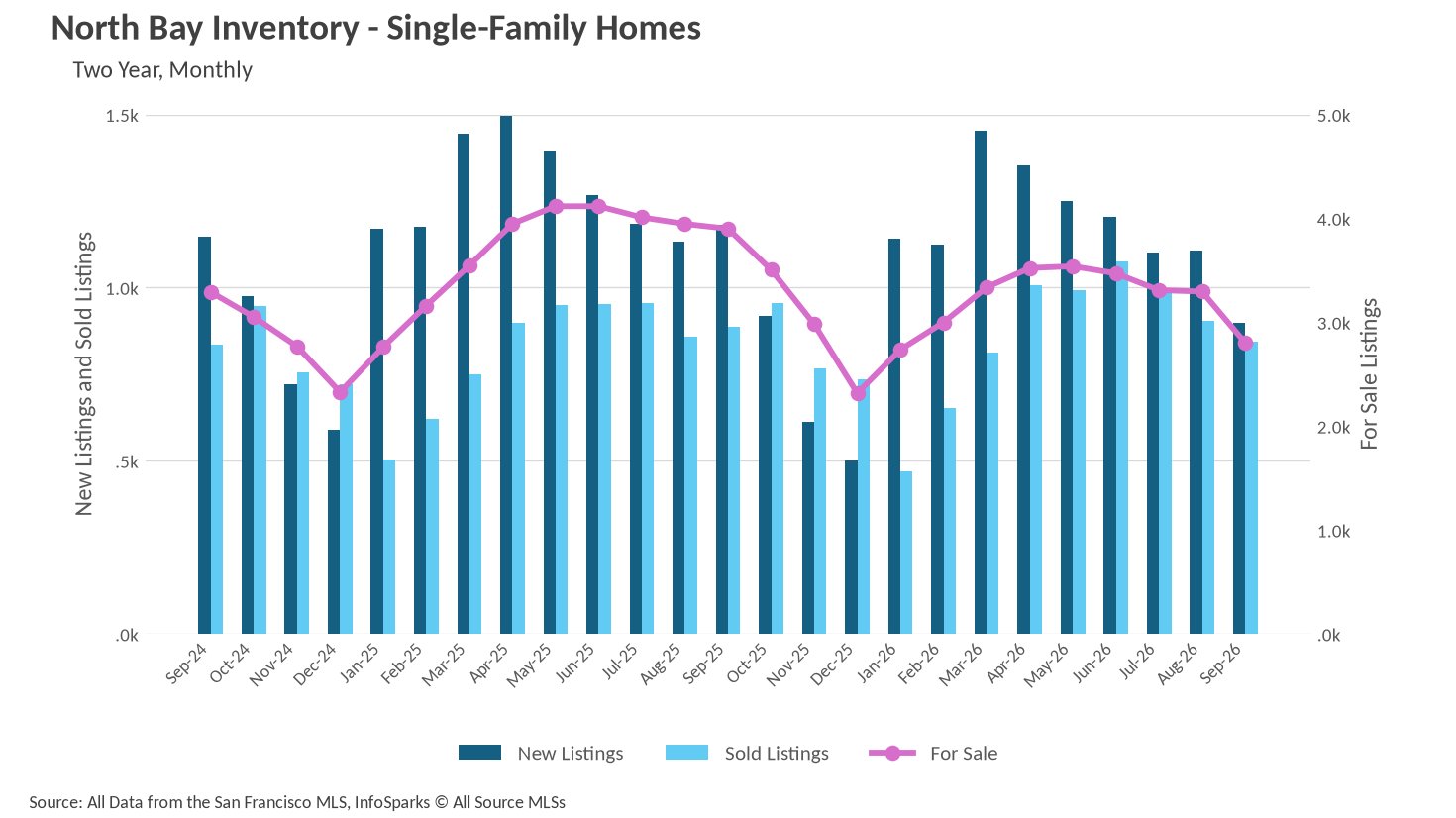
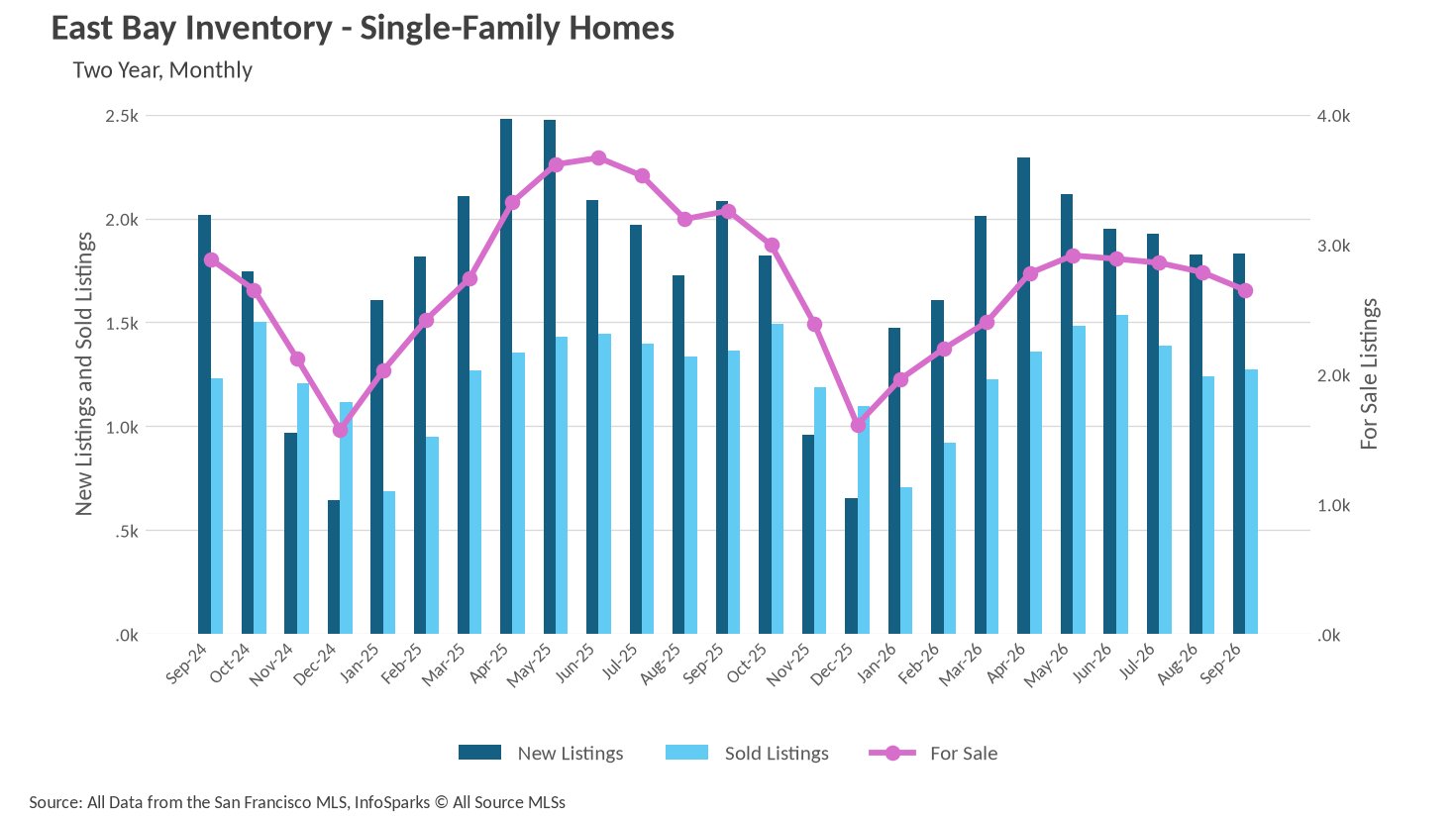
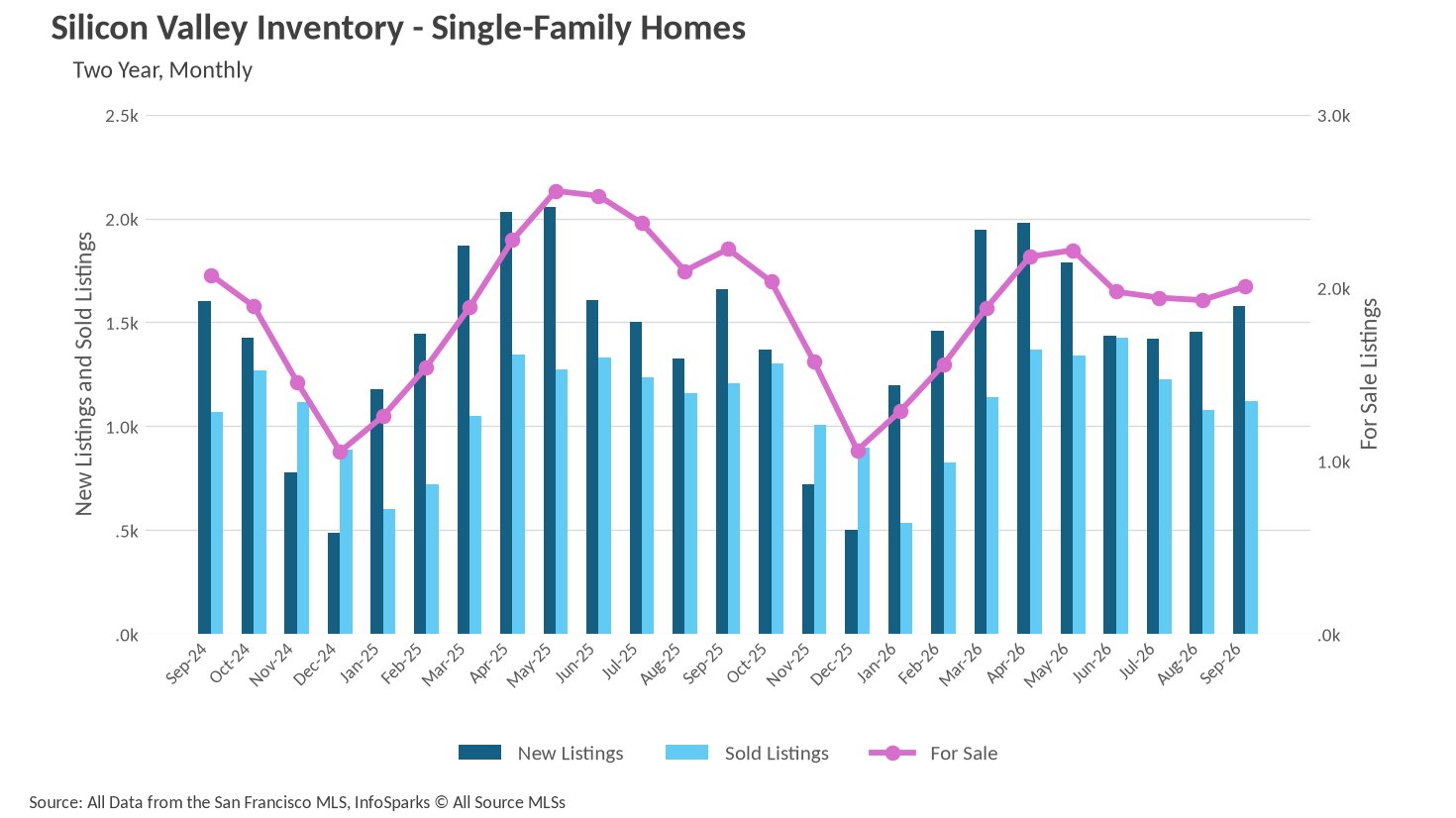
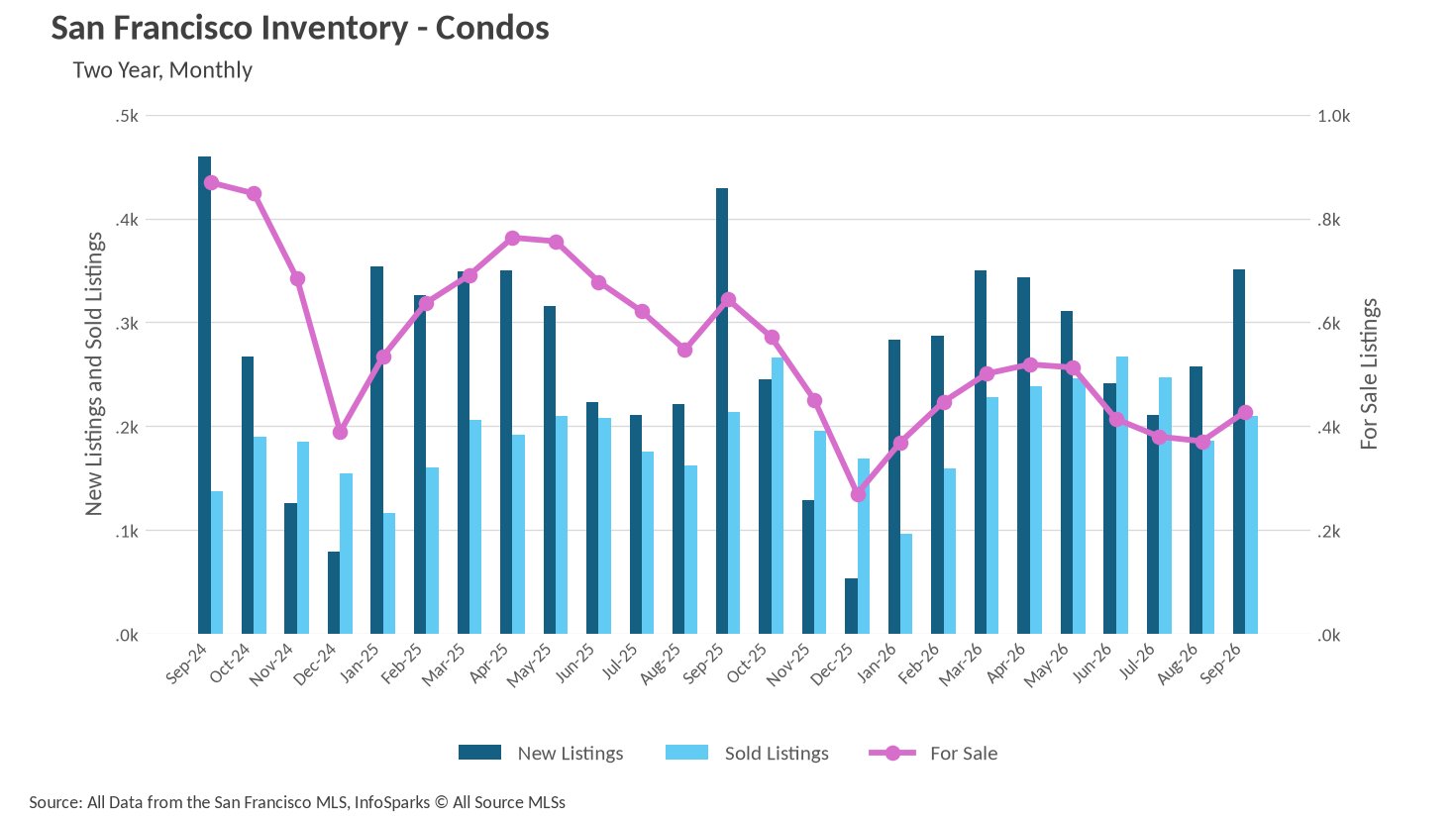
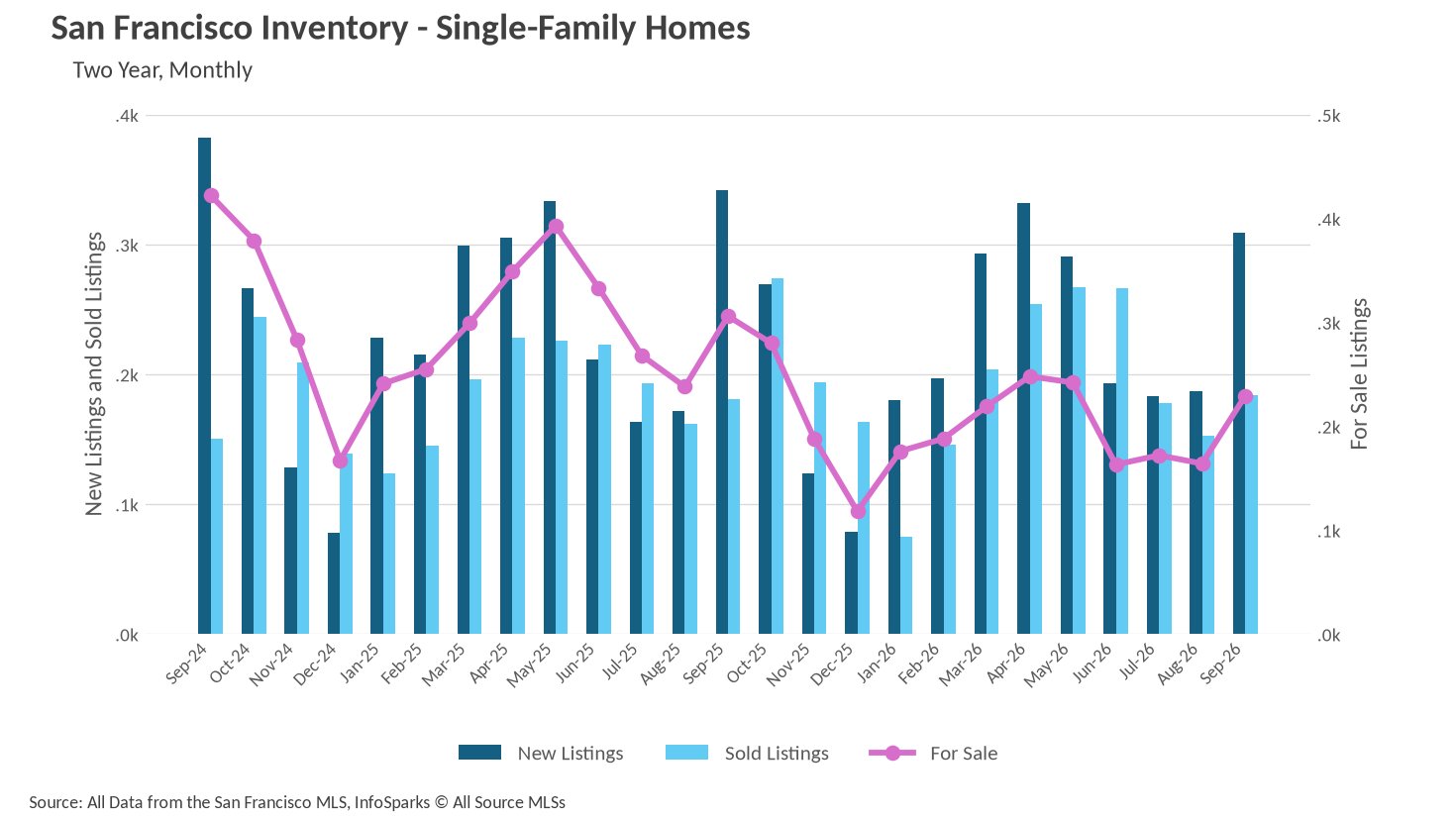
If one number explains September, it is the inventory count. Single-family homes for sale fell in every corner of the region, with the North Bay leading the contraction at 2,803 units, down 28.15% from 3,901 a year ago and down nearly 15% from August alone. San Francisco's 229 listings were off 25.16% year over year despite a healthy seasonal rebound from August's 164. The East Bay carried 2,648 single-family listings, an 18.75% annual decline, and Silicon Valley's 2,007 listings were down 9.72%. Add it up and the region offered roughly 2,000 fewer detached homes than it did last September.
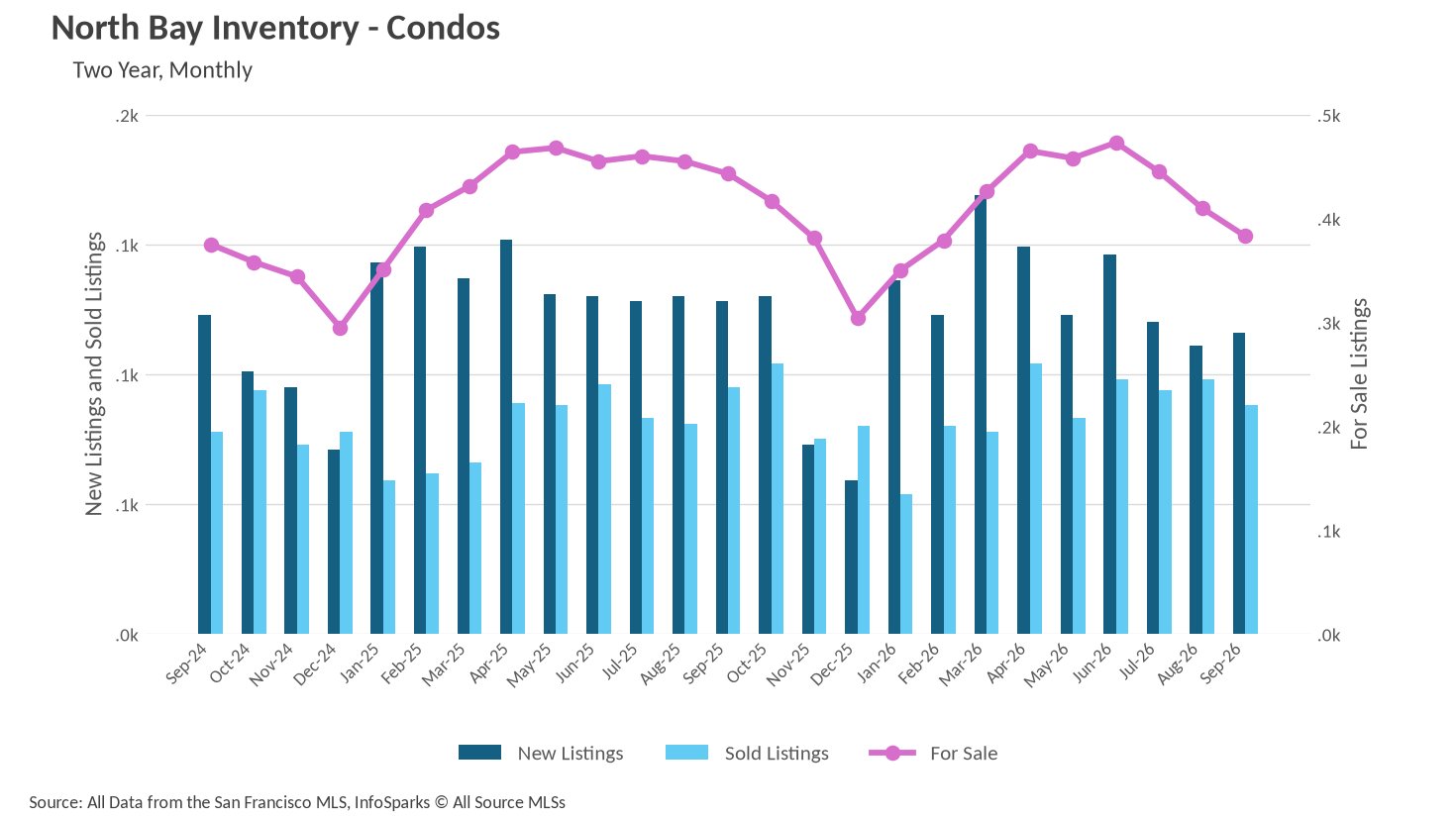
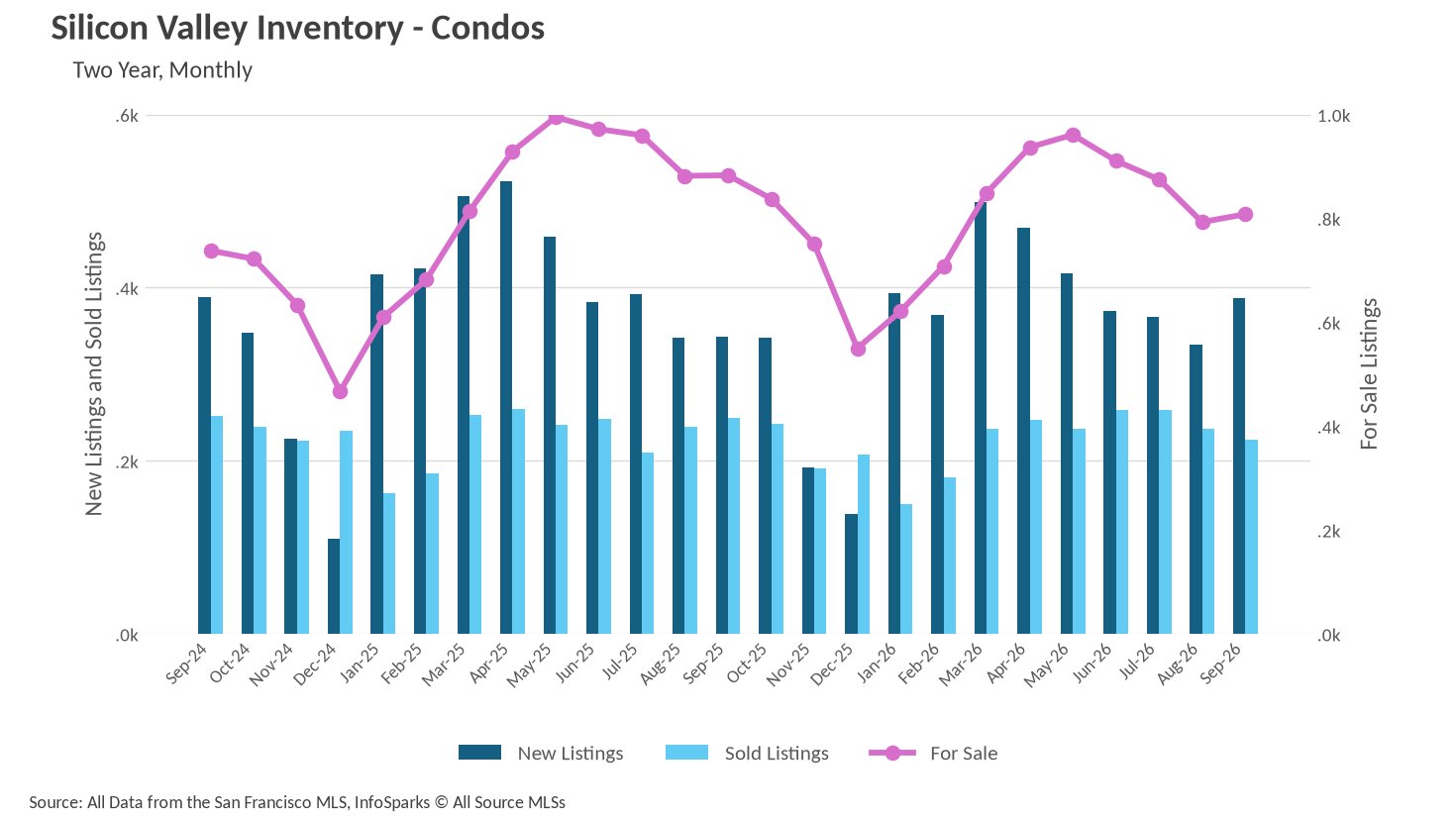
Condo supply followed the same path. San Francisco posted the steepest drop at 428 units, down 33.54% from 644, with the East Bay down 18.36% to 894, the North Bay down 13.54% to 383, and Silicon Valley down 8.49% to 808. The driver is sellers, not buyers. New single-family listings fell 24.05% in the North Bay, 12.06% in the East Bay, 9.65% in San Francisco, and 4.88% in Silicon Valley, while closed sales held far steadier, off just 4.96% in the North Bay, 6.67% in the East Bay, 7.13% in Silicon Valley, and essentially flat in San Francisco at 184 versus 181. When listings contract faster than sales, prices tend to hold, and that is precisely what the September medians show. The one bright spot for buyers is that fall restocking did arrive, with for-sale counts rising month over month in both San Francisco and Silicon Valley and new listing activity picking up in both markets.
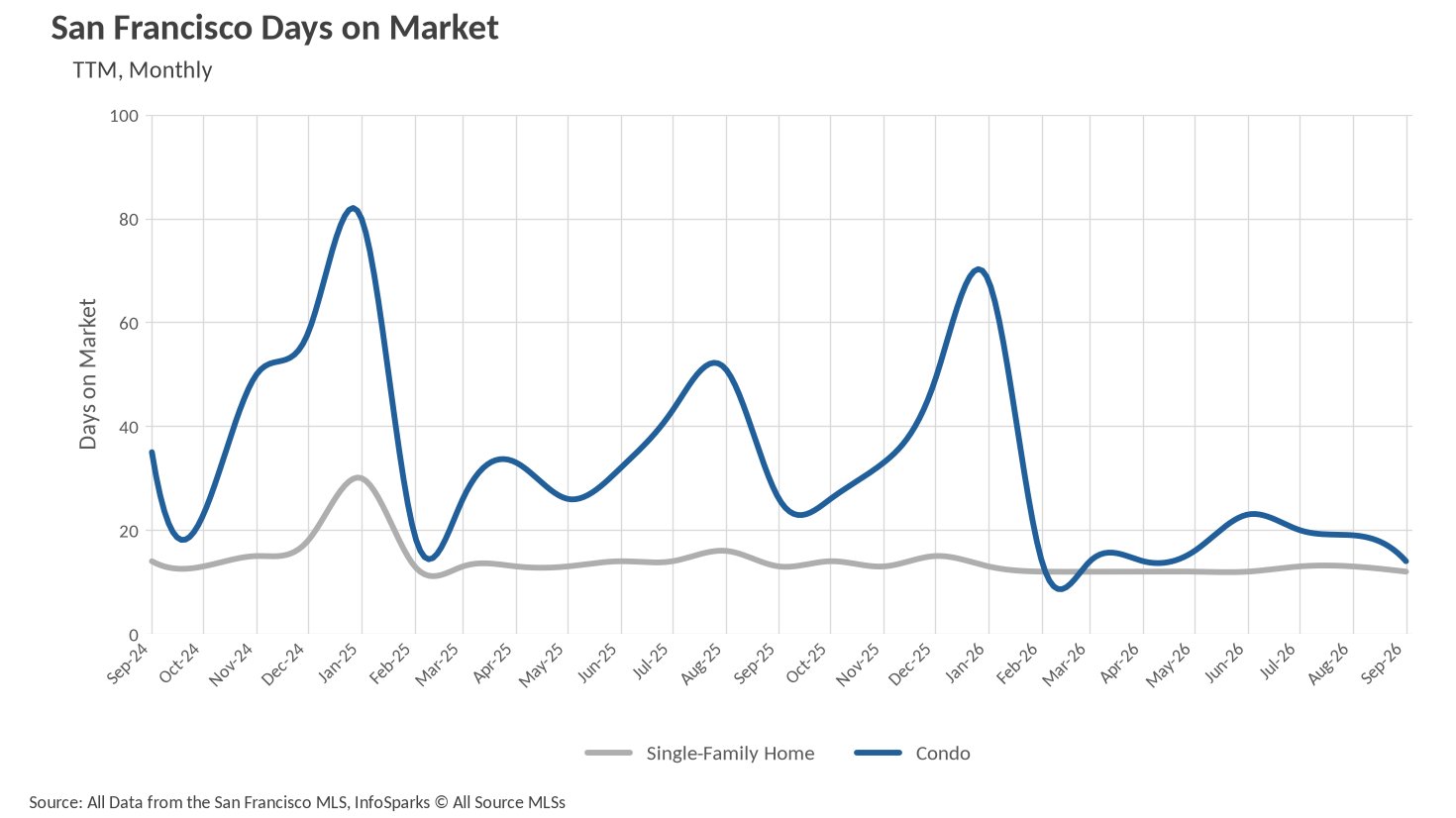
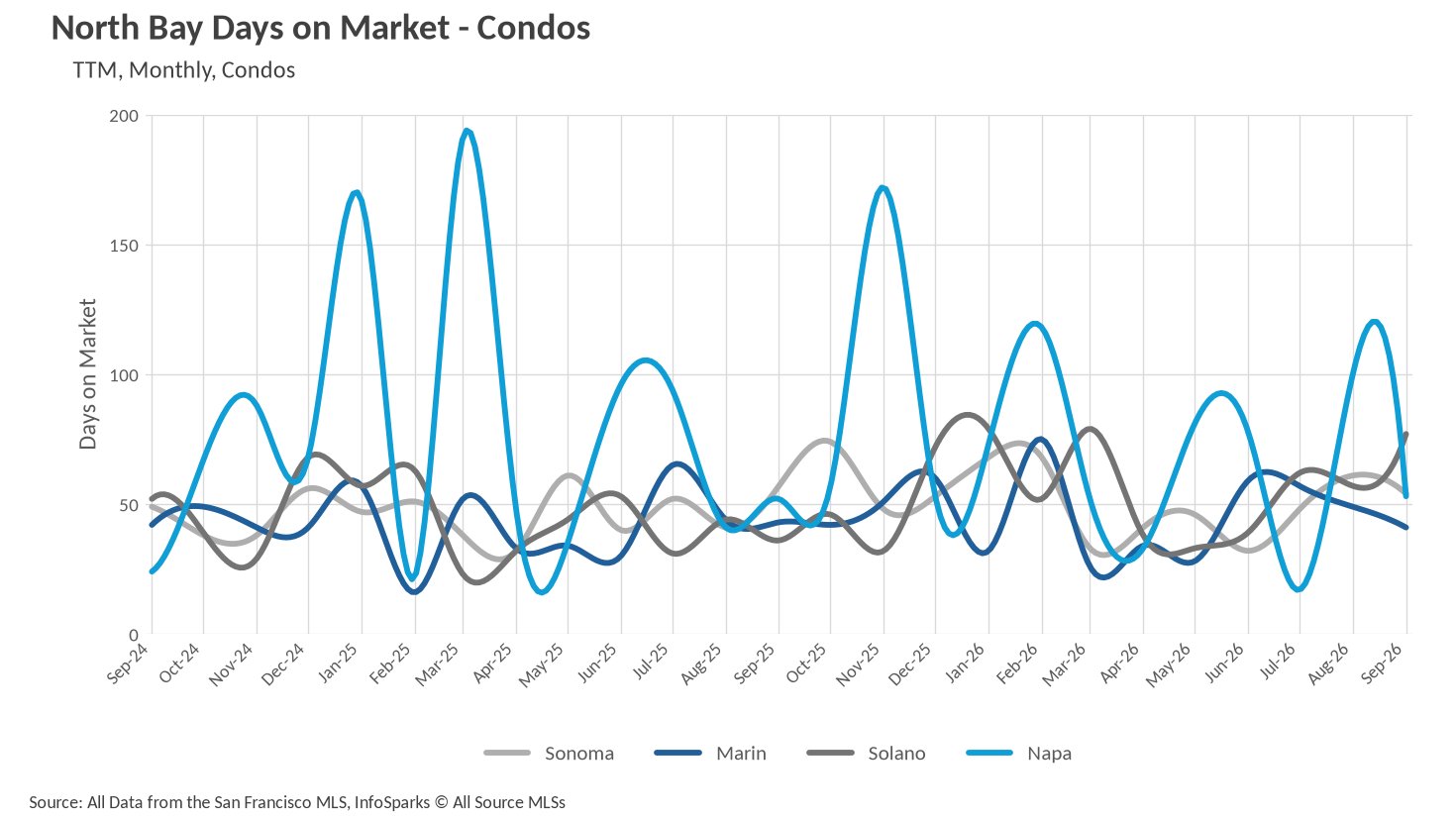
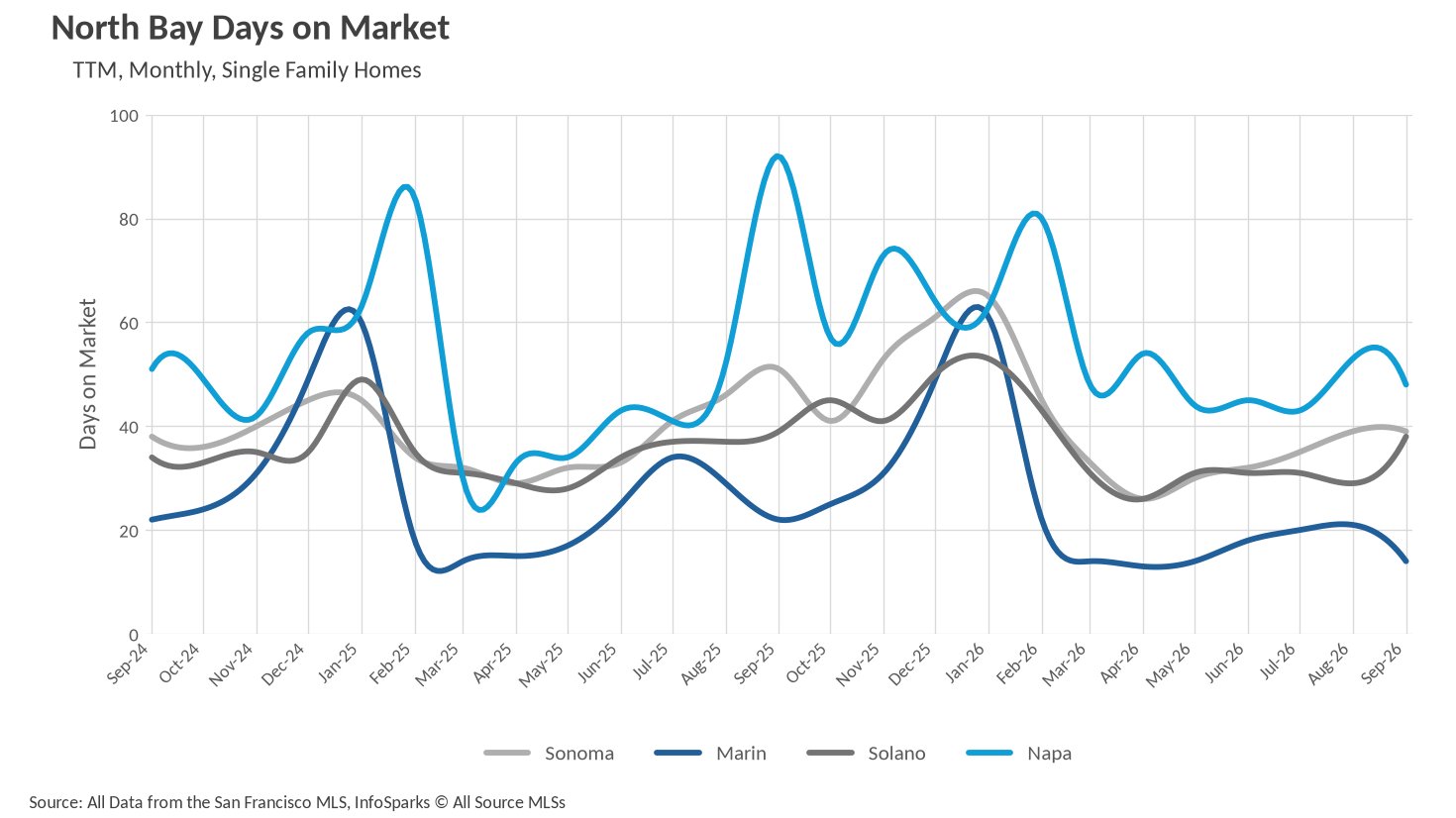
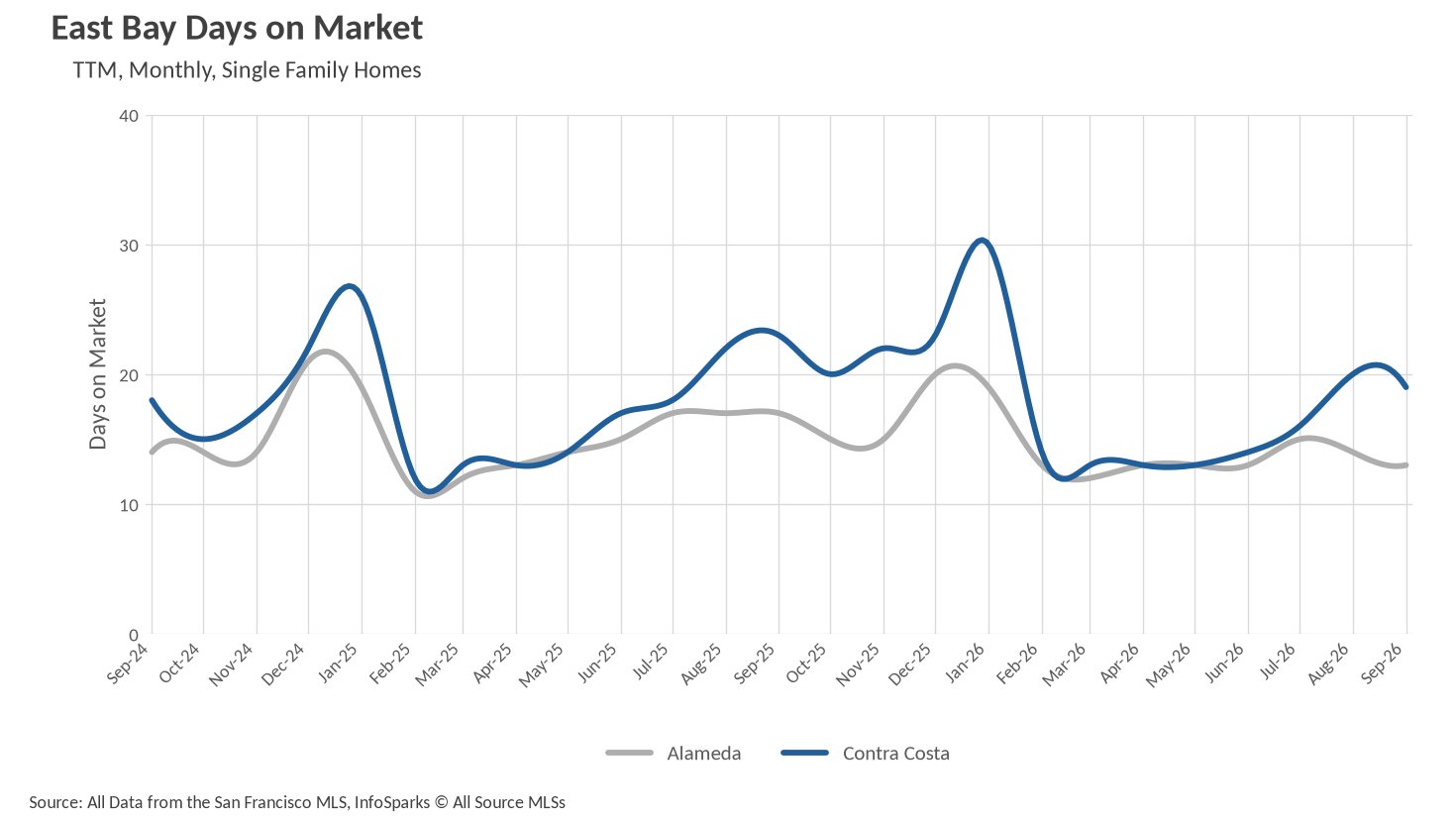
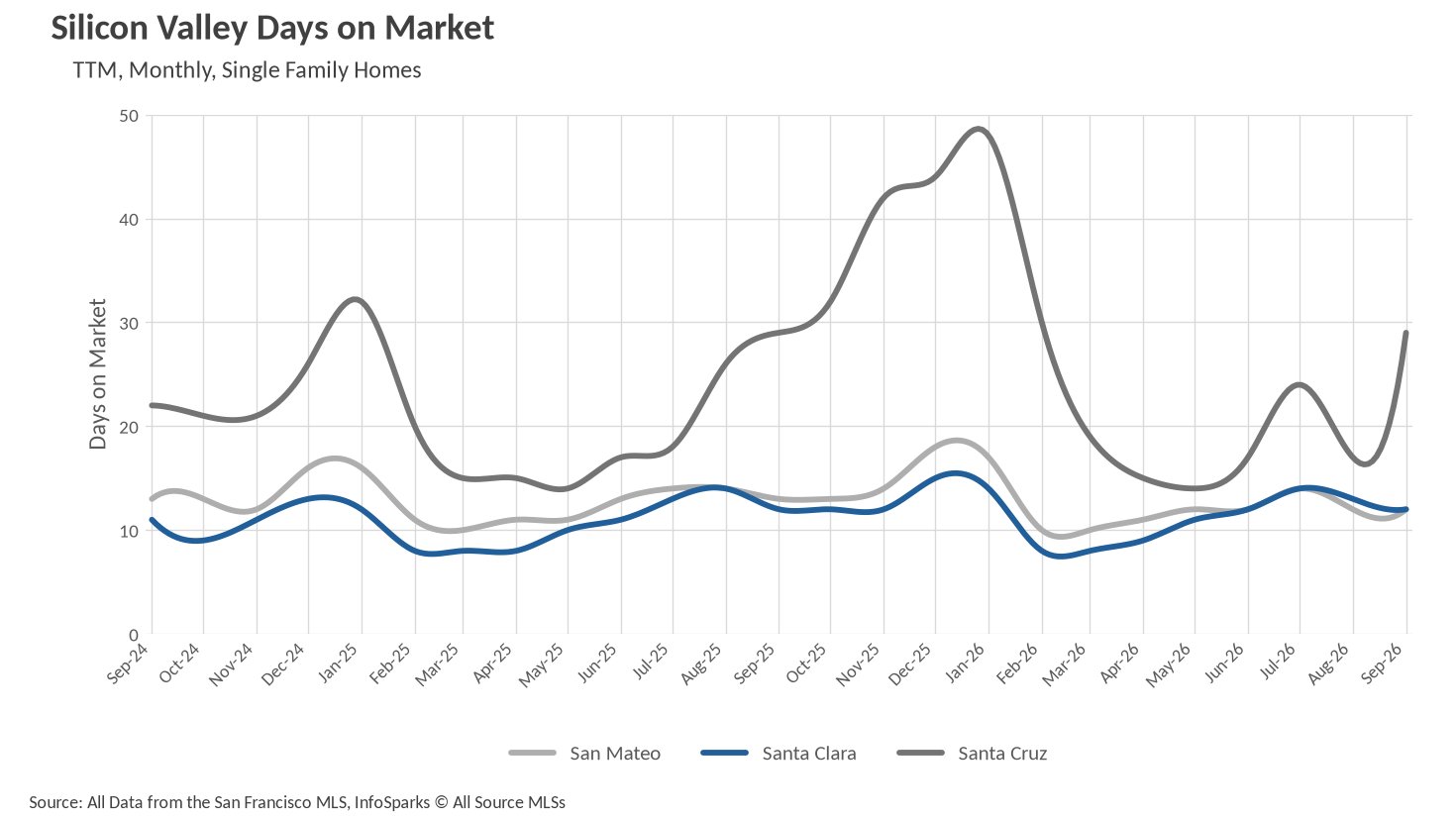
Marketing times tightened almost everywhere. San Francisco, San Mateo County, and Santa Clara County all averaged 12 days for single-family homes, Alameda County came in at 13 days, and Marin County posted just 14 days, a 36.36% improvement over last September and the fastest pace Marin has recorded in two years. Contra Costa County followed at 19 days, down 17.39% year over year. The slower markets are the ones you would expect given geography and price point: Santa Cruz County at 29 days, Solano at 38, Sonoma at 39, and Napa at 48, though Napa's figure represents the single most dramatic improvement in the region, down 47.83% from 92 days a year ago.
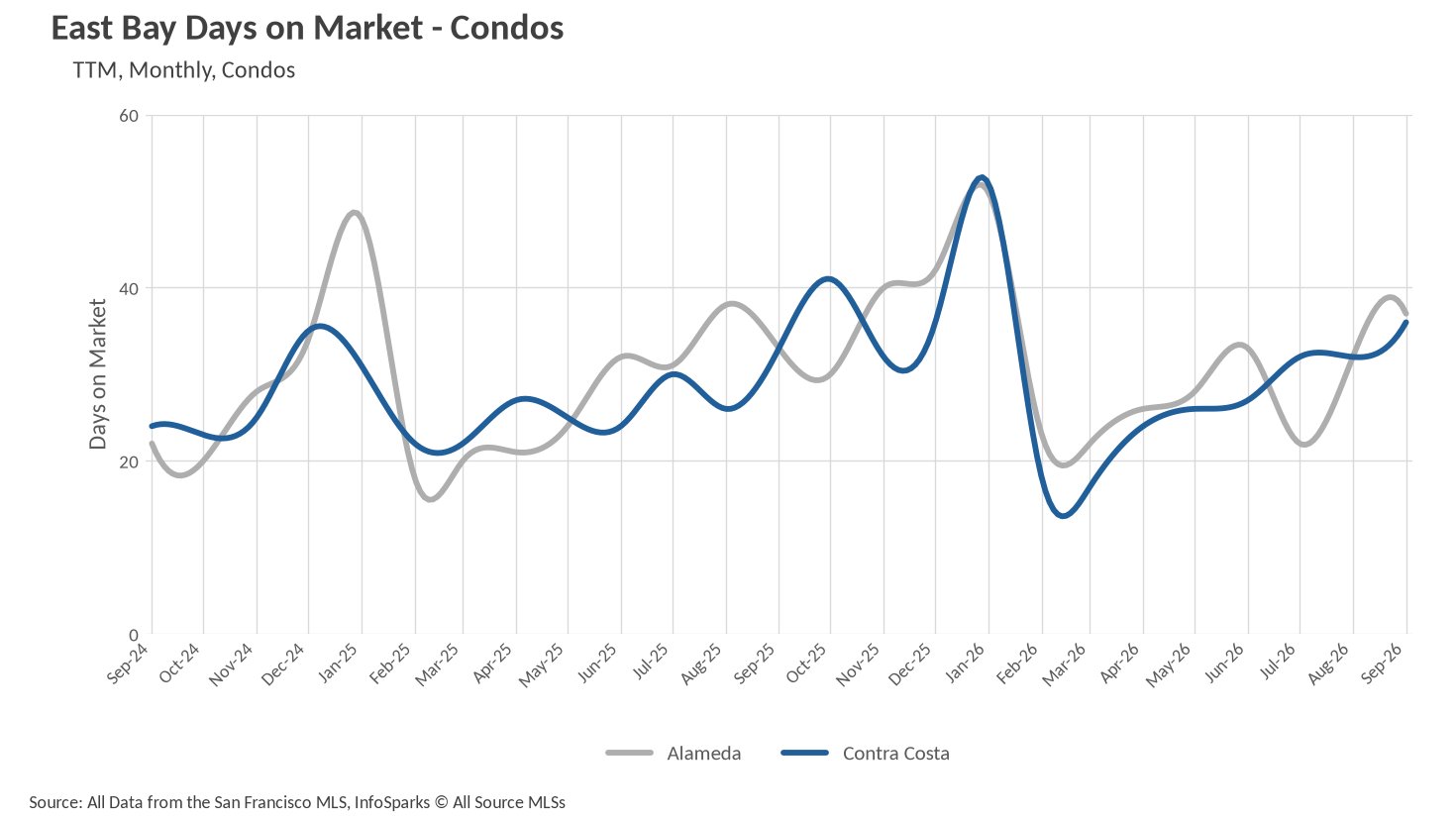
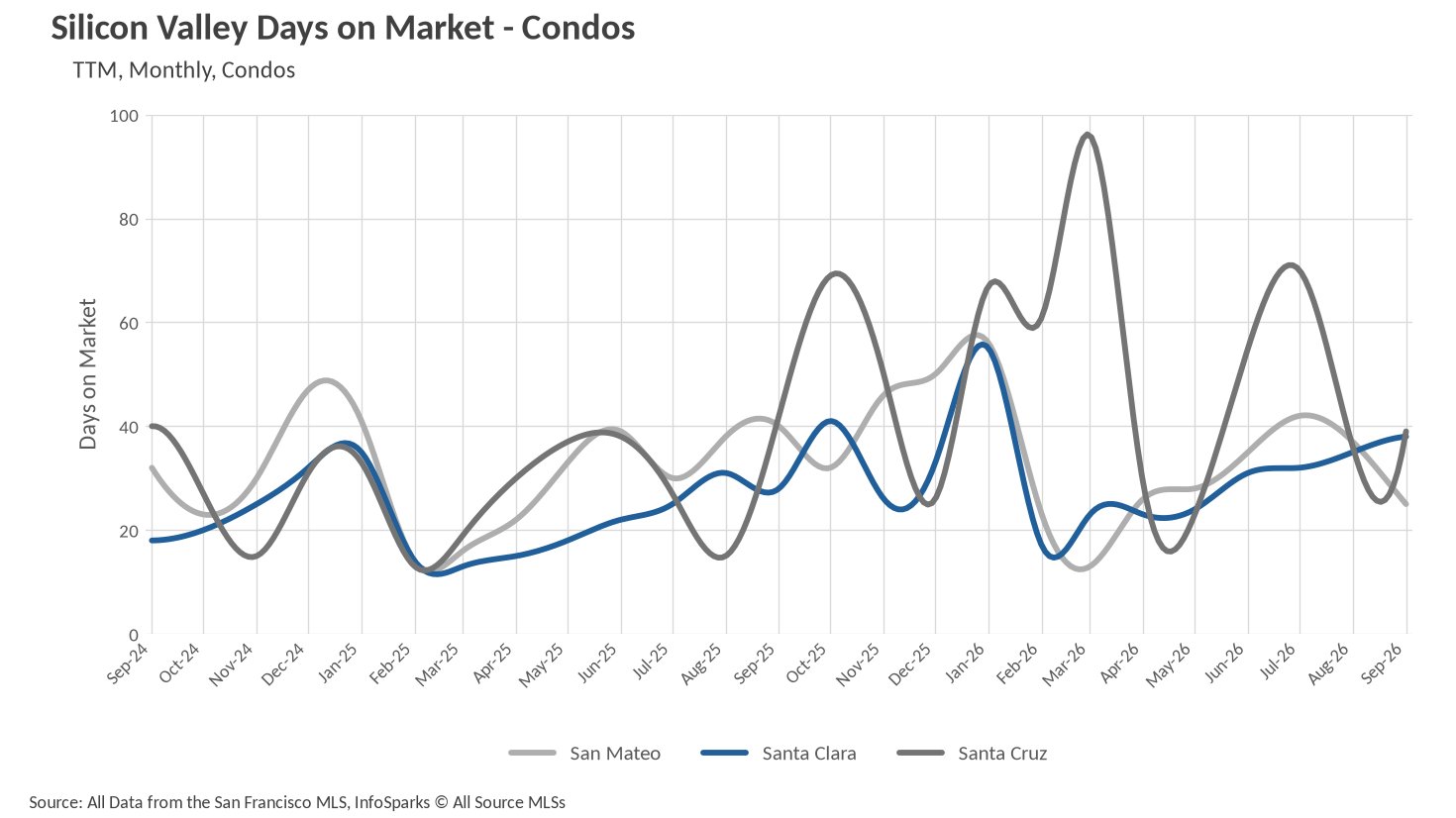
The condo picture is far more varied, and it maps closely to the pricing story. San Francisco condos sold in an average of 14 days, a 46.15% improvement from 26 days last September and one of the fastest readings in that market's history, essentially closing the gap with detached homes. San Mateo County condos improved 37.50% to 25 days. From there the pace lengthens considerably: Contra Costa at 36 days, Alameda at 37 (up 12.12% year over year), Santa Clara at 38 (up 35.71%), Santa Cruz at 39, Marin at 41, Napa at 53, Sonoma at 54, and Solano at 77 days, more than double last September's 36. Buyers shopping for attached homes outside the city still have the luxury of time that detached-home buyers simply do not.
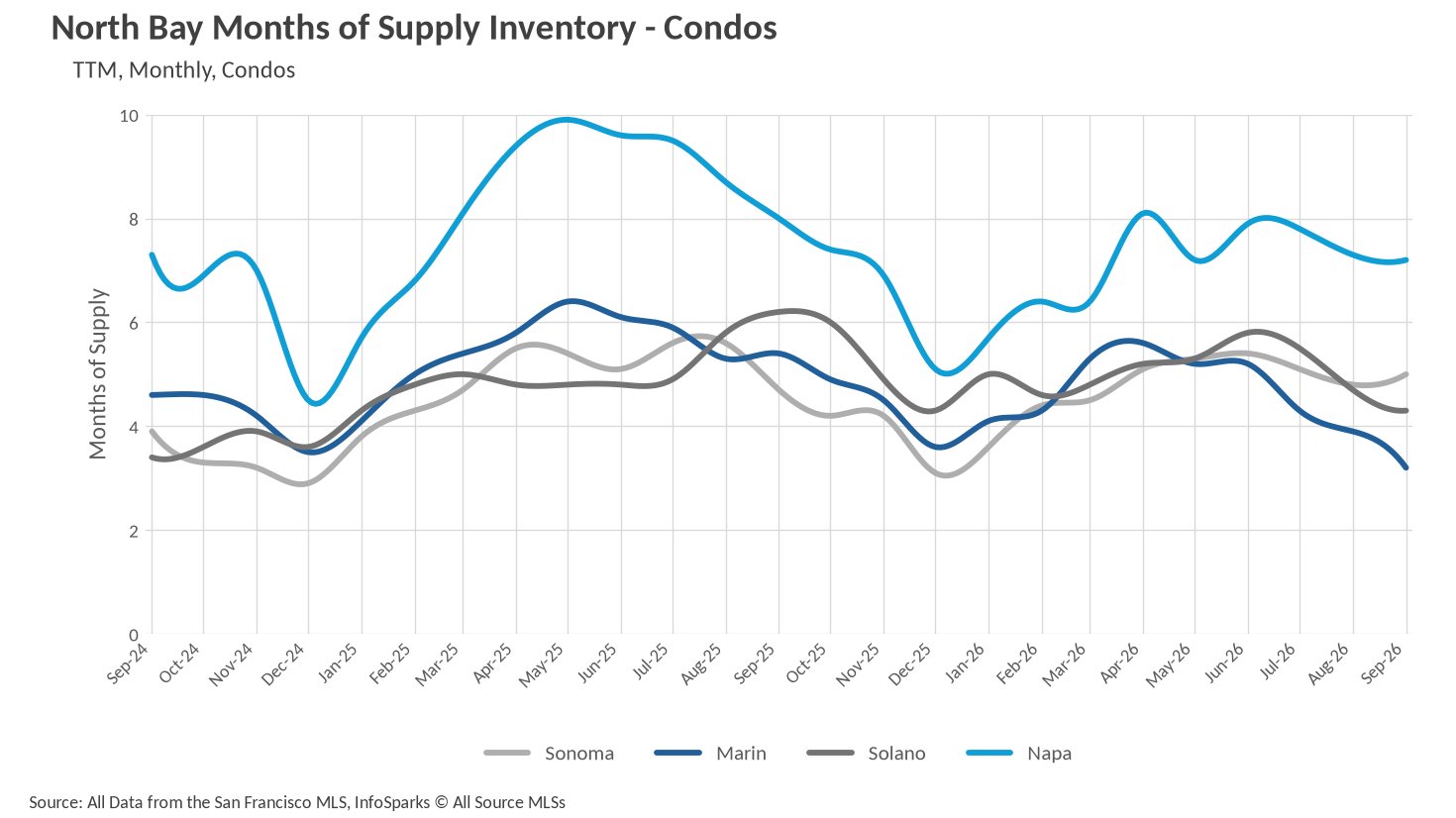
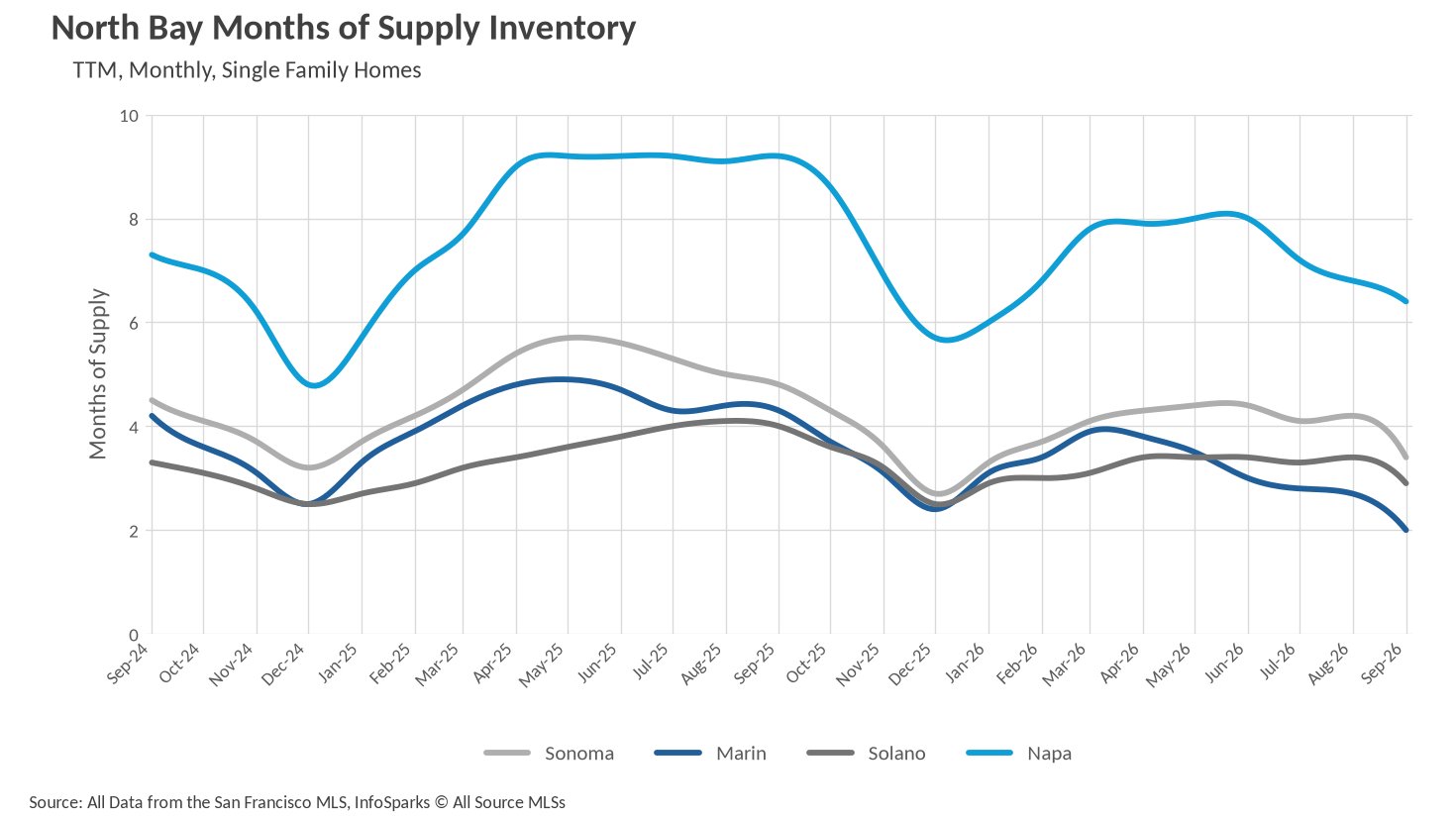
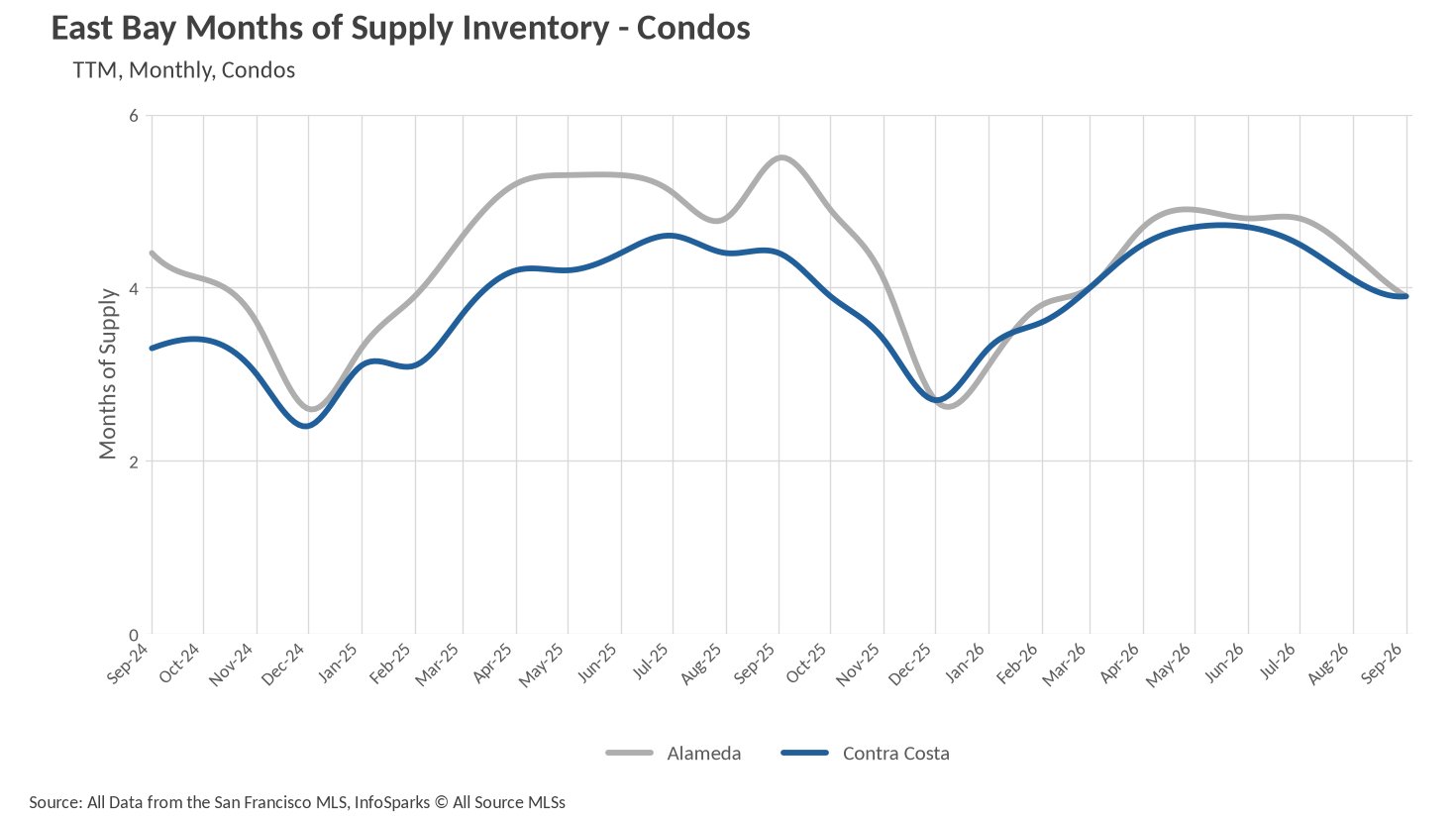
When determining whether a market is a buyers’ market or a sellers’ market, we look to the Months of Supply Inventory (MSI) metric. The state of California has historically averaged around three months of MSI, so any area with at or around three months of MSI is considered a balanced market. Any market that has lower than three months of MSI is considered a seller’s market, whereas markets with more than three months of MSI are considered buyers’ markets.
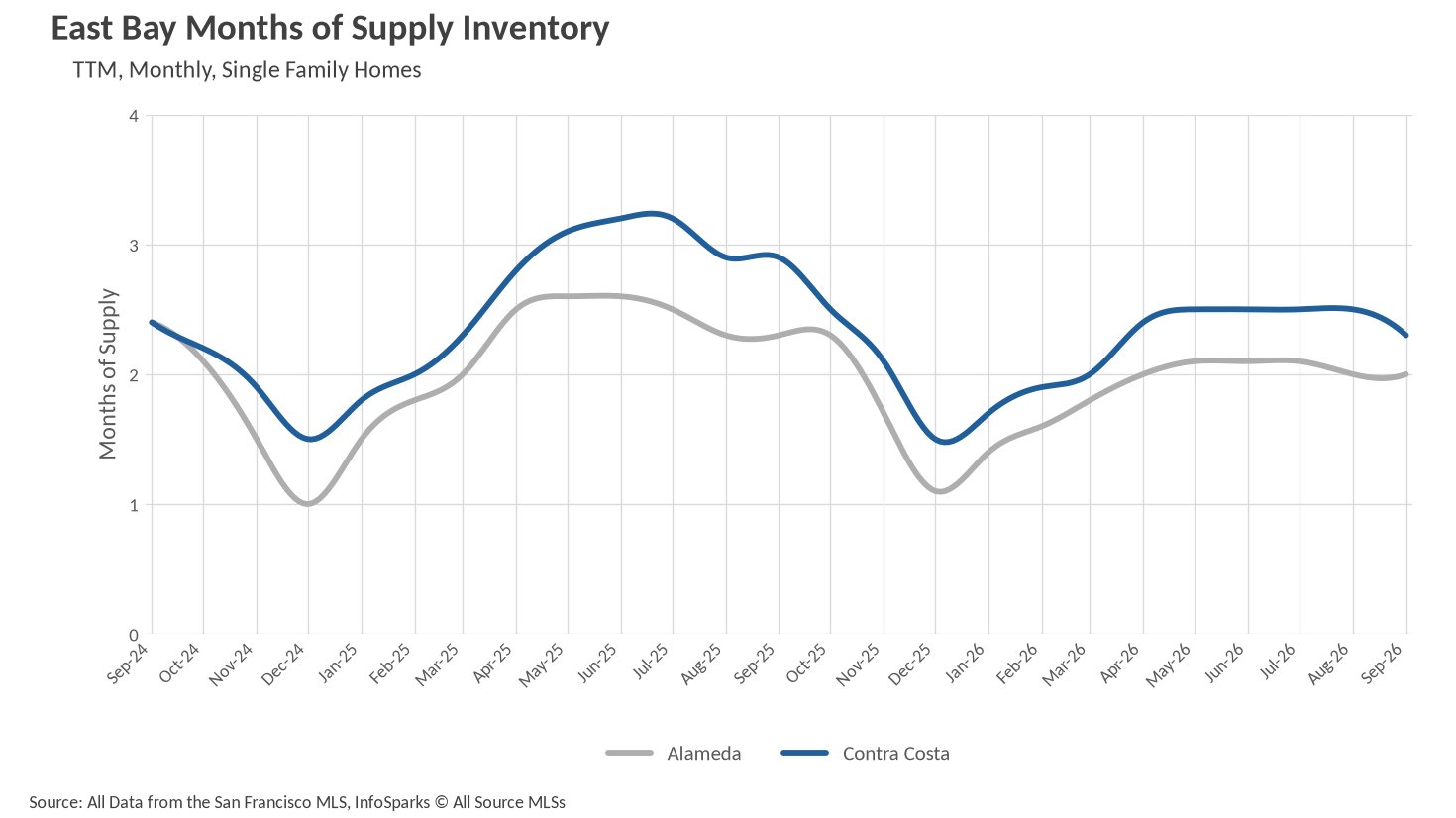
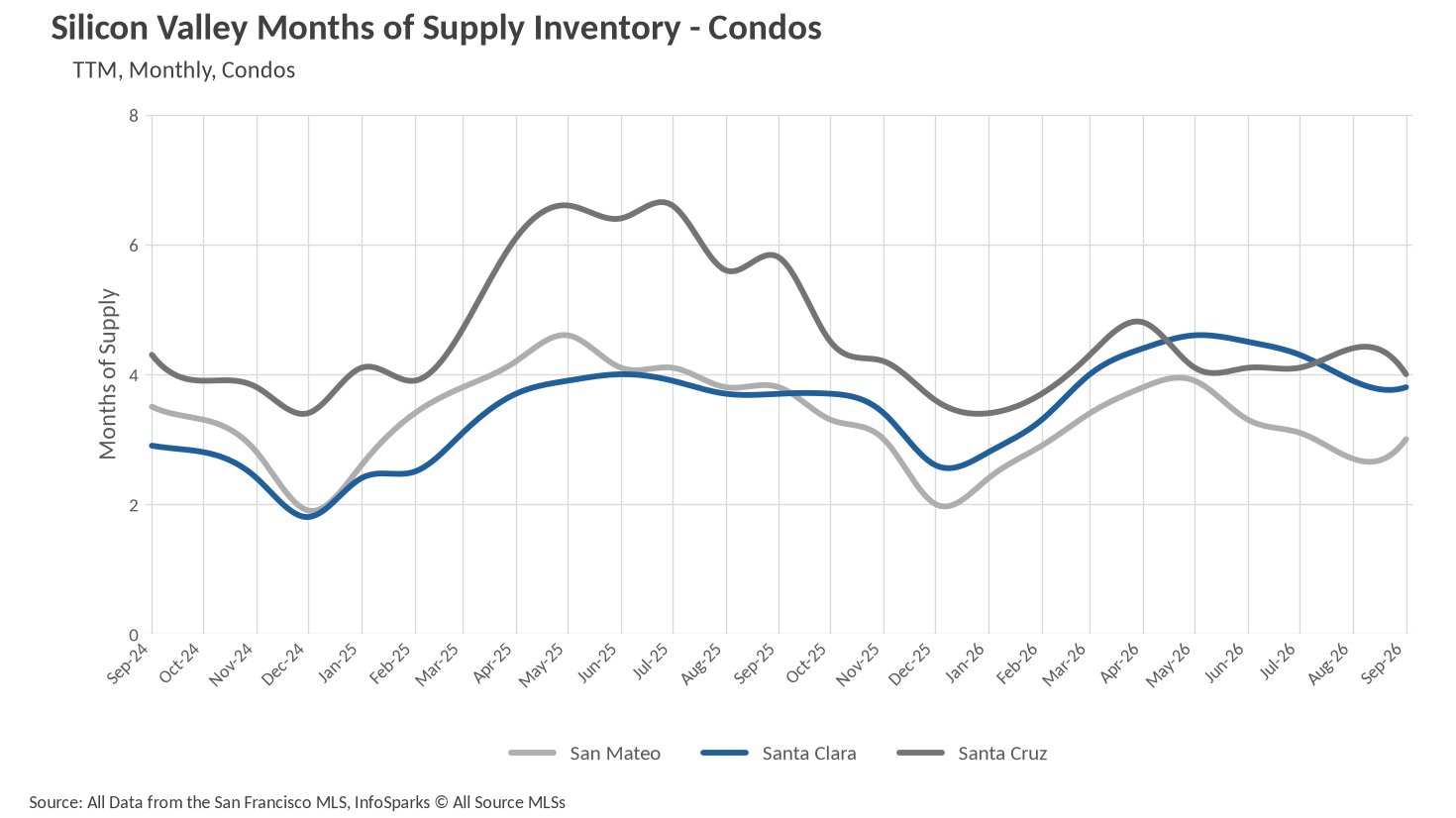
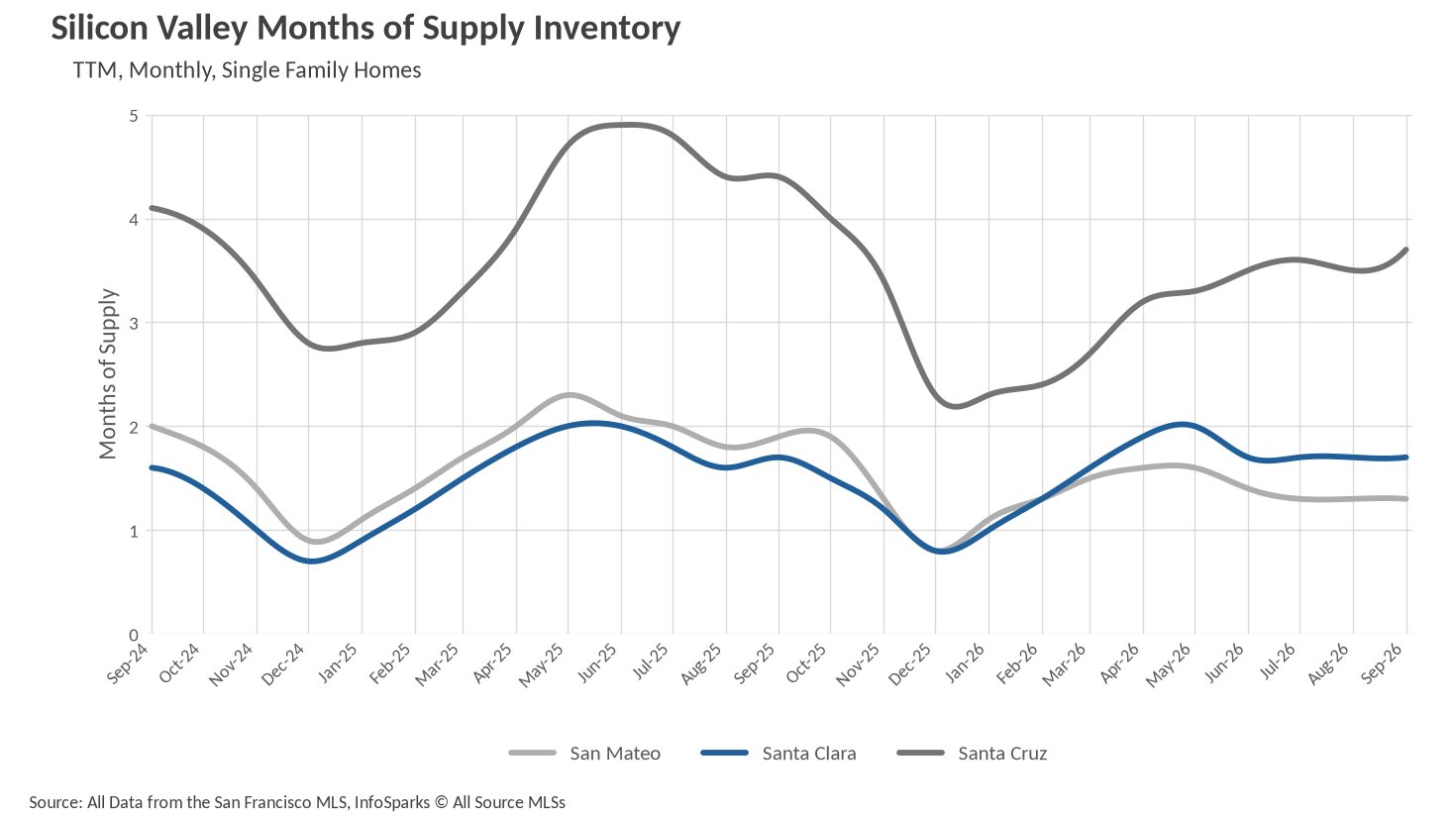
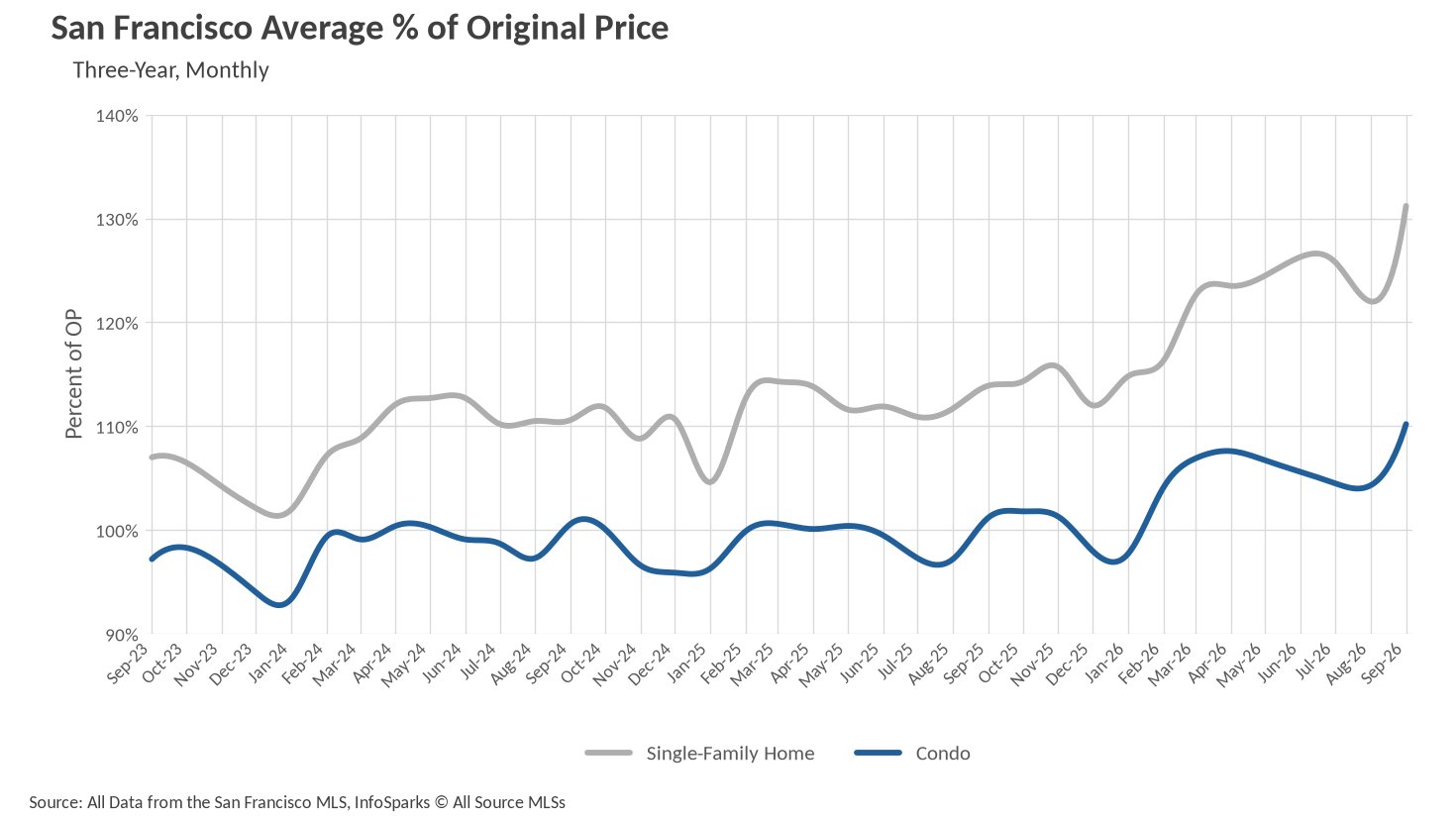
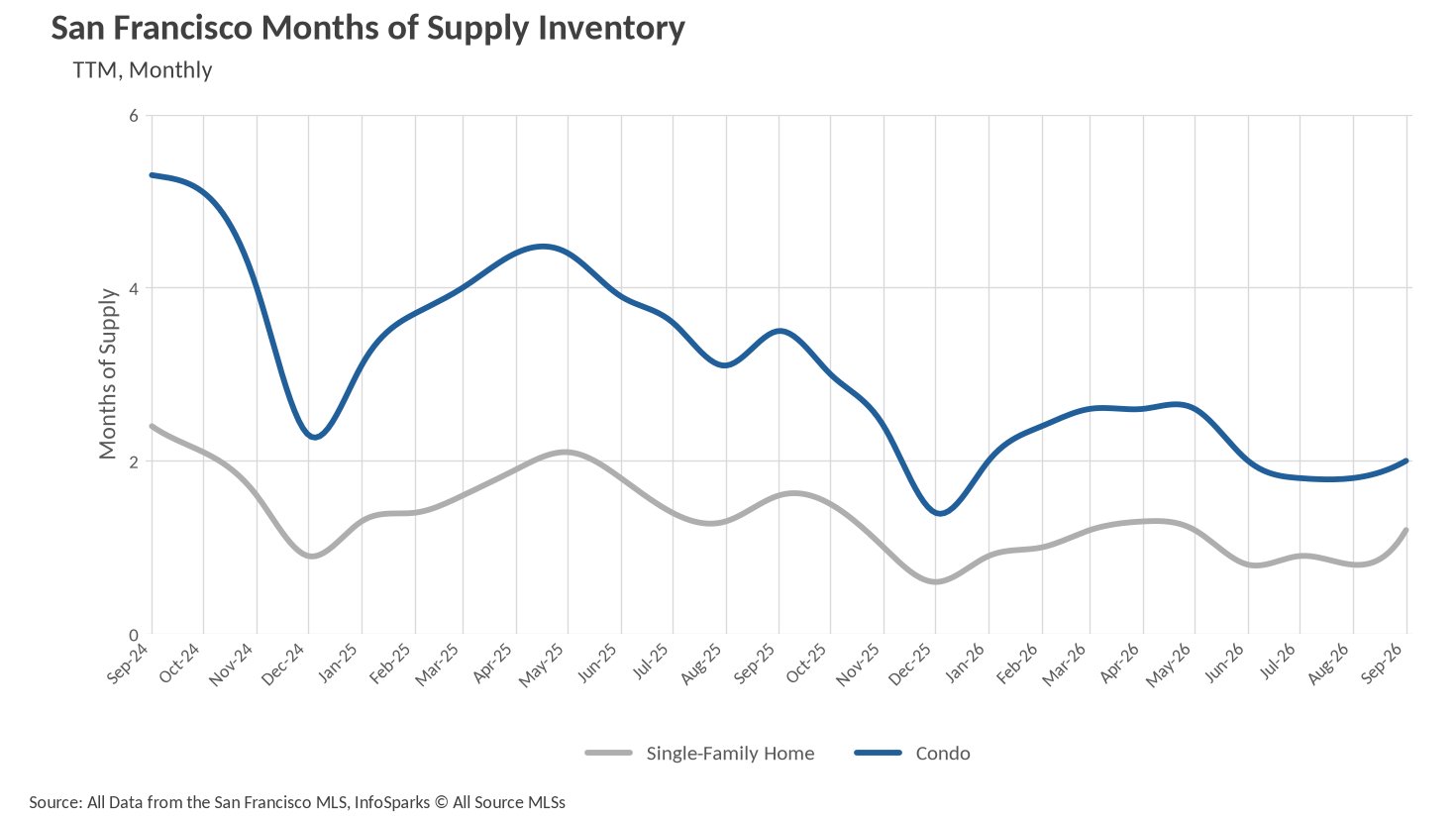
By that standard, the Bay Area's single-family market is overwhelmingly a seller's market this fall. San Francisco leads at 1.2 months of supply, followed closely by San Mateo County at 1.3 months, Santa Clara County at 1.7 months, Alameda County and Marin County both at 2.0 months, Contra Costa County at 2.3 months, and Solano County at 2.9 months. Marin's reading is especially striking, down 53.49% from 4.3 months last September. Sonoma County has moved into balanced territory at 3.4 months, improving from 4.8 months a year ago, while Santa Cruz County sits at 3.7 months and Napa County remains the region's lone pronounced buyer's market at 6.4 months, though even that figure is down 30.43% from last September's 9.2 months. Condos are looser but moving the same direction, with San Francisco at 2.0 months (down 42.86% year over year), San Mateo right at the 3.0 month balance point, and Marin at 3.2 months, while Santa Clara (3.8), Alameda and Contra Costa (3.9 each), Santa Cruz (4.0), Solano (4.3), Sonoma (5.0), and Napa (7.2) all still favor buyers. The practical takeaway heading into the final months of 2026 is a market of two speeds. Anyone pursuing a detached home in San Francisco, Silicon Valley, the East Bay, or Marin should be prepared to compete, move quickly, and in San Francisco's case pay well above asking, where single-family homes closed at an average of 31% over original list price in September. Condo shoppers outside the urban core, meanwhile, retain more negotiating room than they have had in years.
Stay up to date on the latest real estate trends.

Real Estate 101 | Selling a Home | Midpeninsula
Real Estate 101 | Buying a Home | Midpeninsula
Market Update
Buying a Home | Neighborhood Guides | Mid-Peninsula
We know that real estate transactions can be complex, but with our expertise, they don’t have to be stressful. Our team is dedicated to handling every aspect of your Mid-Peninsula real estate needs with the utmost care and professionalism. From the initial consultation to the closing, we manage all the details so you can focus on your future. Whatever challenges arise, trust that we’ve got this — your success is our top priority.