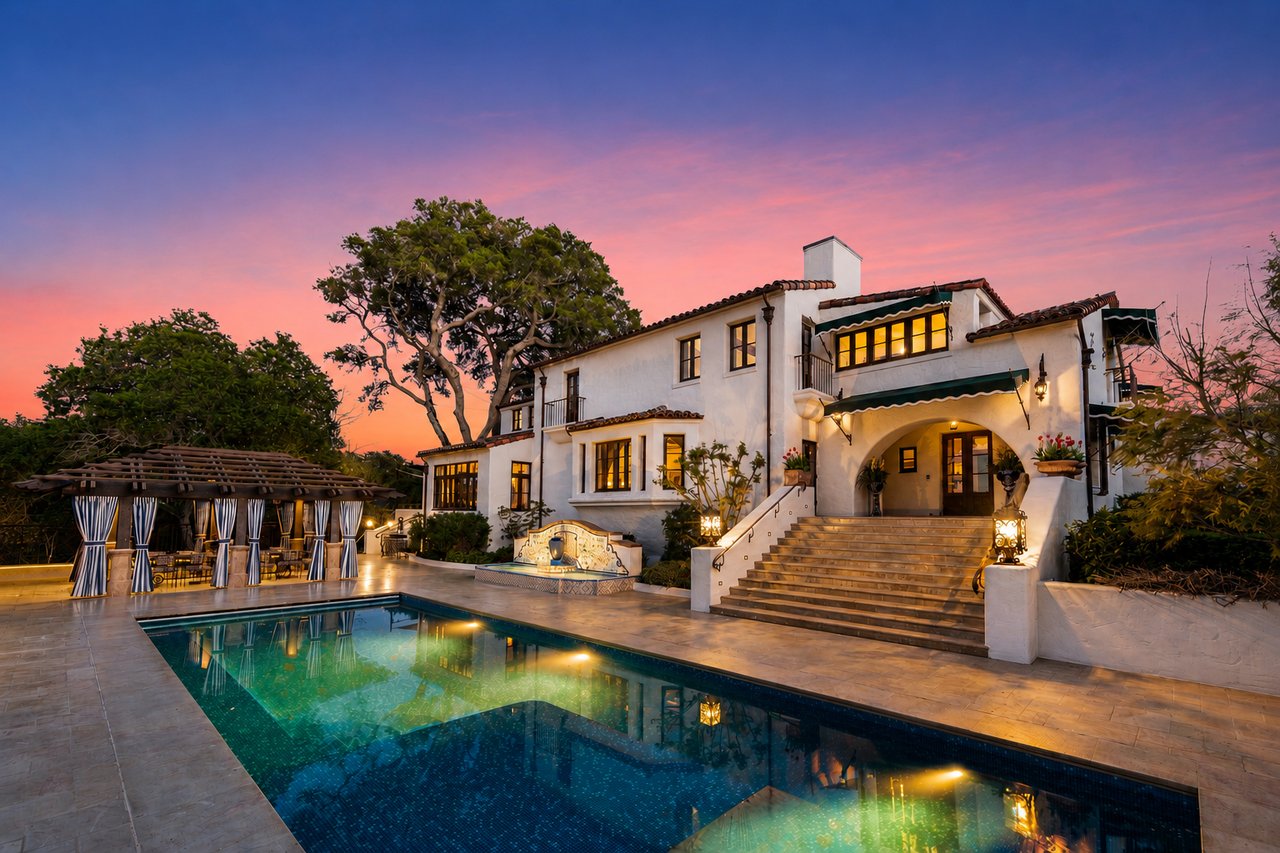
Woodside: Equestrian Estates and Privacy at a Premium
Real Estate 101 | Woodside July 6, 2026
Real Estate 101 | Woodside July 6, 2026
If there's one word that defines Woodside, it's privacy.
Tucked into the redwood-covered hills above Highway 280, this small San Mateo County town of roughly 5,000 residents has spent decades arguably more than a century guarding what makes it rare: space, seclusion, and a landscape that feels worlds away from the density of the Peninsula below. And yet Menlo Park, Palo Alto, Stanford University, and San Francisco are all a short drive away. That combination is the whole story. Woodside doesn't ask you to choose between the wild and the connected it gives you both, on terms most of Silicon Valley simply can't offer.
That's not marketing language. It's the conclusion you reach when you look at the data, the zoning history, the equestrian infrastructure, and the caliber of buyers consistently choosing Woodside over every other community on the Peninsula.
Woodside's housing market in 2026 tells a deceptively simple story: extreme demand meeting an almost fixed supply. The median sale price reached $5.8 million by March 2026 a 27.1% increase from the same period the year prior. That kind of appreciation in a single year isn't driven by new construction or speculative energy. It's driven by serious, well-capitalized buyers competing for a shrinking pool of available Woodside homes.
How shrinking? Only three homes sold in Woodside in March 2026, a 25% decline in sales volume from the previous year. Three. In a month where other Peninsula cities were logging dozens of transactions, Woodside changed hands three times. When that's your inventory environment, every listing becomes an event.
The scarcity isn't accidental it's structural. Woodside's desirability continues to draw technology executives, startup founders, and high-net-worth families, but the supply side has almost no give. Strict zoning rules, large minimum lot sizes, conservation easements, and the town's deep commitment to environmental preservation collectively ensure that Woodside will never see the kind of infill growth that has reshaped neighboring communities on the Peninsula. The land is protected. The character is protected. And with those protections firmly in place, the homes that do come to market command whatever the market will bear which in Woodside's case continues to be extraordinary.
Long-term, Woodside's unique blend of natural charm, large estates, and Silicon Valley proximity is expected to sustain its desirability and premium pricing, even as broader market cycles fluctuate. That stability is itself part of the appeal for buyers who are thinking in decades, not quarters.
Most buyers think of zoning as a constraint something that limits what you can do with a property. In Woodside, zoning is more accurately understood as the foundation of value.
What sets Woodside apart is its commitment to open space and low-density living. Strict zoning helps protect its rural character, and the real estate market is defined by estate properties and custom architecture. Woodside enforces large minimum lot requirements estate-zoned parcels in the upper hills typically require 2.5 acres or more and limits maximum building coverage to a modest percentage of the total lot area. Height restrictions ensure homes don't break the skyline when viewed from public roads. Floor area is capped on a sliding scale that actually gets more restrictive as lots get larger, preventing the McMansion effect that's quietly degraded the character of other wealthy communities.
The result of all this? Drive through Woodside and what you notice first isn't the houses it's the trees. Wide setbacks, native redwoods and oaks, gated driveways set well back from the road. Properties reveal themselves slowly, if at all. The town has maintained what it chose to be when it incorporated in 1956: a rural residential enclave, deliberately designed to stay that way.
Even the downtown feels like a small Western town with only a few shops and a post office. There's no commercial sprawl, no strip malls pushing into the residential fabric, no visible concession to the density of the Peninsula just a few miles east. That's not neglect it's discipline.
Horses aren't a lifestyle accessory in Woodside they're built into the physical and civic infrastructure of the town itself.
Horses brought Spanish explorer Don Gaspar de Portolà through the Woodside area during his 1769 expedition from San Diego to San Francisco, and horses have been traversing local roads and trails ever since. That history is still visible and active today. Drive through Woodside today, and you'll see horses and riders sharing the roadside trails with walkers, joggers, and moms pushing strollers. Shop at Woodside stores, and it's not surprising to find a horse or a few tied to hitching racks outside a restaurant or shop.
The trail network that makes this possible is genuinely remarkable in scale. Woodside and its southern neighbor Portola Valley have hundreds of miles of trails over 500 square miles of rural residential properties. The system is a combination of public and private trails which link the community together, criss-cross the towns and connect them to 1,000 acres of trails in the San Mateo County Parks and the Mid-Peninsula Regional Open Space District, where one can ride from the San Francisco Bay to the Pacific Ocean.
Wunderlich Park adds another 17 miles of dedicated equestrian trails with horse trailer parking. The Horse Park at Woodside sits on 272 acres and is complete with horse stables, obstacle courses, and exercise and practice trails. The park hosts a full competition calendar hunter/jumper, eventing, dressage, reining, vaulting, and polo making Woodside not just a place to keep a horse, but a destination for serious equestrians from across the region.
There's a riding club or equestrian organization for literally every interest, from western rodeos and reining to English dressage and hunter/jumper. Trail riding groups have deep roots in the community, and equestrian service and safety organizations are essential to community life.
This isn't a quaint holdover from a previous era it's an active, organized community culture. The Woodside-area Horse Owners Association (WHOA) has contributed over $556,000 in donations to support youth riding programs, hitching racks, park trail maintenance, and horse shows. The Town of Woodside's Livestock and Equestrian Heritage Committee provides application reviews and inspections related to stable permits, and is a resource for Town Council, staff, and residents on matters concerning horses. Equestrian life in Woodside has its own civic infrastructure because in Woodside, it's considered worth protecting at the municipal level.
That said, the equestrian community in Woodside is at a cultural inflection point. While there were about 3,000 horses in Woodside in the 1990s, now there are only 300, according to local equestrian Bree-Anna Vail. As longtime residents age and newer buyers arrive without equestrian backgrounds, organizations like WHOA are actively working to preserve and pass on that heritage through school programs, youth riding initiatives, and community events like the annual Day of the Horse. For buyers drawn to Woodside specifically for its equestrian character, supporting those efforts is part of what it means to be a neighbor here.
Woodside real estate covers an enormous range and it's worth being specific, because the word "estate" gets used loosely elsewhere on the Peninsula.
From historic European-style estates to hillside contemporary masterpieces to Tuscan mansions complete with a vineyard, the homes in Woodside are nothing short of remarkable. With vast land, stables and trails for horses, mansion-sized interiors, and jaw-dropping resort amenities, some of the palatial homes at the top echelon of Woodside can cost $100 million or more.
In the 1880s, wealthy San Franciscans took the stagecoach service south and began building their country houses here. That legacy is still visible in Woodside's architectural range from the landmark 1915 Filoli estate with its Georgian-style mansion and botanical gardens, to mid-century ranch properties, to contemporary builds that use the terrain to spectacular effect.
The transaction record in early 2026 illustrates where Woodside sits in the regional luxury hierarchy. A Woodside property sold for $25.5 million in Q1 2026, alongside a broader surge in Peninsula luxury activity that saw 40 closed sales above $5 million in February 2026 alone a 33% increase from the prior year. Buyers targeting $15 million to $30 million on the Peninsula have, at any given moment, perhaps one to two dozen properties to consider across Atherton, Woodside, Los Altos Hills, and Portola Valley combined. In that context, a well-positioned Woodside estate isn't just a home it's genuinely rare inventory.
The stretch of Woodside centered near Mountain Home Road and Sand Hill Road has long been referred to as "Billionaires' Row," with Oracle founder Larry Ellison and SoftBank founder Masayoshi Son among the well-known tech entrepreneurs who have called the area home. Locally, the area has long been the home to founders of Apple, Google, Facebook, Intuit, Intel, and a variety of other tech and biotech companies. For buyers where peer community matters and at this price level, it often does Woodside's resident roster speaks for itself.
Woodside has always attracted a particular kind of buyer, and that profile has stayed remarkably consistent even as the broader Silicon Valley market has shifted around it.
Residents enjoy a rare combination of privacy, open space, and proximity to major tech hubs. With expansive estates, wooded hillsides, and a strong rural character preserved through zoning and land use protections, Woodside continues to attract high-profile residents seeking tranquility and understated luxury.
For many, the appeal isn't about proximity to amenities it's the absence of them. Woodside offers room to build a private equestrian property, plant a vineyard, or simply not see a neighbor's roofline from the back deck. That combination of scale and seclusion simply isn't available at any price point once you move closer to the urban core of the Peninsula.
Atherton, Los Altos Hills, Palo Alto, and Woodside are particularly poised for record-setting years, with demand likely to outpace available supply in part because the AI era has generated a new cohort of ultra-high-net-worth buyers who are, as one DeLeon Realty analysis put it, "fundamentally less rate-sensitive than any previous cycle." These buyers aren't stretching to afford Woodside. They're choosing Woodside because it offers something their wealth can't easily replicate elsewhere.
Despite the eye-watering price tags, Woodside homes don't sit on the market for long. Homes in Woodside sold after an average of just 14 days on the market in early 2026, compared to 74 days the year before a compression that tells you everything about the current competitive environment.
When a well-positioned Woodside estate comes to market, it draws serious, well-qualified buyers almost immediately. Fast, well-structured offers have a distinct advantage. Collaborating with an experienced local agent familiar with Woodside's idiosyncrasies gives buyers superior insight these professionals have priority access to off-market listings and can advise on pricing, offer strategy, and negotiations, which is invaluable in a climate where multiple bids are the norm.
Off-market matters here more than almost anywhere else on the Peninsula. Given how few Woodside homes come to market in a given month, a meaningful share of transactions never appear on the MLS at all. Buyers without access to those conversations are working with an incomplete picture of what's actually available.
For buyers: Mortgage pre-approval isn't optional in Woodside it's table stakes. With so few homes changing hands each month, the ones that do come up tend to draw multiple offers from buyers who've already done their homework. Understanding the zoning nuances what you can build, how many structures are permitted, what equestrian facilities require from a permit standpoint is equally essential and often overlooked until it's too late in the process.
For sellers: Woodside is a market where preparation and timing matter enormously. With inventory this constrained and buyer demand running this hot, a well-presented listing can generate intense, competitive interest in a very short window. The Woodside buyer pool tends to be experienced and exacting they've often looked at every property in this price range across multiple communities, and they'll know immediately if a home is presented at its best.
For both sides: Woodside's combination of privacy, open land, equestrian infrastructure, and Silicon Valley access makes it one of the most defensible real estate positions on the entire Peninsula. The fundamentals driving value here fixed supply, institutional-grade zoning protections, a location that can't be replicated don't change with interest rate cycles or market sentiment.
Our team knows this market's quirks from off-market Woodside opportunities to the zoning nuances that affect what you can build, which equestrian facilities require permits, and how to position a Woodside estate to attract the right buyers. Whether you're just starting to explore what's possible or you're ready to move, we'd love to have a straightforward conversation about the Woodside market. Reach out to Pacific Trust Real Estate we're here to help.
Stay up to date on the latest real estate trends.
Real Estate 101 | Woodside
Market Update
Real Estate 101 | Palo Alto
Real Estate 101 | Atherton
Real Estate 101 | Menlo Park
Real Estate 101 | Menlo Park
We know that real estate transactions can be complex, but with our expertise, they don’t have to be stressful. Our team is dedicated to handling every aspect of your Mid-Peninsula real estate needs with the utmost care and professionalism. From the initial consultation to the closing, we manage all the details so you can focus on your future. Whatever challenges arise, trust that we’ve got this — your success is our top priority.