Why Hyper-Local Expertise Matters More Than a Big Brand Name on the Midpeninsula
Real Estate 101 | Buying a Home | Selling a Home September 14, 2026
Real Estate 101 | Buying a Home | Selling a Home September 14, 2026
There is a version of real estate where brand recognition genuinely matters. Markets with high transaction volume, standardized housing stock, and buyers who are choosing primarily on price and convenience are markets where a national firm's reach and name recognition translate into real value.
The Mid-peninsula is not that market.
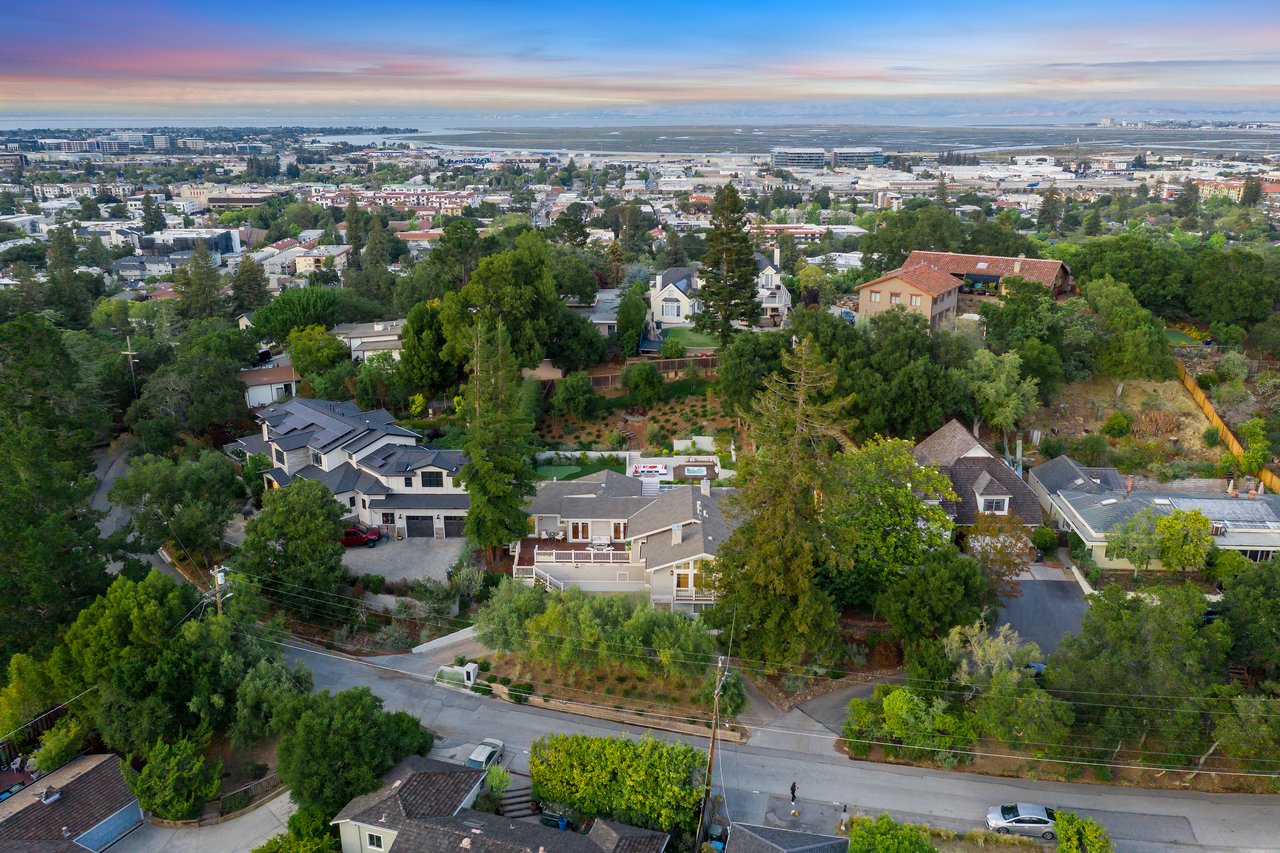
In Palo Alto, Menlo Park, Atherton, Woodside, Portola Valley, and the communities surrounding them, the factors that determine whether a buyer wins a home or a seller achieves the best possible outcome have very little to do with whose sign is in the yard. They have everything to do with what the agent actually knows, and who they know, before the sign ever goes up.
The Silicon Valley housing market operates as a collection of hyper-local micro-markets where pricing, competition, and days on market can change dramatically from one city to the next, and sometimes from one school boundary to the next.
That isn't a figure of speech. In Palo Alto, the agents who consistently win are the ones who read the city block by block, understanding the school boundary line that can split a single street between Gunn and Paly. The difference in inspection playbook between a 1920s Professorville home and a south Palo Alto Eichler matters as much as the list price.
A national brokerage can put a listing on the MLS, syndicate it to Zillow and Redfin, and execute a standard marketing playbook. What it cannot do is tell a buyer why one side of a street commands a $200,000 premium over the other, or advise a seller that the specific corner lot they own has been quietly sought after by three prospective buyers whose agents have been watching for exactly that configuration for six months.
That kind of intelligence doesn't come from brand affiliation. It comes from years of concentrated, deal-by-deal experience in a specific geography.
Perhaps no single feature of the Mid-peninsula market illustrates this point more clearly than the role of off-market transactions.
Land on the Mid-peninsula is near fully built out, turnover is structurally low, and the best addresses rarely surface publicly. When they do, competition is immediate. A significant share of the market's most desirable transactions never appear on the MLS at all. They move through agent networks, through relationships between brokers who have been working these communities for years, and through the kind of quiet, direct conversations that happen long before a home is ever officially listed.
Homes are going under contract in a median of just eight days across the Mid-peninsula, and the region has only 1.7 months of inventory, according to Palo Alto Online. For buyers, that compression means the window to identify a home, evaluate it, and make a credible offer is measured in days. Buyers whose agents are not already plugged into the conversations that precede public listings are, by definition, working with a narrower set of options and less time to act on each one.
For sellers, the off-market dimension cuts the other way. A listing agent who knows which buyers are actively looking, and at what price points, can often generate serious interest before a home is formally launched, giving the seller pricing intelligence and a potential buyer pool that a national firm operating on a standard playbook simply cannot replicate from a regional office.
Market knowledge specific to your target cities and neighborhoods, and not just general regional familiarity, is what separates the agents who consistently perform in this market from those who don't.
The stakes of pricing precision on the Mid-peninsula are extraordinarily high in both directions.
For sellers, the data from markets like Portola Valley and Palo Alto consistently shows that homes priced correctly from launch sell quickly and at or above asking. Homes that miss their pricing window can sit for weeks, lose momentum, and ultimately close for less than they would have achieved with accurate initial pricing. An agent who prices based on general market feel rather than granular comparable analysis, who doesn't know that a specific micro-neighborhood within a zip code is trending 8% above the broader city median, is working at a disadvantage that no amount of brand recognition can compensate for.
For buyers, pricing precision means understanding what a home is actually worth in its specific configuration, in its specific location, before writing an offer. MLS data from Palo Alto consistently shows buyer demand driving sale prices above list. Stanford, Meta in nearby Menlo Park, and the broader startup economy create a steady influx of buyers competing over specific pockets within the region's residential zip codes. A buyer relying on an agent who doesn't know the zip code at the block level is, at best, working from incomplete information. At worst, they are overpaying for a property that a better-informed agent would have recognized as overpriced, or underpricing an offer on a home that a genuinely local expert would have known was going to draw multiple bids.
It's worth being specific, because "local expertise" is a phrase that gets used loosely in real estate marketing. On the Mid-peninsula, it means something concrete.
It means knowing which school boundaries fall where, and understanding the premium that a specific boundary assignment commands in the current market. In Palo Alto, a single street can split between Gunn High and Palo Alto High attendance areas, and that distinction changes the buyer pool and the pricing. An agent unfamiliar with that boundary is advising their client with incomplete information on a decision worth hundreds of thousands of dollars.
It means understanding the inventory dynamics specific to each community. What today's buyers actually want, in terms of location, layout, condition, and commute practicality, looks different in Woodside than it does in Los Altos, different in Barron Park than it does in Old Palo Alto, and different for a tech executive relocating from Austin than for a local move-up buyer who has been watching a specific neighborhood for two years.
It means having relationships with the other agents working your market. On a peninsula where the best properties can move in a week and off-market conversations happen months before a formal listing, the agents who are connected to those conversations are operating in a fundamentally different information environment than those who are not.
This is not an argument that national brokerages have nothing to offer. A well-resourced national firm can provide professional marketing infrastructure, broad listing syndication, and legal and transaction support systems that newer or smaller operations sometimes lack. For a seller of a relatively standard property in a market with ample comparable sales and a predictable buyer pool, some of those resources genuinely add value.
But the Mid-peninsula is a market where the marginal value of brand recognition approaches zero fairly quickly, and the marginal value of deep local knowledge keeps compounding. According to the National Association of Realtors, boutique and independent brokerages consistently outperform in specialized, supply-constrained markets precisely because their agents concentrate their expertise rather than spreading it across a broad geography. In a market where conditions can shift meaningfully from one month to the next, the ability to adapt quickly and advise clients based on current, granular, neighborhood-level intelligence is a structural advantage that a national playbook cannot replicate.
The highest-performing agents in markets like Palo Alto and Atherton are, almost without exception, those who have chosen to go deep rather than broad: concentrating their practice in a handful of communities, building relationships that span years and dozens of transactions, and developing the kind of contextual judgment that only comes from sustained, intensive focus on a specific place.
Pacific Trust Real Estate was built around a single premise: that the Mid-peninsula is a market that rewards depth. Our principals, Nick Granoski and David Weil, have spent years developing the neighborhood-level knowledge, agent relationships, and market intelligence that allow us to advise clients with a level of specificity that a national generalist simply cannot match.
That means knowing what a specific block in Crescent Park has been doing, not just what Palo Alto is doing. It means knowing which sellers are thinking about listing before they've told anyone publicly. It means knowing how to position a home for the specific buyers who are actively looking right now, and how to write an offer that wins in a competitive situation where eight other buyers are working from the same MLS data you are.
Brand recognition opens doors. Local expertise is what happens when you walk through them.
Whether you are evaluating your options as a seller or trying to navigate a competitive buying environment, the Pacific Trust team is here to have a straightforward, honest conversation about what this market actually looks like right now and how to approach it strategically. Reach out to the Pacific Trust team and we're happy to talk through your situation.
Stay up to date on the latest real estate trends.
Market Update
Real Estate 101 | Buying a Home | Selling a Home

Real Estate 101 | Selling a Home | Midpeninsula

Local Living | Midpeninsula | History

Market Update

Homeownership | Home Maintenance | Mid-peninsula
We know that real estate transactions can be complex, but with our expertise, they don’t have to be stressful. Our team is dedicated to handling every aspect of your Mid-Peninsula real estate needs with the utmost care and professionalism. From the initial consultation to the closing, we manage all the details so you can focus on your future. Whatever challenges arise, trust that we’ve got this — your success is our top priority.