Are Homes in Portola Valley a Good Investment? What the Long-Term Data Shows
Real Estate 101 | Portola Valley August 5, 2026
Real Estate 101 | Portola Valley August 5, 2026
It's a reasonable question, and a more interesting one than it might first appear. For a town of roughly 4,500 people with no commercial corridors, no big-box retail, and a housing stock that turns over at a pace of maybe 25 to 40 homes per year, Portola Valley punches well above its size when it comes to real estate performance. But is buying here actually a good investment? The honest answer requires a look at what's driving value, what the recent numbers show, and what the structural features of this market mean for buyers thinking in years rather than months.
Understanding Portola Valley as an investment starts with understanding what the town has chosen to be, and what it has consistently refused to become.
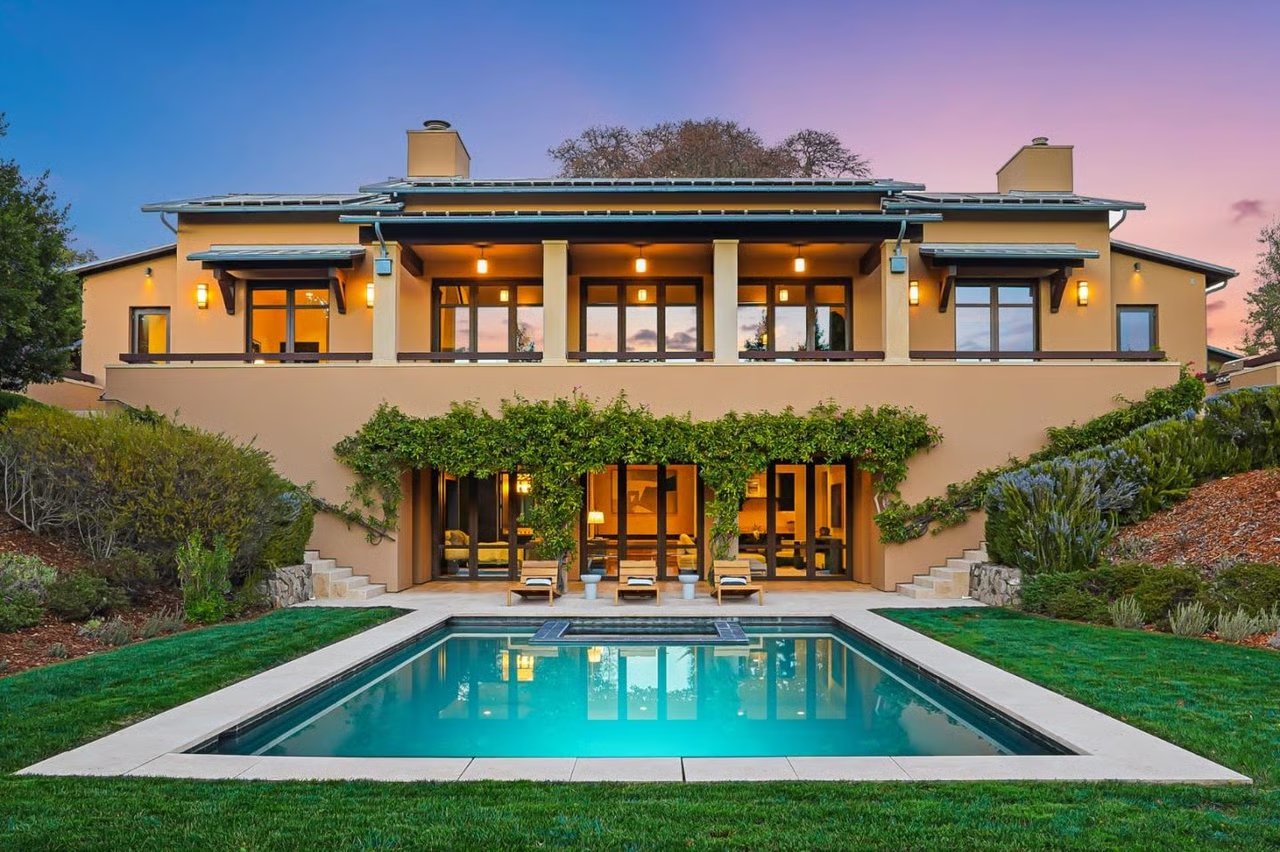
Through thoughtful planning and the protection of nearly 2,000 acres of open space, Portola Valley has maintained its rural character while offering some of the Peninsula's most desirable residential living. There are no strip malls here, no traffic-generating commercial zones, no high-density infill projects quietly reshaping the residential fabric. There are no big-box retailers, no strip malls, and no traffic-generating commercial zones, by design. The community is sophisticated and accomplished, with a high concentration of professionals, academics, and tech industry executives who chose this town specifically because of what it is not.
That design philosophy is codified in the town's zoning, which enforces large minimum lot sizes, strict height and coverage limits, and land use policies that actively discourage new development. Portola Valley is known for its low-density planning, expansive land, and nature-integrated lifestyle, with 0.5 to 3 acre homesites, top-rated schools, strong community ties, and convenient access to Stanford and Sand Hill Road.
The investment implication is straightforward: when a market is structurally designed to prevent supply from growing, and demand keeps rising, values move in one direction over time.
The 2025 full-year data for Portola Valley tells a story of sustained, accelerating performance. The average sale price in Portola Valley hit a record high of $5,573,720 in 2025, a 13% increase compared to 2024 and only the second time it has exceeded $5 million. The median sale price of $4,250,000 also represented a record high and a 4% increase from the prior year.
The range of individual transactions that year underscores just how broad this market's appeal has become. There were 3 sales above $12 million on the MLS, including one at $25 million, alongside more accessible transactions at the lower end of the market. That spread from entry-level estate to ultra-luxury isn't a sign of an inconsistent market. It's a sign of a deep one.
Looking at 2026 data, the appreciation story continues. The average Portola Valley home value reached $4,342,136 as of April 2026, up 9.7% over the past year. Premium estates in neighborhoods like Westridge and Blue Oaks command $8 million to $15 million or more, with price per square foot generally ranging from $1,200 to $2,000 depending on location, views, and amenities.
One important caveat worth naming directly: because only a few dozen homes change hands in Portola Valley each year, year-over-year statistics can swing dramatically based on which properties happen to sell in a given period. Long-term appreciation has been strong, though the market's small sample size creates volatility in year-over-year statistics. The right lens for evaluating Portola Valley as an investment is a long one, not a quarterly snapshot.
One of the most instructive data points from Portola Valley's 2025 market isn't the record average price. It's the relationship between list price accuracy and days on market.
Homes that sold for list price or more were on the market an average of 15 days. Homes that sold for less than list price were on the market an average of 94 days. That is not a rounding difference. It's a 79-day gap that reflects how this buyer pool operates: experienced, well-informed, and unwilling to pay a premium for a property that missed its initial pricing window.
In a market where only 76 homes sold in all of 2025, first impressions are almost everything. A well-priced listing in Portola Valley draws the right buyers immediately. A mispriced one sits until the seller adjusts, by which point a meaningful portion of the available buyer pool has already moved on.
For buyers, this same dynamic works in reverse. Properties that have lingered often represent genuine opportunity for anyone willing to look past an initial list price that was simply set too high.
Investment performance comes down to the strength of the underlying demand drivers. In Portola Valley, those drivers are unusually durable.
Fixed supply, by design. Inventory remains perpetually limited due to the town's small size and minimal new construction. Only 25 to 40 homes typically change hands annually. This isn't going to change. The zoning framework, the open space protections, and the community's consistent political will to preserve its character collectively make new supply nearly impossible. When demand rises, there is nowhere for it to go except into higher prices on the existing stock.
Proximity to enduring economic engines. Portola Valley sits minutes from Stanford University and Sand Hill Road, home to more venture capital firms per square mile than anywhere else in the world. That proximity is not a coincidence of geography. It's a feature that has been repriced upward over decades as Silicon Valley's economic weight has grown, and there's no scenario on the horizon in which Stanford moves or Sand Hill Road loses its relevance.
A buyer pool that isn't rate-sensitive. Portola Valley attracts Stanford faculty, technology founders, investors, and families who value quality of life and long-term livability. A meaningful share of transactions in this market involve cash or near-cash buyers whose purchase decisions are not meaningfully affected by mortgage rate fluctuations. That insulates Portola Valley from the demand volatility that affects more rate-sensitive markets.
Real estate that is well-maintained by nature. Real estate in Portola Valley is exceedingly well-maintained and tends to maintain its value over time. The buyer demographic, the community culture, and the pride of ownership that comes with properties at this price point collectively keep the housing stock in strong condition. Deferred maintenance at scale, which can quietly erode value in other markets, is simply not the norm here.
Open space as a permanent amenity. Windy Hill Open Space Preserve spans more than 1,300 acres and offers miles of hiking, biking, and equestrian trails, along with spectacular views of the Peninsula and surrounding open space. That preserved land isn't just a lifestyle amenity. It's a buffer against the density and development pressure that has steadily reduced privacy in communities closer to the urban core. The open space around Portola Valley will not be built on. That permanence has real value in a region where undeveloped land is increasingly scarce. Fang Yuan
It's worth being honest about this, because Portola Valley is not the right investment for every buyer.
This is not the community for those seeking walkable urban amenities, nightlife, or rental properties. It requires commitment, both financial and philosophical, to low-density, conservation-minded living. The carrying costs on a $4 million to $8 million estate are significant, and the illiquidity of a market transacting 30 to 40 times a year means buyers need a long enough horizon to absorb the inevitable variability of any given selling window.
But for buyers with that horizon, and with the lifestyle alignment that makes Portola Valley genuinely desirable rather than just financially logical, the investment case is a strong one. Real estate in Portola Valley is defined by scarcity, scale, and significant land value. The town's strict development policies mean that the housing stock turns over slowly and new supply is virtually nonexistent. When homes come to market, they attract serious, well-qualified buyers who understand the long-term value of owning in one of the most protected and desirable communities on the Peninsula.
That description, more than any single year's appreciation figure, is the investment thesis for Portola Valley real estate.
Is Portola Valley a good investment? By the metrics that matter for long-term real estate, the answer is yes, with one important condition: you have to hold long enough for the market's structural strengths to do their work. Record average sale prices in 2025, 9.7% year-over-year appreciation through April 2026, near-zero new supply, and a buyer pool drawn from the highest-earning professional cohort in the country all point in the same direction.
The town has been built, zoned, and governed to stay the way it is. In a region that changes as rapidly as Silicon Valley, that kind of stability is its own form of competitive advantage.
Whether you're evaluating Portola Valley as a primary residence, a long-term investment, or both, the Pacific Trust team can help you understand what the market actually looks like right now and what to expect as a buyer. We know this market's neighborhoods, its pricing patterns, and the off-market conversations that often matter most here. Reach out to the Pacific Trust team and we're happy to talk through your options.
Stay up to date on the latest real estate trends.
Local Living | Midpeninsula | History
Market Update
Homeownership | Home Maintenance | Mid-peninsula
Real Estate 101 | Buying a Home | Midpeninsula
Real Estate 101 | Portola Valley
Real Estate 101 | San Carlos
We know that real estate transactions can be complex, but with our expertise, they don’t have to be stressful. Our team is dedicated to handling every aspect of your Mid-Peninsula real estate needs with the utmost care and professionalism. From the initial consultation to the closing, we manage all the details so you can focus on your future. Whatever challenges arise, trust that we’ve got this — your success is our top priority.