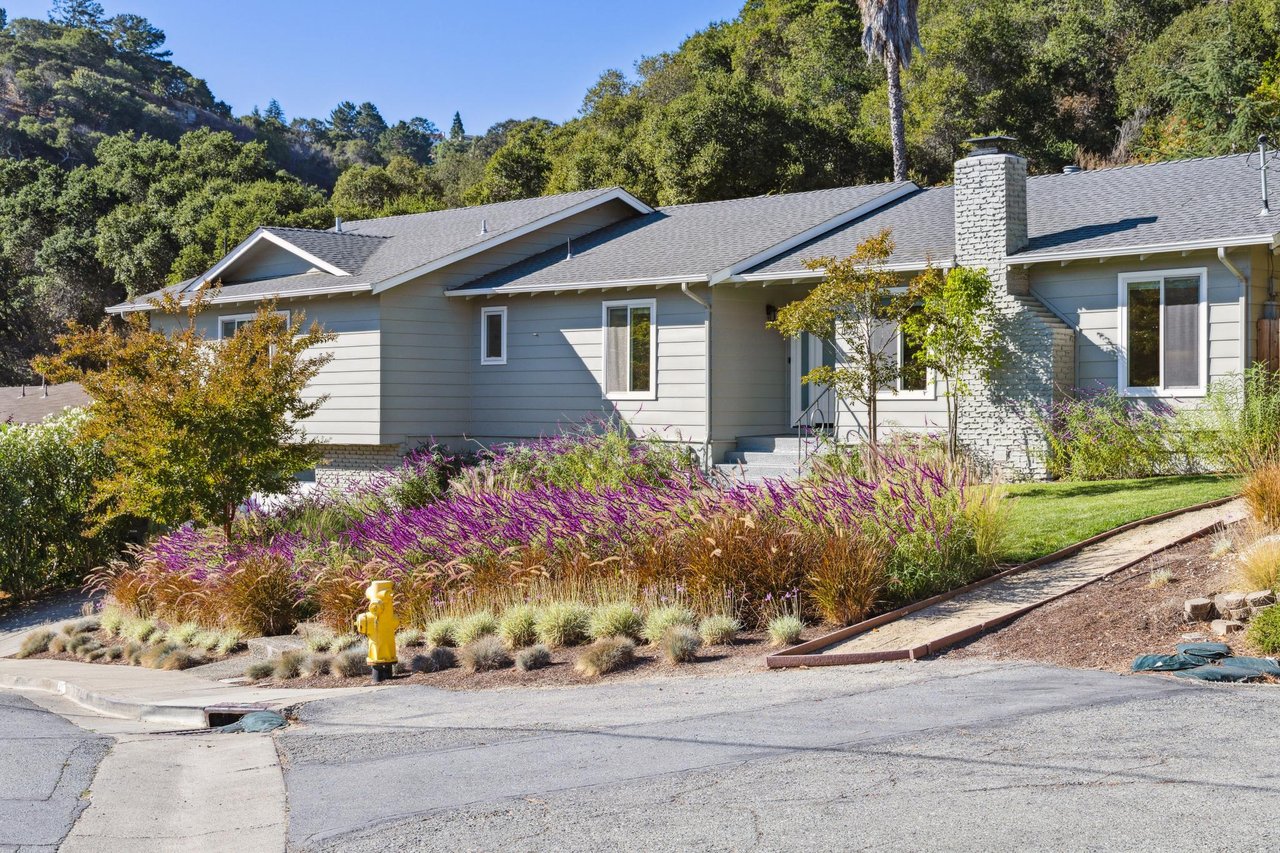
San Carlos: The "City of Good Living" Value Play
Real Estate 101 | San Carlos July 29, 2026
Real Estate 101 | San Carlos July 29, 2026
Every region has a city that quietly outperforms its price tag. The place locals know is a smart move long before the rest of the market catches on. On the Mid-Peninsula, that city is San Carlos.
It doesn't carry Atherton's name recognition or Palo Alto's tech-company gravity. What it carries instead is a long-standing local nickname that says exactly what it's selling: "The City of Good Living." In a region where that kind of living routinely comes with an eight-figure price tag, San Carlos offers something genuinely rare: comparable quality of life at a fraction of the cost of its neighbors.
San Carlos's reputation isn't a chamber-of-commerce invention. The city has earned its nickname "The City of Good Living" through a walkable, tree-lined downtown that hums with independent restaurants, wine bars, and boutique shops, while still feeling relaxed and genuinely welcoming rather than rushed. That identity is built on a specific combination of small-town charm, family-friendly neighborhoods, a lively downtown, excellent schools, and close proximity to Silicon Valley.
The city's character was shaped over decades, not overnight. Compared to neighboring Redwood City and Belmont, both of which grew rapidly in the late 19th century, San Carlos's growth was notably slower. That pattern, intentionally or not, left the city with the kind of human-scaled downtown that faster-growing neighbors never quite preserved. The city's population grew gradually, from about 600 people at incorporation in 1925 to 5,000 by 1941, and sits at roughly 30,722 residents today.
The appeal isn't abstract. It shows up in how residents actually spend their time. Laurel Street anchors downtown with wide sidewalks, locally owned shops, and a relaxed but polished restaurant and cafe scene. Burton Park, the city's oldest developed park, remains a favorite gathering spot, with well-maintained playgrounds, open lawns, and a water play area that makes it a summer staple. It sits within a quiet, tree-lined residential neighborhood that gives the park a genuine backyard feel.
San Carlos also has a distinct identity tied to flight and innovation. The city is perhaps best known for its rich aviation heritage, anchored by the Hiller Aviation Museum and the historic San Carlos Airport. It's a hands-on destination where visitors can climb into historic cockpits, explore more than 50 aircraft and spacecraft, and test flight simulators.
Transit access adds to the day-to-day convenience. Caltrain, headquartered in downtown San Carlos, provides regional commuter rail service between San Francisco and San Jose. The station's original 1888 depot, a Richardsonian Romanesque structure built of Almaden sandstone, has been listed on the National Register of Historic Places since 1984. The city is also home to several wineries and tasting rooms, most within walking distance of the Caltrain station, making it possible to spend an entire day exploring on foot.
Here's where San Carlos separates itself from nearly every other city in this series, and where the "value play" framing earns its keep.
As of January 2026, San Carlos homes sold for a median price of $2.3 million, down 3.4% from the prior year, with homes typically selling in about 35 days and receiving an average of 5 offers. Other 2026 data points to a similar range, with a February 2026 median of roughly $1.99 million.
Now place that next to its Mid-Peninsula neighbors. As of early 2026, Palo Alto's median home value hovered around $3.5 million, Los Altos sat over $4.3 million, and Atherton's median exceeded $7.4 million in February, more than three times San Carlos's price point.
That gap is the entire story. A buyer priced out of a starter home in Palo Alto or Los Altos can often find a genuinely comparable lifestyle in San Carlos, with walkable downtown, strong schools, Caltrain access, and Mid-Peninsula proximity, for roughly 40 to 60 cents on the dollar relative to its higher-profile neighbors.
For buyers specifically targeting downtown walkability, the value proposition tightens even further. In Downtown San Carlos specifically, the median sale price was $1.4 million as of the most recent month tracked, up 11.3% year-over-year, reflecting strong, sustained demand for the walkable core even as the city's broader median has softened slightly.
Affordability relative to its neighbors doesn't mean San Carlos compromises on the factor that drives most Mid-Peninsula buying decisions: schools.
San Carlos is part of the San Mateo County school system, with 11 elementary schools, 6 middle schools, and 2 high schools, plus several private and charter options. The city's public schools carry an average GreatSchools rating of 8 out of 10, a genuinely strong mark that holds up credibly against the much higher-priced districts surrounding it.
For families running the math on cost-per-quality-point of schooling, San Carlos consistently comes out ahead. You're not getting Palo Alto-caliber test scores at every school in the district, but you're getting solidly above-average schools at a meaningfully lower buy-in than the districts commanding national rankings.
San Carlos's slightly longer days-on-market figure compared to Palo Alto or Los Altos isn't a red flag. It's a structural feature of a market that moves at a more measured pace, and it works in buyers' favor.
With homes selling in around 35 days and receiving an average of 5 competing offers, San Carlos remains genuinely competitive. Multiple-offer situations are still the norm, but the pace gives serious buyers more breathing room than the 8-to-10-day windows common in Palo Alto, Los Altos, and Woodside. That extra runway matters for buyers who want time to actually evaluate a property rather than make a life-changing decision over a single weekend.
San Carlos isn't trying to be Atherton, and that's precisely the point. It's built for buyers who want genuine Mid-Peninsula fundamentals, strong schools, walkability, transit access, and proximity to Silicon Valley employers, without paying the premium that comes with a more famous zip code.
That makes it a particularly compelling option for move-up buyers priced out of Palo Alto or Los Altos, young families prioritizing walkable downtown life over acreage, and anyone commuting via Caltrain who values having the station and its historic depot right in their backyard.
The city's slower, steadier growth pattern over the past century has left it with something its flashier neighbors can't easily replicate: a downtown that feels lived-in rather than curated, at a price point that still leaves room to actually live there.
Whether you're comparing San Carlos against Palo Alto, Redwood City, or Belmont, the Pacific Trust team can walk you through exactly what your budget buys in each market and where the real value is hiding. Reach out to the Pacific Trust team and we'd love to help you find your way home.
Stay up to date on the latest real estate trends.
Local Living | Midpeninsula | History
Market Update
Homeownership | Home Maintenance | Mid-peninsula
Real Estate 101 | Buying a Home | Midpeninsula
Real Estate 101 | Portola Valley
Real Estate 101 | San Carlos
We know that real estate transactions can be complex, but with our expertise, they don’t have to be stressful. Our team is dedicated to handling every aspect of your Mid-Peninsula real estate needs with the utmost care and professionalism. From the initial consultation to the closing, we manage all the details so you can focus on your future. Whatever challenges arise, trust that we’ve got this — your success is our top priority.